

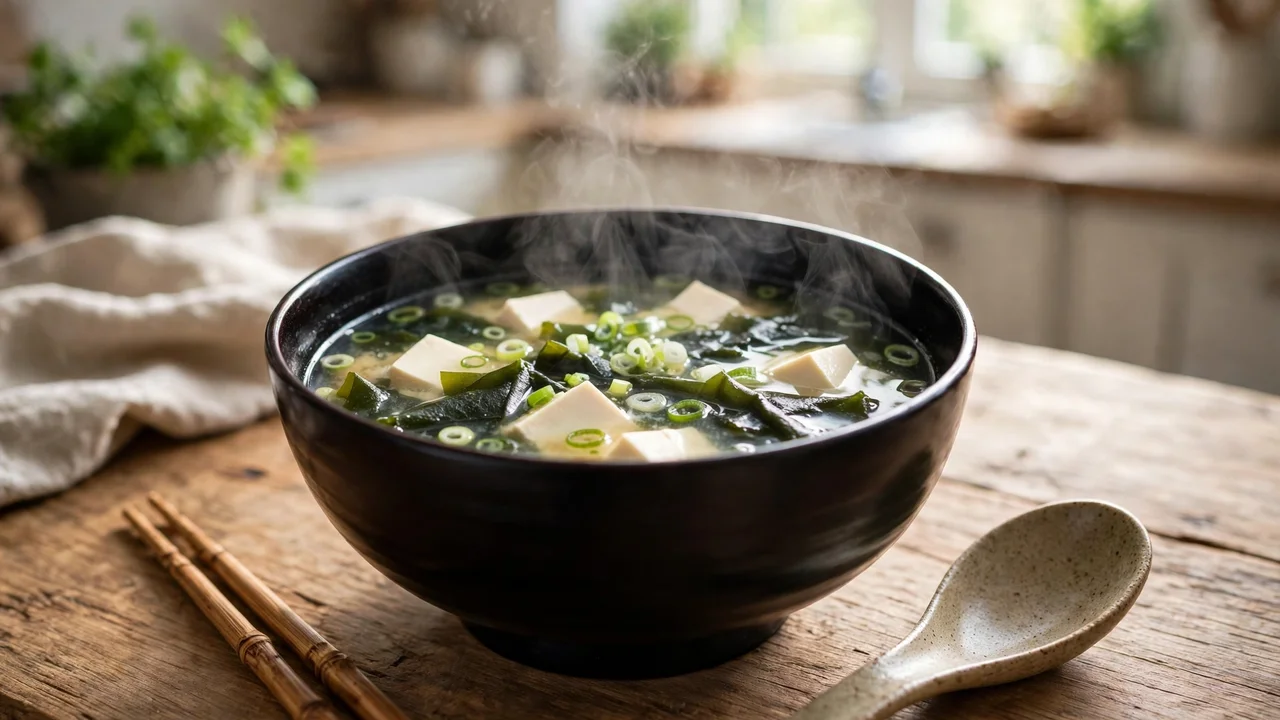
Fifteen Minutes to a Proper Bowl
There is exactly one rule that separates good miso soup from the dull, flat kind: the miso never boils. Everything else — the dashi, the wakame, the tofu — is forgiving. But boil the soup after the miso goes in and you cook off the delicate fermented aroma that is the entire reason you’re eating it, and the flavor turns blunt and a little harsh. Keep the pot just below a simmer at the end, and you get the clear, savory, quietly complex bowl that restaurants serve as a matter of course.
The rest is mostly assembly. Dried wakame wakes up in water while the dashi heats. Tofu needs nothing more than a gentle poach. If you keep instant dashi granules and a tub of miso in the pantry — both keep for months — this soup is always fifteen minutes away, which makes it my default first course whenever a richer main is coming and I want something warm and light to start.
Serve it before a plate of my teriyaki chicken thighs and you’ve got a proper Japanese-leaning dinner on the table. And on the nights when the soup needs to be the main event rather than the opening act, the creamy chicken pot pie is the other bowl I reach for — different continent, same comfort.
Why You’ll Love This Recipe
- Genuinely fast. Fifteen minutes, start to finish, and most of that is waiting for water to heat.
- Light but satisfying. Warm, savory, and full of protein from the tofu, without weighing you down before the main course.
- Pantry-driven. Miso paste and dried wakame keep for months; instant dashi is a perfectly respectable shortcut, used in plenty of Japanese home kitchens.
- A template, not a cage. Once you know the base, whatever vegetables are in the fridge can go in it.
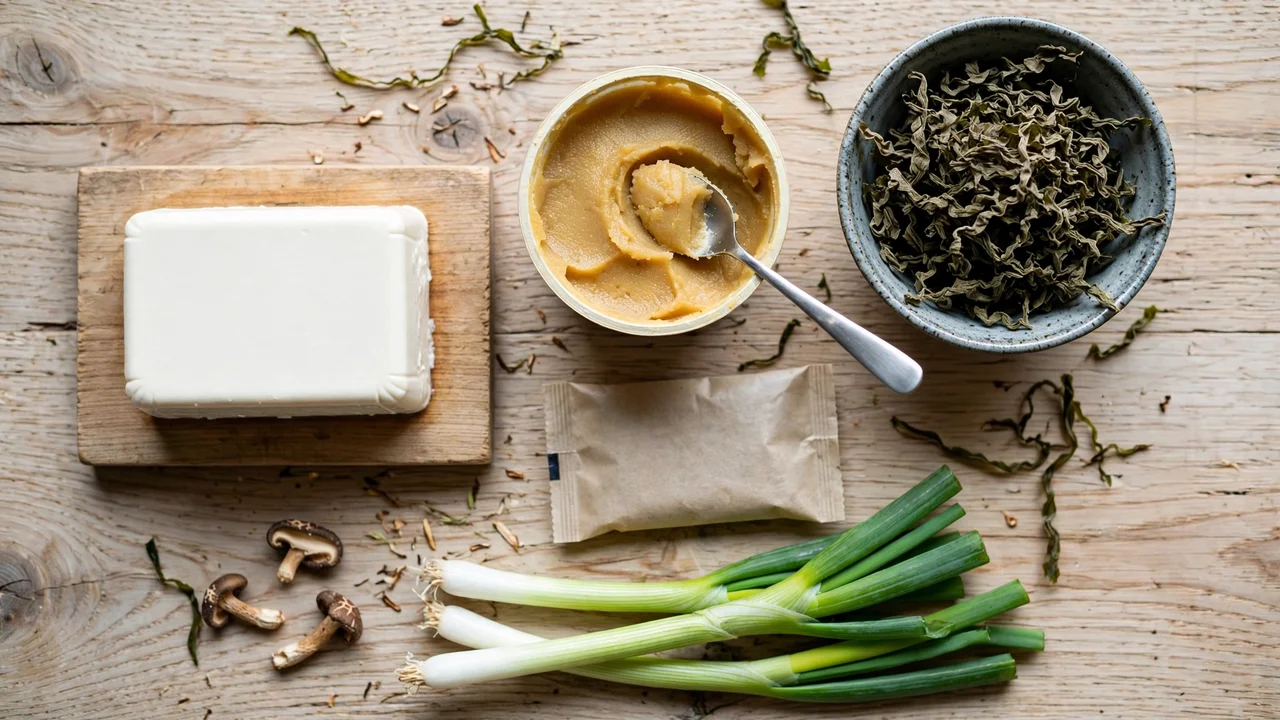
Ingredients
- 4 cups (960 ml) dashi (from instant dashi granules, or homemade — see tips)
- 2 tablespoons dried wakame seaweed
- 7 ounces (200 g) silken or soft tofu, drained and cut into 1/2-inch cubes
- 3 to 4 tablespoons miso paste (white/shiro miso for mild, or a mix of white and red)
- 2 scallions, thinly sliced
- Optional additions: a handful of baby spinach, 4 to 6 fresh shiitake mushrooms thinly sliced, or a few clams
Instructions
- Wake the wakame. Put the dried wakame in a bowl and cover with cold water. In 5 minutes it will unfurl into soft, dark green ribbons — it expands a lot, so measure it dry. Drain and squeeze gently. If the pieces are large, chop them once or twice.
- Heat the dashi. Pour the dashi into a saucepan and bring it to a gentle simmer over medium heat — small bubbles at the edges, not a rolling boil.
- Cook the additions first. If you’re using mushrooms or any firm vegetable, add them now and simmer 2 to 3 minutes, until tender. Add the drained wakame and let it warm through for about 30 seconds.
- Poach the tofu gently. Slide the tofu cubes in and simmer for 1 to 2 minutes, just until heated through. Silken tofu is fragile — lower it in with a spoon rather than dumping it, and don’t stir vigorously from here on.
- Turn the heat down. Drop the heat to the lowest setting, or pull the pot off the burner entirely. The soup should be steaming hot but no longer simmering. This is the moment everything depends on.
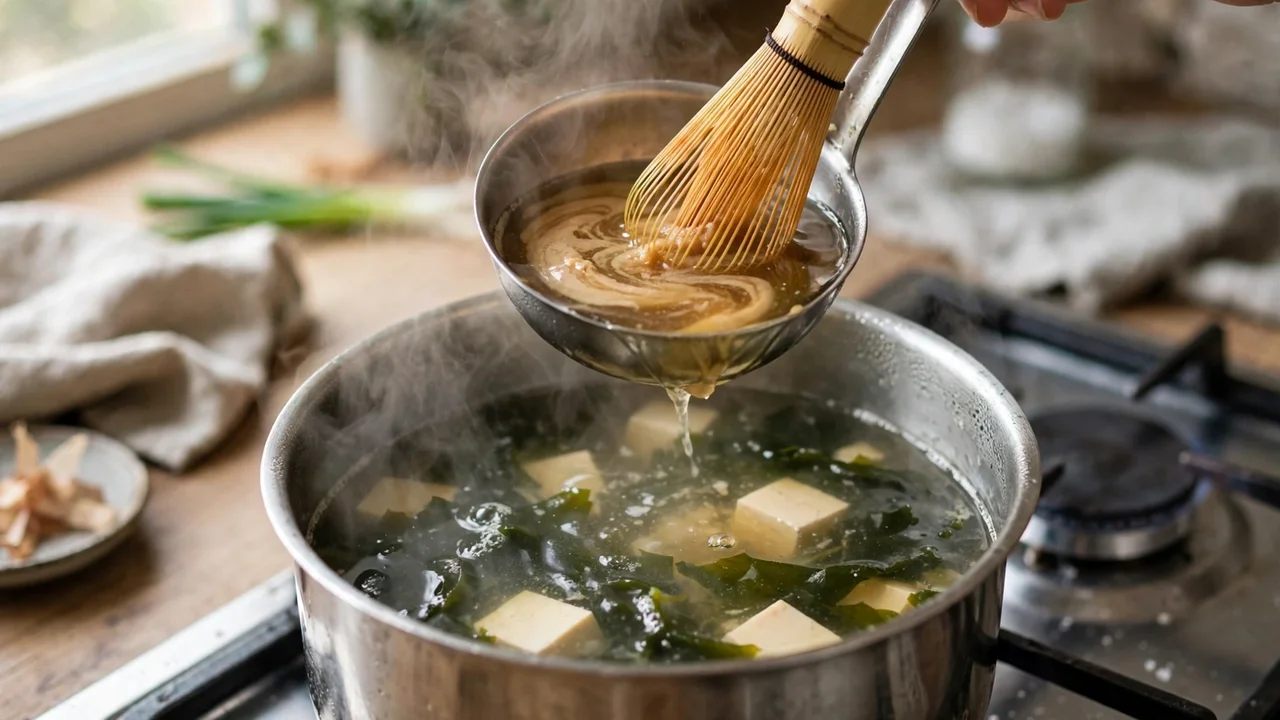
- Dissolve the miso. Ladle about 1/2 cup of the hot broth into a small bowl and whisk the miso paste into it until completely smooth — a small strainer held over the pot, with the paste pressed through, is the traditional tool and guarantees no lumps. Stir the dissolved miso back into the soup.
- Serve immediately. Ladle into bowls, making sure each gets its share of tofu and wakame, and scatter the scallions over the top. Miso soup waits for no one: it is at its fragrant best in the first few minutes.
Tips for Success
Never boil after the miso. This is the tip, repeated from the top because it decides the dish. Miso’s aroma compounds are volatile, and boiling drives them off while turning the flavor coarse. Heat the soup to just under a simmer, add the miso off the boil, and reheat leftovers the same gentle way.
Know your miso. White (shiro) miso is fermented for the shortest time; it’s mild, a little sweet, and the friendliest starting point. Yellow (shinshu) sits in the middle. Red (aka) miso is aged longest and tastes saltier, funkier, and deeper — wonderful, but start with less and taste. A half-and-half mix of white and red is what many home cooks settle on. Saltiness varies by brand, so treat the quantity in the recipe as a starting point, not a law.
Instant dashi is fine, honestly. Making dashi from kombu and bonito flakes takes about 30 minutes and is lovely when you have the time. But instant granules (hon-dashi and similar) are the everyday choice in most Japanese homes, and for a weeknight soup the difference is small. If you have neither, use water with a tiny pinch of salt and a few drops of soy sauce — the soup will be simpler, still good, and the miso carries it.
Cut tofu without wrecking it. Slide the tofu block out onto a cutting board, cut it into slabs, then cubes, and use a spatula or the flat of your knife to move it. Silken tofu crumbles if you handle it in the pot; firm tofu is sturdier and a fine substitute if it’s what you have.
Variations
Mushroom miso soup. Add sliced shiitake or enoki mushrooms in step 3 and skip the wakame, or keep both. Mushrooms deepen the broth noticeably; a dried shiitake soaked in the dashi adds even more.
Hearty potato and onion. The diner-style version: add thinly sliced onion and small cubes of potato after the dashi comes to a simmer and cook until the potato is tender before adding miso. More substantial, still fast.
Spinach and egg. Stir in a handful of baby spinach until it just wilts, and for a more filling bowl, drizzle in a beaten egg in a thin stream at the very end, off the heat, for delicate ribbons. It turns the soup into a light lunch on its own.
Clam miso soup (shijimi or asari). Add scrubbed small clams to the dashi and simmer until they open, then proceed. The clam liquor does something wonderful to the broth. Discard any that don’t open.
Vegan dashi. Simmer a piece of kombu and 3 or 4 dried shiitake mushrooms in the water for 20 minutes, then strain. Use it as the base and the soup is fully plant-based, with no loss of depth.
Storage and Make-Ahead
Fridge: Miso soup keeps 2 days refrigerated, though it is best the day it’s made. The wakame softens further and the tofu absorbs broth and firms up a little.
Reheating: Warm it gently over low heat until steaming — never back to a boil, for the same reason as before. If it tastes flat after reheating, whisk in a small extra teaspoon of miso (dissolved in a spoonful of the warm soup) at the end to revive the aroma.
Make-ahead: The honest answer is that miso soup wants to be made fresh, and takes 15 minutes, so there’s little to gain from prepping ahead. What you can do: mix nothing, but set out the components — wakame soaking, tofu cubed, miso measured — and the soup is 10 minutes from done whenever you are. Miso paste itself keeps for months in the fridge, well sealed.

Freezing: Don’t. Tofu turns spongy and the wakame goes to rags. Not worth it for a 15-minute soup.
Frequently Asked Questions
Why does my miso soup taste bitter or harsh?
It boiled after the miso went in — the most common cause by far. It can also happen if the miso was scorched by being added directly to a nearly dry, hot pan. Keep the soup at a bare steam, dissolve the miso in broth first, and the bitterness doesn’t happen.
Which miso should I buy if I can only have one?
A yellow (shinshu) or a white miso, in that order. Yellow is the middle path — savory, not too sweet, works in soup and glazes and dressings. White is milder and sweeter, great for soup and light sauces. Red is a specialist; add it later when you know you like the funk.
I don’t have dashi at all. Is water really okay?
Yes, with a small caveat: add a pinch of salt and about a teaspoon of soy sauce to the water to give the miso something to stand on. It won’t have dashi’s smoky depth, but miso is a strong flavor all by itself, and the soup will still taste like miso soup.
Can I add noodles or rice to make it a meal?
Cooked somen noodles or a scoop of warm rice dropped into the bowl both work and are common in Japan for a more filling bowl. Add them at serving time so they don’t sit and swell in the pot.
Recipe Card
Prep Time: 5 minutes
Cook Time: 10 minutes
Total Time: 15 minutes
Yield: 4 small bowls (about 1 cup each)
Ingredients (summary): Dashi, dried wakame, silken tofu, miso paste, scallions.
Instructions (summary): Soak the wakame until it unfurls; drain. Simmer the dashi, cook any firm additions, add wakame and tofu just to heat through. Off the boil, whisk the miso with a ladle of broth until smooth and stir it back in. Serve immediately with scallions.