
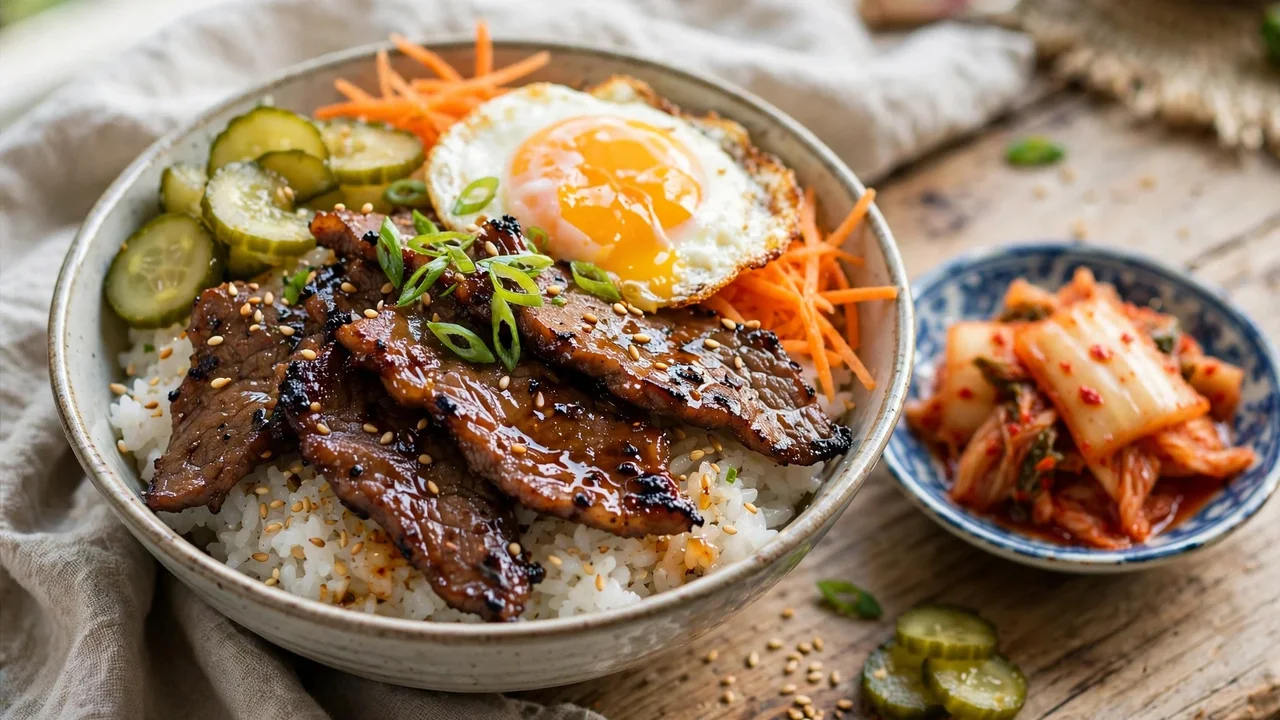
Bulgogi is Korea’s beloved marinated grilled beef — thin slices soaked in a sweet, garlicky soy marinade, cooked fast over high heat until the edges catch and caramelize. At home, without a grill or a trip to a Korean market, you can get remarkably close with a screaming-hot skillet and one important trick: cook the beef in small batches so it sears instead of steaming. Crowd the pan and you get gray, boiled meat. Give it space and you get those dark, sticky edges that make bulgogi bulgogi.
Served as bowls over rice stirred with sesame oil and seeds, it becomes the kind of weeknight dinner that feels like takeout but costs a fraction of it. The marinade does double duty as the sauce, a quick pickled cucumber adds the crunch and acidity the rich beef wants, and a fried egg on top is optional but strongly encouraged in this house.
The marinade logic is close to the one in my teriyaki chicken thighs — soy, sweetness, garlic, patience — so if you’ve made that, you already know how this goes. Slice thin, marinate, sear hard, eat immediately.

Why You’ll Love This Recipe
- The marinade is pantry-based. Soy sauce, brown sugar, garlic, ginger, sesame oil — plus one grated pear (or apple) doing quiet, essential work.
- Fast once marinated. The beef itself cooks in about 6 minutes. Dinner is mostly assembly.
- That char. High heat and small batches give you the caramelized edges that separate great bulgogi from a beef stir-fry.
- Bowls are endlessly flexible. Swap the vegetables with the seasons, add kimchi, top with an egg — nobody will stop you.
- Great for meal prep. Marinate a double batch; half cooks tonight, half waits in the fridge for tomorrow.
Ingredients
For the Bulgogi
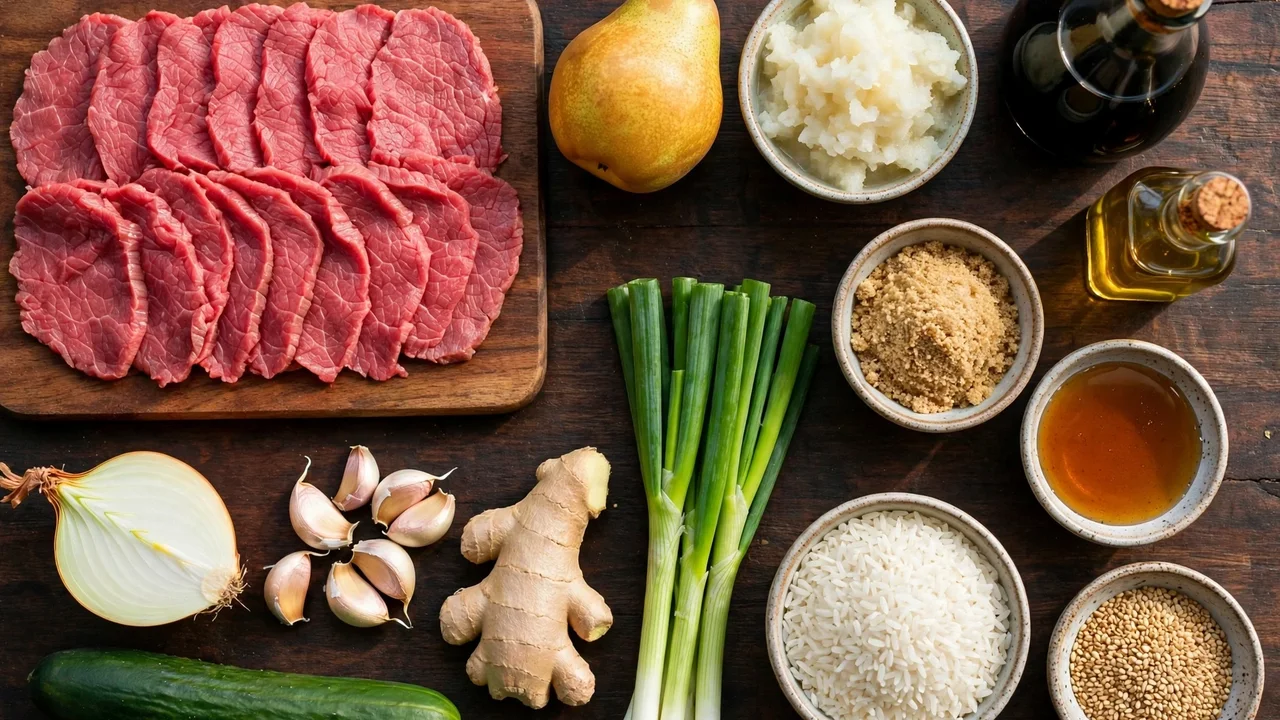
- 1 1/2 pounds ribeye, sirloin, or flank steak, sliced very thin against the grain
- 1/2 medium Asian pear or sweet apple, peeled and grated (about 1/2 cup)
- 1/3 cup low-sodium soy sauce
- 2 tablespoons brown sugar
- 1 tablespoon honey
- 2 tablespoons toasted sesame oil
- 4 garlic cloves, grated or minced
- 1 tablespoon grated fresh ginger
- 1/4 teaspoon black pepper
- 1 tablespoon neutral oil, for cooking
- 1/2 yellow onion, thinly sliced
- 3 green onions, cut into 1-inch pieces, plus more sliced for serving
- 1 teaspoon toasted sesame seeds, for serving
For the Sesame Rice and Bowls
- 1 1/2 cups jasmine or short-grain rice
- 1 tablespoon toasted sesame oil
- 1 teaspoon toasted sesame seeds
- 1/2 teaspoon fine sea salt
- 1 English cucumber, thinly sliced
- 2 tablespoons rice vinegar
- 1 teaspoon sugar
- Pinch of salt
- Shredded carrots, kimchi, and fried eggs, for serving (optional)
Instructions
-
Slice the beef. If your steak isn’t already sliced, freeze it for 30 minutes until firm at the edges — it makes thin slicing easy. Cut across the grain into slices about 1/8 inch thick. Thin slices are non-negotiable: they marinate fast, cook fast, and stay tender.
-
Marinate. In a large bowl, whisk the grated pear, soy sauce, brown sugar, honey, sesame oil, garlic, ginger, and black pepper. Add the beef and the sliced onion and toss until every piece is coated. Cover and refrigerate at least 30 minutes and up to 24 hours. The pear’s enzymes gently tenderize, so overnight is fine but two days is too long.
-
Cook the rice. While the beef marinates, cook the rice by your usual method. When done, fluff it and fold in the sesame oil, sesame seeds, and salt. Keep warm.
-
Quick-pickle the cucumber. Toss the cucumber slices with the rice vinegar, sugar, and a pinch of salt. Set aside at least 15 minutes, stirring once or twice. They’ll soften slightly and turn bright and tangy.
-
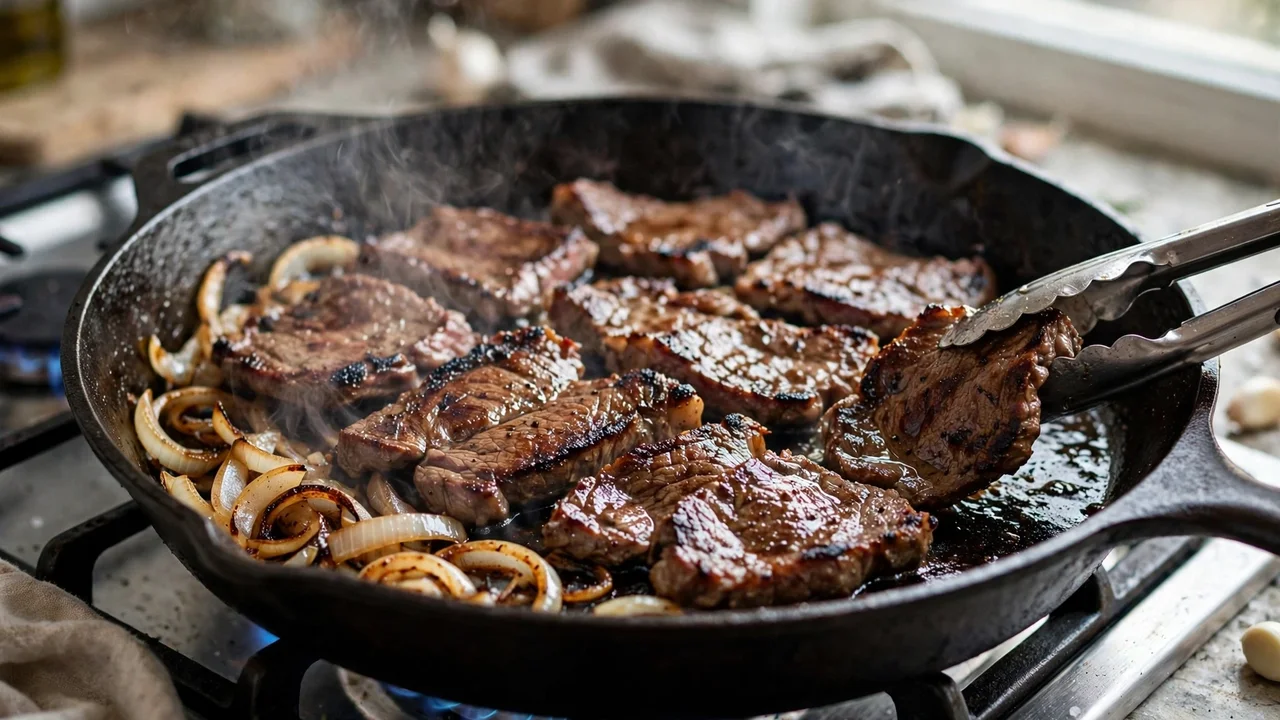
Sear the beef in batches. Heat a large cast-iron skillet or wok over high heat until it just starts to smoke. Add a teaspoon of neutral oil. Lift about a third of the beef out of the marinade, letting the excess drip off, and spread it in a single layer. Leave it alone for 90 seconds to develop a deep sear, then toss and cook 1 to 2 minutes more until caramelized at the edges and just cooked through. Transfer to a plate and repeat with the remaining beef, adding oil as needed. In the last batch, add the green onion pieces for the final minute.
ADVERTISEMENTADVERTISEMENT -
Reduce a little sauce (optional but good). Pour the leftover marinade into the hot pan and simmer 1 to 2 minutes, until slightly thickened and glossy. Drizzle a spoonful over each bowl. (It has been boiled, so it is safe — never serve it uncooked.)
-
Build the bowls. Divide the sesame rice among 4 bowls. Arrange the bulgogi, pickled cucumbers, and shredded carrots over the top. Add a fried egg and a spoonful of kimchi if you like, shower with sliced green onions and sesame seeds, and serve right away.
Tips for the Best Sear
- Dry beef sears; wet beef steams. Let the marinade drip off before the beef hits the pan, and don’t be tempted to pour it all in at once.
- Small batches, real heat. If your pan isn’t big, do three batches without complaint. Each takes 3 minutes, and the difference in the result is the whole dish.
- Cast iron or carbon steel wins. Thin nonstick pans can’t hold the heat this needs. Get the pan properly hot before the oil goes in.
- Slice against the grain. Look for the lines running through the meat and cut across them. With the grain, even well-marinated beef eats chewy.
- Grate the pear on a box grater and use the juicy pulp, not just the liquid. No pear? A grated kiwi (use half the amount and marinate under 4 hours) or a sweet apple both work.
Variations
- Spicy bulgogi: Add 1 to 2 tablespoons of gochujang and 1 teaspoon of gochugaru to the marinade.
- Chicken or pork: The same marinade loves thin-sliced chicken thighs or pork shoulder; cook to the proper temperature for each.
- Lettuce-wrap style: Skip the rice and serve the beef with butter lettuce leaves, the pickles, and ssamjang or a simple gochujang-mayo for wrapping — closer to how bulgogi is served alongside grilled meats like Mediterranean beef kebabs.
- Vegetarian bowls: Marinate thick slices of king oyster mushrooms or extra-firm tofu (pressed well) the same way and sear until deeply browned.
Storage and Make-Ahead
Cooked bulgogi keeps in the fridge for up to 3 days; reheat it quickly in a hot skillet rather than the microwave to bring back some of the char. The unmarinated components are the real make-ahead win here: the beef can sit in its marinade for a full day, the pickles keep 3 days in the fridge, and the rice cooks in 20 minutes. Raw marinated beef also freezes beautifully for up to 2 months — thaw overnight in the fridge and cook as directed.
Frequently Asked Questions
What cut of beef is best?
Ribeye is the traditional, marbled, forgiving choice. Sirloin is a great middle ground; flank works if sliced truly thin and across the grain. Many Korean markets sell pre-sliced bulgogi meat, which saves all the knife work.
Can I cook this on the grill?
Yes — use a grill basket or a fine grate so the thin slices don’t fall through, and cook them fast over high heat, turning once. The char is even better.
Is the pear really necessary?
It does two jobs: sweetness and tenderizing enzymes. You can replace it with a grated apple or 2 tablespoons of pineapple juice, but don’t skip the fruit entirely or the marinade loses its character.
What should I serve with the bowls?
The pickles and rice are built in. Kimchi is the classic partner; a simple miso soup or steamed broccoli with sesame rounds the meal out.
Recipe Card
- Prep Time: 25 minutes, plus at least 30 minutes marinating
- Cook Time: 20 minutes
- Total Time: About 1 hour 15 minutes
- Servings: 4 bowls
Summary: Marinate very thin-sliced beef in grated pear, soy sauce, brown sugar, honey, sesame oil, garlic, and ginger. Sear in small batches in a ripping-hot skillet until the edges caramelize. Serve over rice folded with sesame oil and seeds, with quick-pickled cucumbers, carrots, and a drizzle of the boiled marinade.