
The Quiet Dessert That Asks for a Wooden Spoon
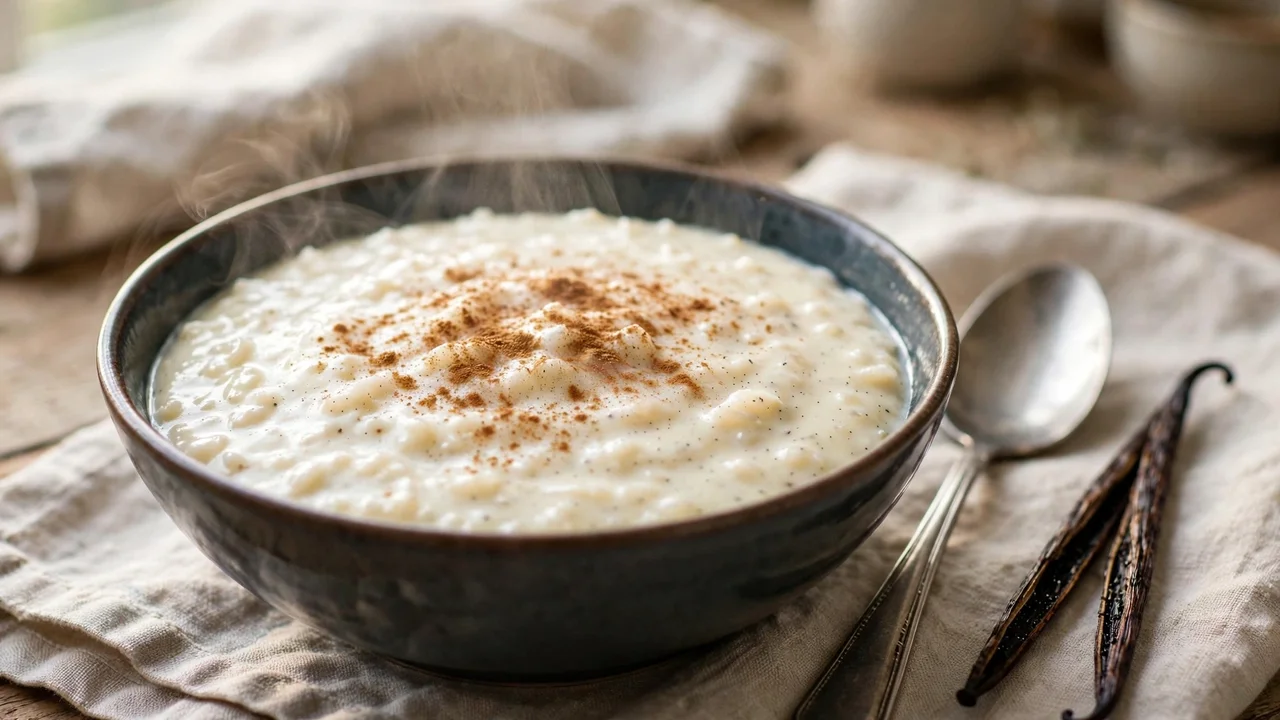
Rice pudding is not a showy dessert. There’s no torch, no layers, no frosting architecture — just rice, milk, sugar, and vanilla, simmered slowly until the grains give up their starch and the whole pot turns to something spoonable and soft. It’s the dessert my grandmother made when the house needed to smell like comfort, and the one I still make when a day has been too loud.
The real vanilla bean is doing heavy lifting here. Those tiny black seeds scraped into the milk perfume the entire pot in a way extract alone never quite manages — warm, floral, almost marshmallowy. Use the extract too, added at the end, and you get vanilla in two registers at once. Serve it warm in deep bowls with a dusting of cinnamon, or chill it overnight and eat it cold and firm straight from the fridge, which is how half my family insists on it.
If you have a soft spot for old-fashioned puddings, my pumpkin bread pudding with caramel is the baked, custardy cousin of this recipe, and the vanilla cupcakes with buttercream are where to go when the vanilla craving needs frosting involved.
Why You’ll Love This Recipe
- Pantry ingredients, mostly. Rice, milk, sugar, vanilla — there’s a good chance everything is already in your kitchen.
- One pot, low effort. A gentle simmer and occasional stirring. No water bath, no oven, no separating eggs.
- Two desserts in one. Silky and pourable served warm; thick and sliceable-chilled the next day. Both are correct.
- Scales and keeps well. Double it for a crowd, or keep a batch in the fridge for a week of small, good endings to dinner.
Ingredients
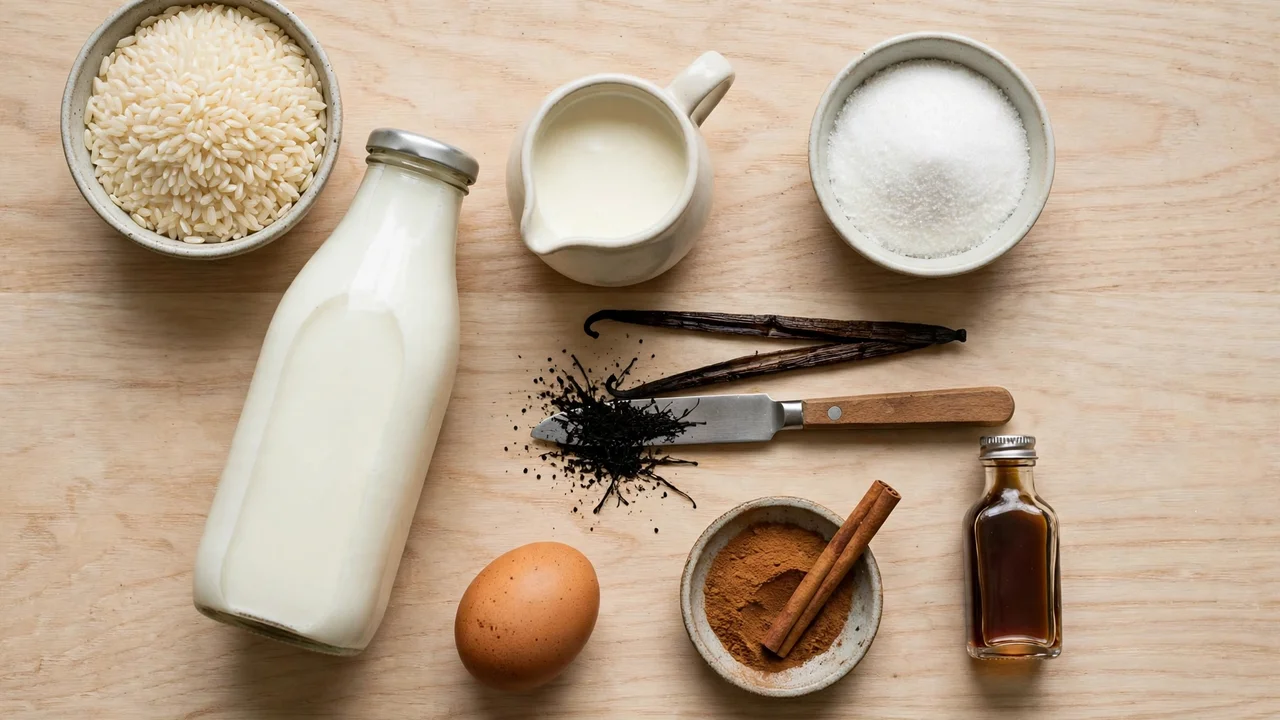
- 3/4 cup (150 g) arborio or other medium-grain white rice
- 1 1/2 cups (360 ml) water
- Pinch of salt
- 4 cups (960 ml) whole milk, plus more as needed
- 1/2 cup (120 ml) heavy cream (or more milk)
- 1/3 cup (65 g) granulated sugar, plus more to taste
- 1 vanilla bean, split lengthwise and seeds scraped (or 2 teaspoons vanilla bean paste)
- 1 teaspoon pure vanilla extract
- Ground cinnamon, for serving
- Optional: 1 egg yolk, for extra richness
Instructions
- Start the rice in water. Rinse the rice briefly under cold water — just a quick swish, not a thorough wash; you want to keep most of its surface starch, because that starch is what will thicken the pudding. Combine the rice, water, and salt in a heavy saucepan and bring to a boil over medium heat. Lower to a gentle simmer, cover, and cook for about 10 minutes, until most of the water is absorbed. This head start means the rice spends less time in the milk, which keeps the milk from reducing into something heavy and scorched-tasting.
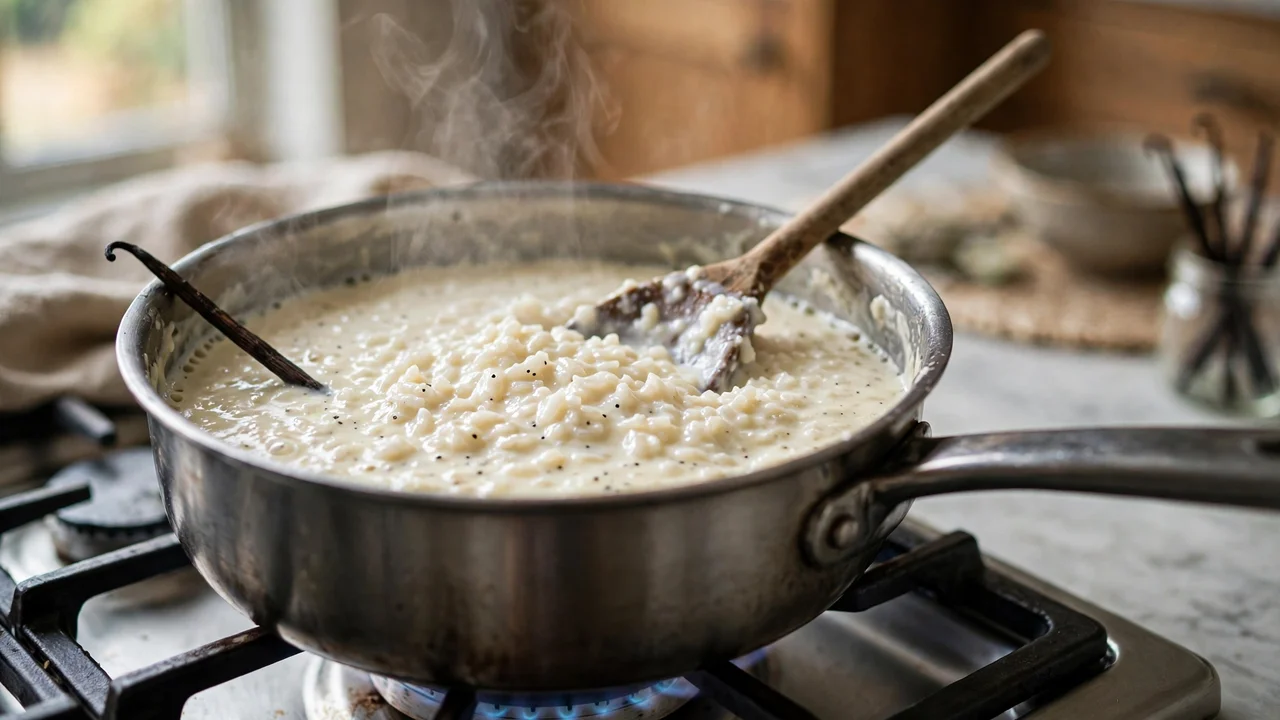
- Add the milk and vanilla bean. Pour in the milk and cream, and add the scraped vanilla seeds along with the empty pod — the pod has plenty of flavor left to give. Stir well, scraping the bottom of the pan.
- Simmer low and slow. Bring the mixture to the barest simmer over medium-low heat, then drop the heat to low. Cook uncovered for 30 to 40 minutes, stirring every few minutes and then more often toward the end, when it thickens and is likelier to catch. Keep it at a lazy bubble, never a boil — boiling milk toughens the rice and risks a scorched layer on the bottom that flavors the whole pot.
- Watch for the right consistency. The pudding is done when the rice grains are completely tender and the mixture looks like a loose porridge — it should slowly mound on a spoon and leave a thick trail when you drag the spoon across the bottom of the pan. It will look looser than you want. Take it off the heat anyway: rice pudding thickens substantially as it cools, and overshooting on the stove is how you end up with a solid block.
- Finish. Fish out the vanilla pod. Stir in the vanilla extract and taste for sweetness, adding another spoonful of sugar if you like. For extra richness, whisk the egg yolk with a spoonful of the hot pudding in a small bowl, then stir it back in and cook 1 minute more over low heat, stirring constantly — it adds a gentle custard quality without turning the pudding into flan.
- Serve warm or chill. For warm pudding, ladle into bowls, dust with cinnamon, and serve within 15 minutes. For chilled, press a piece of plastic wrap directly onto the surface (this prevents a skin), refrigerate at least 4 hours or overnight, and serve cold with more cinnamon and maybe a spoonful of softly whipped cream.
Tips for Success
Rice choice matters more than any other decision. Arborio or another medium-grain rice releases starch generously and gives you that classic creamy body. Long-grain rice stays separate and a little firm, and brown rice takes so long to soften that the milk over-reduces before you get there. Jasmine rice works in a pinch and brings its own light perfume.
Stir like you mean it, but not constantly. Every few minutes is enough for most of the simmer; the stirring releases starch and keeps the bottom clean. In the final 10 minutes, when the pudding thickens, stir more often — that’s when a scorched spot can sneak in.
The skin question. A skin forms when hot pudding sits exposed to air. Some people (my grandmother) considered the skin a delicacy and fought for it. If you’re not in that camp, plastic wrap pressed directly on the surface — or a thin layer of cream poured over the top before chilling — keeps it skin-free.
Too thick after chilling? Too thin off the stove? A chilled pudding that sets firmer than you’d like loosens beautifully with a splash of cold milk stirred in, a spoonful at a time. If yours is still soupy after cooling completely, it was pulled too early; simmer it 5 to 10 minutes more next time and trust the loose look on the stove.
Variations
Chocolate rice pudding. Stir 3 ounces (85 g) of chopped dark chocolate into the hot pudding at the end, off the heat, until melted. Skip the cinnamon or keep it — a pinch gives it a Mexican chocolate lean.
Coconut rice pudding. Replace half the milk with a can of full-fat coconut milk and finish with toasted coconut flakes and diced mango. Use coconut sugar instead of white for a deeper, caramel-like sweetness.
Brûlée top. Spoon chilled pudding into ramekins, sprinkle each with a teaspoon of sugar, and torch or broil until the sugar melts into a crackling amber shell. The contrast of cold pudding and warm glass-like sugar is hard to beat.
Chai-spiced. Simmer a cinnamon stick, 3 crushed cardamom pods, and a slice of fresh ginger in the milk, then strain them out with the vanilla pod. Fall in a bowl.
Baked version. For a firmer, sliceable pudding, pour the mixture (use 3 1/2 cups milk instead of 4) into a buttered baking dish and bake at 325°F (165°C) for about 1 1/2 hours, stirring once halfway, until just set with a gentle wobble.
Storage and Make-Ahead
Fridge: Rice pudding keeps 4 to 5 days refrigerated, covered or with plastic pressed on the surface. It thickens as it sits; loosen with milk when serving.
Reheating: Warm gently on the stovetop over low heat with a splash of milk, stirring, until it’s back to a pourable silkiness. The microwave works too — go in 30-second bursts and stir between them.
Freezing: I don’t recommend it. The rice grains turn grainy and the pudding weeps when thawed. This is a make-it-fresh dessert; fortunately, it takes under an hour.

Make-ahead: Chilled rice pudding is arguably better on day two, when the vanilla has had time to settle into everything. It’s a genuinely good dinner-party dessert for exactly that reason — make it the day before and think about something else.
Frequently Asked Questions
Can I use leftover cooked rice?
Yes, and it’s a fine shortcut. Use about 2 1/2 cups of cooked rice and skip the water step; simmer it in the milk and vanilla for 20 to 25 minutes, until it swells and the pudding thickens. It won’t be quite as creamy as the from-scratch version — cooked rice has less loose starch to give — but a swirl of cream at the end closes most of the gap.
Why did my pudding come out grainy?
Either the rice wasn’t fully tender before you stopped cooking, or the heat was high enough to make the milk proteins seize a little. Keep the simmer gentle, and give it the full time. Graininess from undercooked rice can’t be fixed afterward, so taste a grain before you declare it done.
Can I make it dairy-free?
Yes. Full-fat oat milk is the best swap — it’s naturally a little sweet and thickens decently. Coconut milk works too (see the variation above). Use 4 cups of oat milk and skip the cream, or replace the cream with a dairy-free alternative. Watch the sweetness; plant milks vary.
How do I know when it’s actually done?
Drag your spoon across the bottom of the pan: the trail should fill in slowly, not snap shut and not stay open. Then remember the rule — it thickens a lot as it cools. Loose porridge on the stove becomes proper pudding in the bowl.
Recipe Card
Prep Time: 5 minutes
Cook Time: 45 to 50 minutes
Total Time: About 55 minutes (plus chilling, if serving cold)
Yield: 6 servings
Ingredients (summary): Arborio rice, water, whole milk, cream, sugar, vanilla bean and extract, salt, cinnamon, optional egg yolk.
Instructions (summary): Simmer rice in water 10 minutes. Add milk, cream, and vanilla bean; simmer gently 30 to 40 minutes, stirring often, until the rice is tender and the pudding is a loose porridge. Remove the pod, stir in extract (and tempered yolk, if using). Serve warm with cinnamon, or chill with plastic on the surface for a firmer set.