
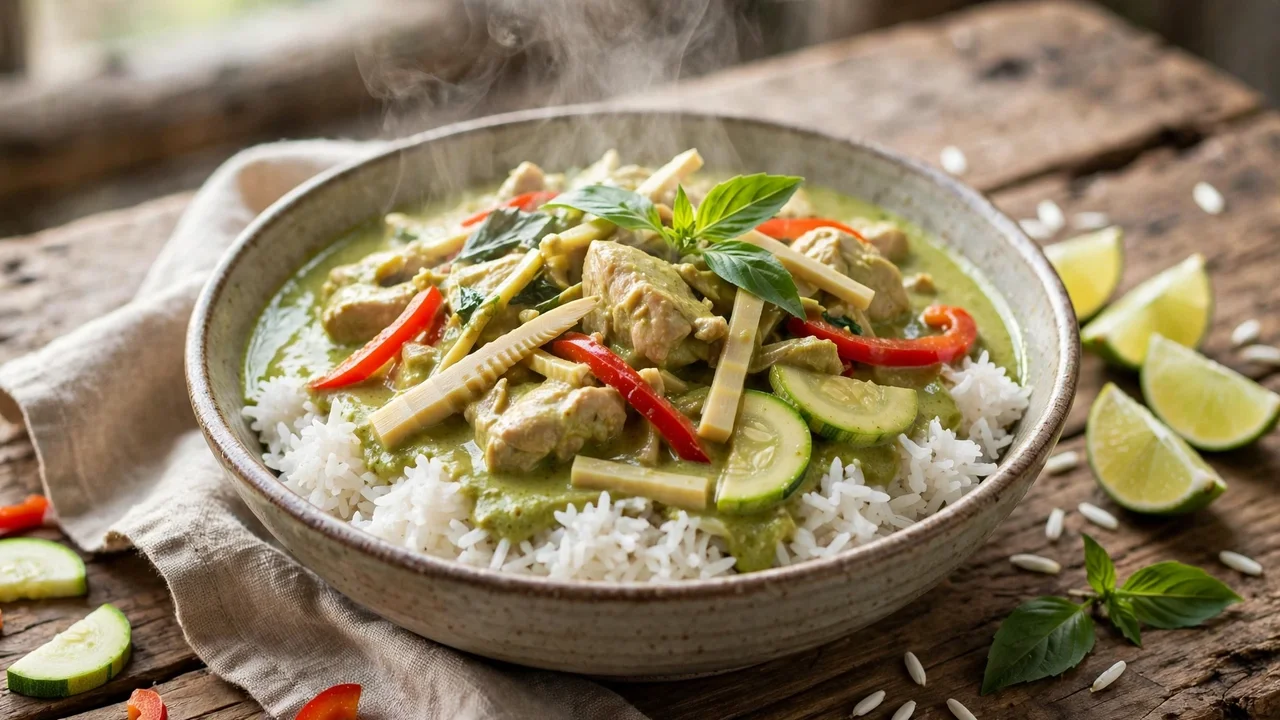
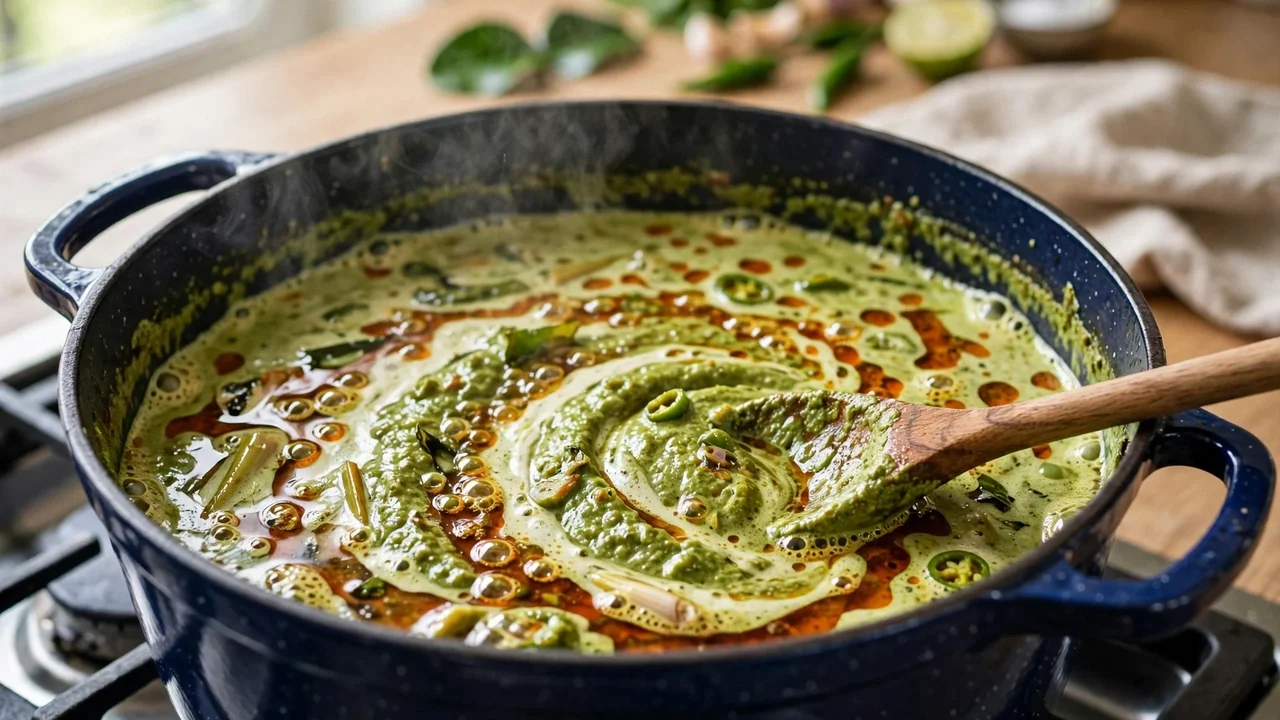
A good Thai green curry is a balance act: hot, salty, a little sweet, deeply aromatic, with the coconut milk rounding off the edges without muting anything. The versions I made when I first tried cooking Thai food at home were pale and timid — all coconut, no punch. The fix turned out to be a technique, not an ingredient: fry the curry paste in the thick top of the coconut milk until the oil separates and the paste smells toasted and intense. That two-minute step is the difference between a curry that tastes like a restaurant’s and one that tastes like a shortcut.
Everything after that step is gentle. The chicken poaches in the sauce rather than searing, which keeps it tender. The vegetables go in near the end so they stay vivid. Fish sauce and a little sugar, adjusted at the table of your own taste, do the final balancing — Thai cooking expects you to taste and correct, and the amounts below are a starting point, not a law.
Serve it over jasmine rice with lime wedges and extra basil. If you like the rhythm of a saucy chicken main with rice, my teriyaki chicken thighs follow the same weeknight logic with a different flavor map.
Why You’ll Love This Recipe
- Restaurant technique, home effort. Frying the paste in coconut cream until the oil splits is the single step that makes homemade green curry taste like the real thing.
- One pot, 35 minutes. The chicken cooks in the sauce, the rice cooks alongside, and dinner is done.
- Adjustable heat. Green curry paste brands vary wildly in heat. The recipe gives you a moderate baseline and tells you exactly how to cool it down or fire it up.
- Vegetables stay bright. Adding the peppers and basil at the end keeps color and texture instead of a uniform soft stew.
Ingredients
For the curry
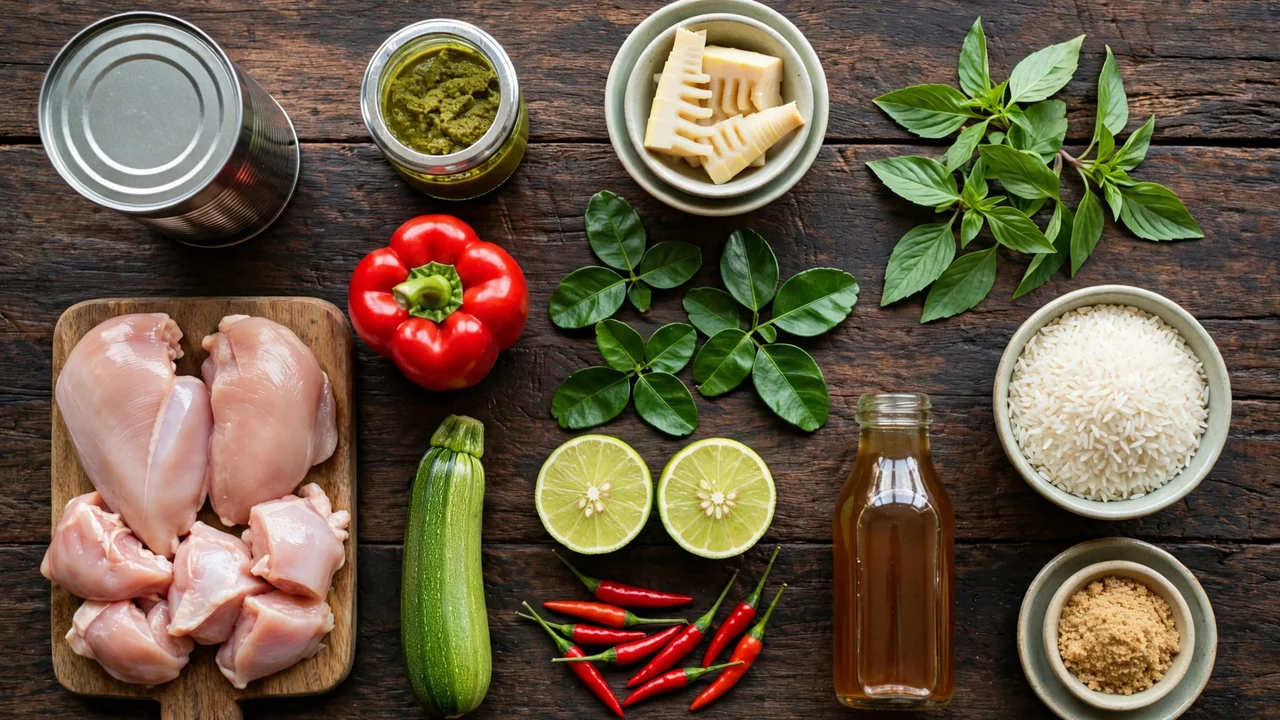
- 1 tablespoon neutral oil (only if your coconut milk has no thick cream on top)
- 3 to 4 tablespoons Thai green curry paste
- 1 can (14 ounces) full-fat coconut milk, unshaken
- 1 pound boneless, skinless chicken thighs or breasts, cut into bite-size pieces
- 3/4 cup low-sodium chicken broth or water
- 1 tablespoon fish sauce, plus more to taste
- 2 teaspoons palm sugar or light brown sugar, plus more to taste
- 1 red bell pepper, sliced into strips
- 1 small zucchini, halved lengthwise and sliced, or a handful of green beans
- 1/2 cup canned bamboo shoots, drained (optional, traditional and good)
- 4 makrut lime leaves, torn (optional, but they add a lot)
- 1 cup Thai basil leaves (or regular basil), loosely packed
- Juice of 1/2 lime, plus wedges for serving
- 1 to 2 fresh Thai chiles, sliced (optional)
For serving
- 1 1/2 cups jasmine rice
- 2 1/4 cups water
- Pinch of salt
Instructions
- Start the rice. Rinse the jasmine rice in a bowl of water, swirling and draining, until the water runs mostly clear — this keeps the grains separate instead of gummy. Combine rice, water, and salt in a pot with a tight lid, bring to a boil, then cover and cook on the lowest heat for 15 minutes. Take it off the heat and let it stand, still covered, while you finish the curry. Fluff with a fork before serving.
- Spoon off the coconut cream. Open the unshaken can of coconut milk and spoon the thick cream from the top into a large pot or Dutch oven — you’ll get about 1/2 cup. Reserve the thin milk below. If your can has no thick layer (some brands homogenize), use the neutral oil plus 1/2 cup of the milk instead.
- Fry the paste. Heat the coconut cream over medium heat until it simmers and looks glossy, then stir in the curry paste. Cook, stirring often, for 2 to 3 minutes, until the paste darkens slightly, smells intensely fragrant, and red-green oil beads on the surface. This step cooks out the raw edge of the paste and builds the base of the whole dish. Do not rush it.
- Build the sauce. Pour in the reserved thin coconut milk and the broth, stirring to combine. Add the fish sauce, sugar, and lime leaves if using. Bring to a gentle simmer — a hard boil can split coconut milk and make the sauce greasy and grainy.
- Cook the chicken. Add the chicken pieces in a single layer and simmer gently for 6 to 8 minutes, until just cooked through. Poaching in the sauce keeps the chicken silky. Don’t let it boil hard.
- Add the vegetables. Stir in the bell pepper, zucchini or green beans, and bamboo shoots. Simmer 3 to 4 minutes more, until the vegetables are tender-crisp and still brightly colored.
- Balance and finish. Take the pot off the heat. Stir in the basil leaves and lime juice, and the sliced chiles if you want more heat. Now taste properly: it should be hot, salty, faintly sweet, and aromatic. Add fish sauce by the teaspoon for salt, sugar by the pinch for sweetness, and lime if it tastes flat. This final adjustment is where the curry becomes yours.
- Serve. Spoon the curry over bowls of jasmine rice, making sure everyone gets plenty of sauce. Pass lime wedges at the table.
Tips for Success
- Full-fat coconut milk, no exceptions. Light coconut milk gives you a thin, watery sauce that no amount of simmering will fix. The fat carries the flavor of the paste.
- Paste brands differ. Some are twice as hot as others. If you’re using a new brand, start with 3 tablespoons, taste after step 4, and add more before the chicken goes in if you want more fire.
- Fish sauce is the salt here. Don’t substitute soy sauce and expect the same result; the fermented depth of fish sauce is what makes the sauce taste Thai. If the smell from the bottle worries you, don’t let it — it mellows completely in the hot sauce.
- Basil goes in off the heat. Basil blackens and loses its perfume if it simmers. Stir it in at the very end and let the residual heat wilt it.
- Slice chicken evenly. Pieces of the same size cook at the same rate. Thighs are more forgiving than breasts; if you use breasts, err on the side of pulling the pot off early, since they keep cooking in the hot sauce.
Variations
- Shrimp green curry. Swap the chicken for 1 pound of peeled shrimp and simmer just 2 to 3 minutes at the end, after the vegetables, so the shrimp stay snappy.
- Vegetarian version. Use tofu or chickpeas, vegetable broth, and a vegan fish sauce or an extra pinch of salt plus a squeeze of lime. Load it with eggplant, peppers, and bamboo shoots.
- Add Thai eggplant. If you can find the small round eggplants, quarter them and add with the chicken — they soak up the sauce beautifully.
- Red or yellow instead. The same method works with red or yellow curry paste; yellow is mildest and loves a potato added to the pot.
Storage and Make-Ahead
Leftover curry keeps for up to 3 days in the fridge, and like most curries, it tastes even better on day two once the flavors settle. The sauce will thicken as it sits; loosen it with a splash of water or broth when reheating gently on the stove. The basil will darken, so add a few fresh leaves when serving leftovers if you have them.
Freeze the curry (without the rice) for up to 2 months. Coconut sauces can separate slightly after thawing — a good whisk over gentle heat brings them back together. Cook rice fresh; leftover rice dries out in the fridge, though day-old rice is perfect for frying up alongside, and a warm piece of homemade garlic naan for scooping is never a bad idea either.
Frequently Asked Questions
My sauce split and looks oily. Can I fix it?
Yes, mostly. A split sauce usually means it boiled too hard. Take it off the heat, whisk in a splash of cold water or broth, and keep it at a bare simmer afterward. A little oil on the surface is actually normal and desirable in Thai cooking — it’s the sign the paste was fried properly.
How spicy is this as written?
With 3 tablespoons of a typical store-bought paste, it’s a solid medium — warming, not punishing. Use 2 tablespoons and skip the fresh chiles for mild, or go to 4 to 5 tablespoons with chiles for genuinely hot.
Can I use chicken breast instead of thighs?
Yes. Slice it thin so it cooks quickly and evenly, and watch it closely — breast meat goes from tender to dry in about a minute of overcooking.
What if I can’t find Thai basil?
Regular sweet basil works and still tastes great. Holy basil is more authentic for some dishes but harder to find; don’t let the basil hunt stop you from making dinner.
Recipe Card
- Prep Time: 15 minutes
- Cook Time: 20 minutes
- Total Time: 35 minutes
- Servings: 4
Ingredients: Green curry paste, full-fat coconut milk, chicken, chicken broth, fish sauce, palm or brown sugar, bell pepper, zucchini, bamboo shoots, lime leaves, Thai basil, lime, jasmine rice.
Instructions summary: Cook jasmine rice. Fry curry paste in the thick coconut cream until the oil separates and it smells toasted. Add the remaining coconut milk, broth, fish sauce, and sugar; simmer gently. Poach the chicken 6–8 minutes, add vegetables for 3–4 minutes, then finish off the heat with basil and lime juice. Taste, adjust salt/sweet/heat, and serve over rice with lime wedges.