
Roasting a whole turkey intimidates people out of proportion to how hard it actually is. The bird is big, the stakes feel high, and there is usually an audience. But the truth is that a great roast turkey comes down to three things: salt it early, butter it generously, and use a thermometer instead of a clock. Get those right and the rest is mostly waiting.
This recipe leans on a dry brine, which is just salt and a little sugar rubbed over the bird a day or two ahead. It seasons the meat all the way through, dries the skin so it crisps properly, and quietly does the work that a bucket of wet brine does, without the bucket. On roasting day, softened butter loaded with sage, thyme, and rosemary goes under and over the skin, so the meat bastes itself as it cooks.
The gravy is built the old way, from the pan drippings, while the turkey rests. Resting is not optional, by the way. It is when the juices settle back into the meat, and it hands you a clean 30-minute window to make the gravy without rushing.
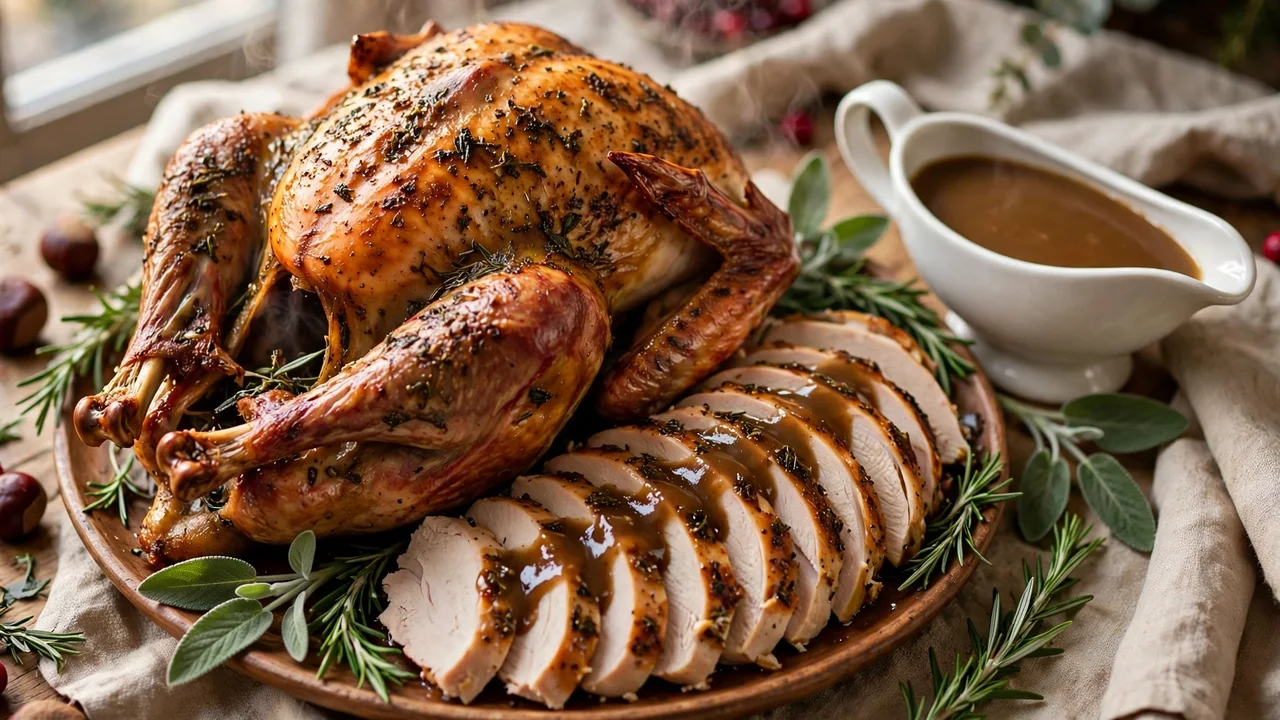

Why You’ll Love This Recipe
- Dry brine, deep flavor. Salt a day ahead means seasoned meat and crackly skin, no sloshing brine bucket in the fridge.
- Herb butter everywhere. Under the skin, over the skin, in the cavity. Every bite tastes like the holidays.
- Thermometer-driven. Clear target temperatures take the guesswork (and the dry breast) out of roasting.
- Gravy from real drippings. A simple roux plus pan juices and stock makes a gravy that tastes like the turkey, because it is.
- Scales easily. The timing and ratios work for birds from 10 to 18 pounds.
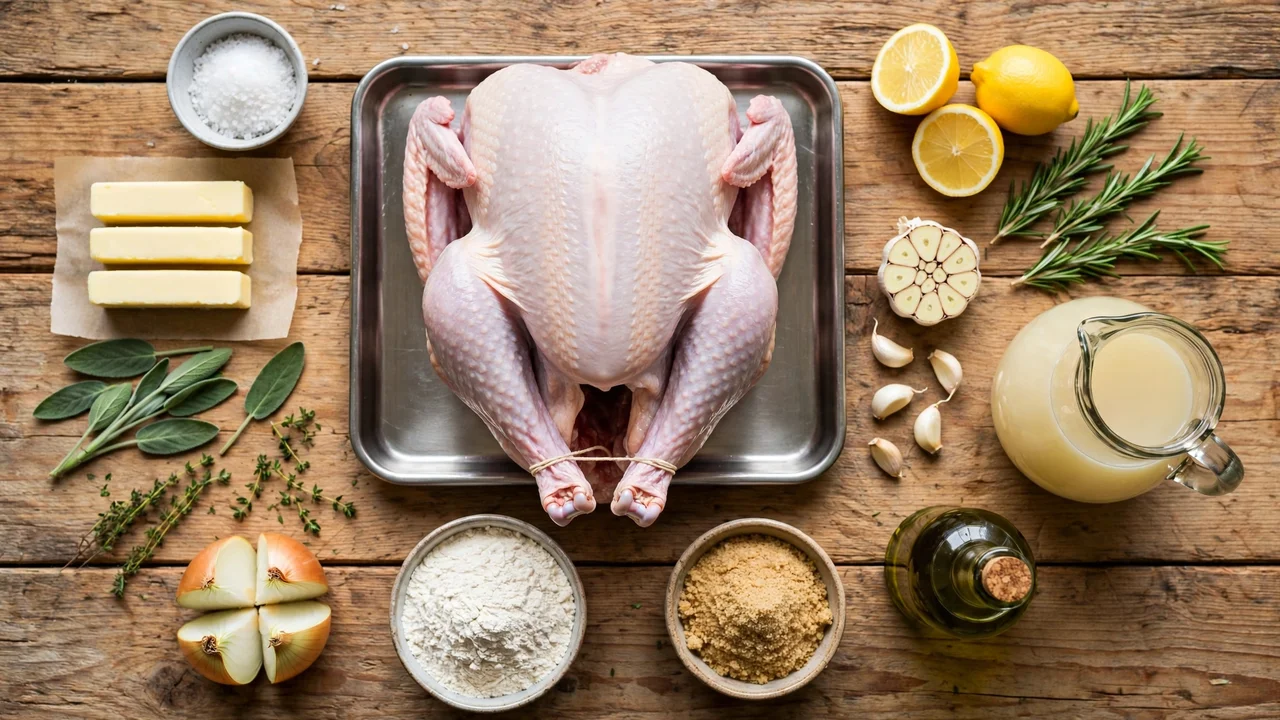
Ingredients
For the Dry Brine
- 1 whole turkey, 12 to 14 pounds, thawed, giblets and neck reserved
- 1/2 cup kosher salt (use 1 tablespoon per 4 pounds of turkey if your bird differs)
- 1 tablespoon light brown sugar
- 1 teaspoon black pepper
For the Herb Butter
- 3/4 cup (1 1/2 sticks) unsalted butter, softened
- 2 tablespoons finely chopped fresh sage
- 1 tablespoon finely chopped fresh thyme leaves
- 1 tablespoon finely chopped fresh rosemary
- 3 garlic cloves, grated or finely minced
- 1 teaspoon lemon zest
- 1/2 teaspoon black pepper
For the Cavity and Pan
- 1 lemon, halved
- 1 onion, quartered
- 1 head of garlic, halved crosswise
- A handful of fresh herb sprigs (sage, thyme, rosemary)
- 2 cups low-sodium chicken or turkey stock, plus more as needed
- 2 tablespoons olive oil
For the Gravy
- Pan drippings from the roast
- 1/3 cup all-purpose flour (adjust based on fat, see instructions)
- 3 to 4 cups low-sodium chicken or turkey stock, warmed
- Salt and black pepper to taste
- 1 teaspoon apple cider vinegar or a squeeze of lemon (optional, to brighten)
Instructions
- Dry brine the turkey (1 to 2 days ahead). Stir the salt, brown sugar, and pepper together. Pat the turkey completely dry and rub the mixture all over, including inside the cavity and under the skin where it is loose. Set the bird breast-up on a rack in a roasting pan or sheet pan, and refrigerate uncovered for 24 to 48 hours. The skin will look dry and slightly translucent; that is exactly what you want.
- Bring to room temperature. Take the turkey out of the fridge 1 hour before roasting. This takes the chill off so it cooks evenly.
- Make the herb butter. Mash the softened butter with the chopped herbs, garlic, lemon zest, and pepper until fully combined.
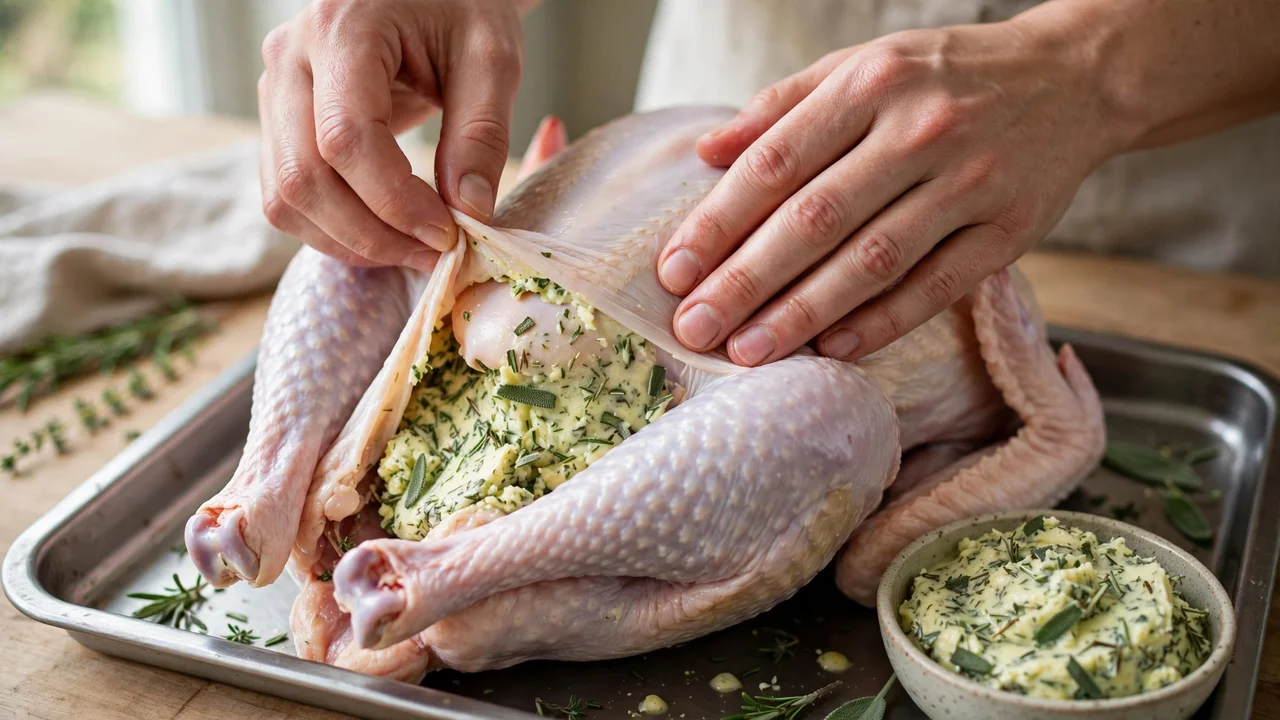
- Butter the bird. Gently loosen the skin over the breast and thighs with your fingers. Push about two-thirds of the herb butter under the skin and massage it around from the outside so it coats the meat evenly. Rub the remaining butter all over the outside of the bird.
- Fill the cavity. Stuff the cavity with the lemon halves, onion quarters, halved garlic head, and herb sprigs. Tie the legs together with kitchen twine and tuck the wing tips underneath the bird.
- Set up the pan. Scatter any leftover onion in the roasting pan, set the turkey on a rack above it, and pour 2 cups of stock into the pan. Drizzle the bird with olive oil.
- Roast. Roast at 425°F (220°C) for 30 minutes to set the skin, then reduce the heat to 325°F (165°C) and continue roasting. Plan on roughly 13 minutes per pound at the lower temperature. Rotate the pan once halfway through. If the breast skin browns too deeply, tent it loosely with foil.
- Check the temperature. The turkey is done when a thermometer in the thickest part of the thigh reads 165°F (74°C) and the breast reads at least 160°F (71°C); it will coast up as it rests. Start checking 30 minutes before your estimate.
- Rest. Transfer the turkey to a cutting board, tent loosely with foil, and rest for at least 30 minutes, up to 45. Do not skip this. Pour all the pan juices through a strainer into a fat separator or measuring cup and save them for the gravy.
- Make the gravy. Let the drippings settle so the fat rises. Spoon off 1/3 cup of the fat into a saucepan (if you have less, make it up with butter) and set the remaining juices aside. Heat the fat over medium heat, whisk in the flour, and cook the roux for 2 minutes, until it smells toasty and turns light golden. Slowly whisk in the reserved juices and 3 cups of warm stock. Simmer, whisking, for 3 to 5 minutes until it thickens to a pourable consistency. Add more stock if it gets too thick. Season with salt and pepper, and stir in the vinegar or lemon if it tastes flat.
- Carve and serve. Carve the turkey, arrange on a warm platter, and spoon a little gravy over the top. Serve the rest in a warm gravy boat.
Set the platter down next to a basket of soft, buttery dinner rolls and a dish of cornbread with honey butter and you have the backbone of the whole meal handled.
Tips for Success
- A probe thermometer is your best friend. Leave-in probes let you watch the temperature without opening the oven again and again.
- Dry skin equals crisp skin. The uncovered rest in the fridge after brining is what dries the surface. Do not cover the bird.
- Truss simply. Legs tied and wings tucked keep the extremities from overcooking and make the bird easier to move.
- Warm the platter. Hot slices on a cold platter cool fast. Run the platter under hot water or park it in the cooling oven.
- Gravy too thin or too thick? Simmer longer to reduce, or whisk in warm stock a splash at a time to loosen.
Variations
- Citrus herb: Swap the lemon zest for orange zest and add orange halves to the cavity for a brighter profile.
- Maple butter: Replace the brown sugar in the brine with maple sugar and stir 1 tablespoon of maple syrup into the herb butter.
- Spatchcocked turkey: Remove the backbone and flatten the bird; it roasts in roughly half the time and cooks very evenly. Brine and butter exactly the same way.
- Smoked paprika rub: Add 2 teaspoons of smoked paprika and 1 teaspoon of onion powder to the brine for a deeper, campfire note.
Storage and Make-Ahead
Brining: The turkey can sit in its dry brine for up to 48 hours. Longer than that and the texture starts to cure like ham.
Herb butter: Make it up to 5 days ahead and refrigerate, or freeze for a month. Soften before using.
Leftovers: Refrigerate carved turkey in a little stock or gravy to keep it moist, up to 4 days. Freeze sliced meat for up to 3 months.
Gravy: Refrigerate for up to 4 days. It will gel when cold; reheat gently and whisk, adding stock to restore the consistency.
Frequently Asked Questions
My turkey is still partially frozen. What now?
Submerge it, still wrapped, in cold water, changing the water every 30 minutes. Plan on about 30 minutes per pound. Never thaw a turkey on the counter.
Do I rinse off the dry brine?
No. Shake off any loose excess, but leave the salt on. Rinsing re-wets the skin you worked to dry.
Can I stuff the turkey with dressing?
It is safer and more reliable to bake dressing separately and aromatics in the cavity instead. Stuffing slows cooking and invites uneven temperatures.
How much turkey per person?
Plan on 1 1/4 to 1 1/2 pounds of whole turkey per adult if you want leftovers, which you do.
Recipe Card
Prep Time: 25 minutes, plus 24 to 48 hours brining
Cook Time: About 3 hours for a 12 to 14 pound bird
Total Time: About 3 1/2 hours, plus brining and resting
Servings: 10 to 12
A dry-brined whole turkey coated inside and out with sage, thyme, and rosemary butter, roasted until the skin is deep golden and crisp, and served with a silky gravy made from its own pan drippings.