

A Tray of Potstickers Is Never Enough
Every time I make potstickers, I make what I think is a sensible amount, and every time I am wrong. They come off the skillet in batches of ten, and somehow half of each batch gets eaten standing at the stove, dipped quickly, still too hot, while the next round crisps. This recipe makes about 40, which experience has taught me is closer to the truth for four people with appetites and opinions.
The good news is that nothing here is genuinely difficult. The filling is a five-minute mix. Store-bought wrappers are excellent and save you an afternoon. The pleating looks fussy but is really just three or four little folds pressed shut — and even the ugly ones, the ones that lean and slouch, fry up crisp-bottomed and delicious. What actually matters is the squeeze: cabbage holds a surprising amount of water, and skipping the step where you salt and wring it out is how fillings turn soupy and wrappers tear.

Freeze a tray of these raw and you’ve given your future self a very good evening. And if pork dumplings start a craving, my garlic herb pork tenderloin is the other pork dinner in constant rotation here, while the teriyaki chicken thighs pair beautifully with a batch of potstickers as a starter.
Why You’ll Love This Recipe
- Crisp bottoms, tender tops. The fry-steam-fry method gives you the golden, crunchy base and the soft steamed wrapper in one pan.
- Freezer gold. Potstickers freeze raw and cook straight from frozen. A double batch now is two easy dinners later.
- Store-bought wrappers, zero shame. They’re consistent, sturdy, and let this stay a weeknight project.
- A sauce worth doubling. Four ingredients, thirty seconds, and you’ll want it on rice, eggs, and everything else.
Ingredients
For the filling
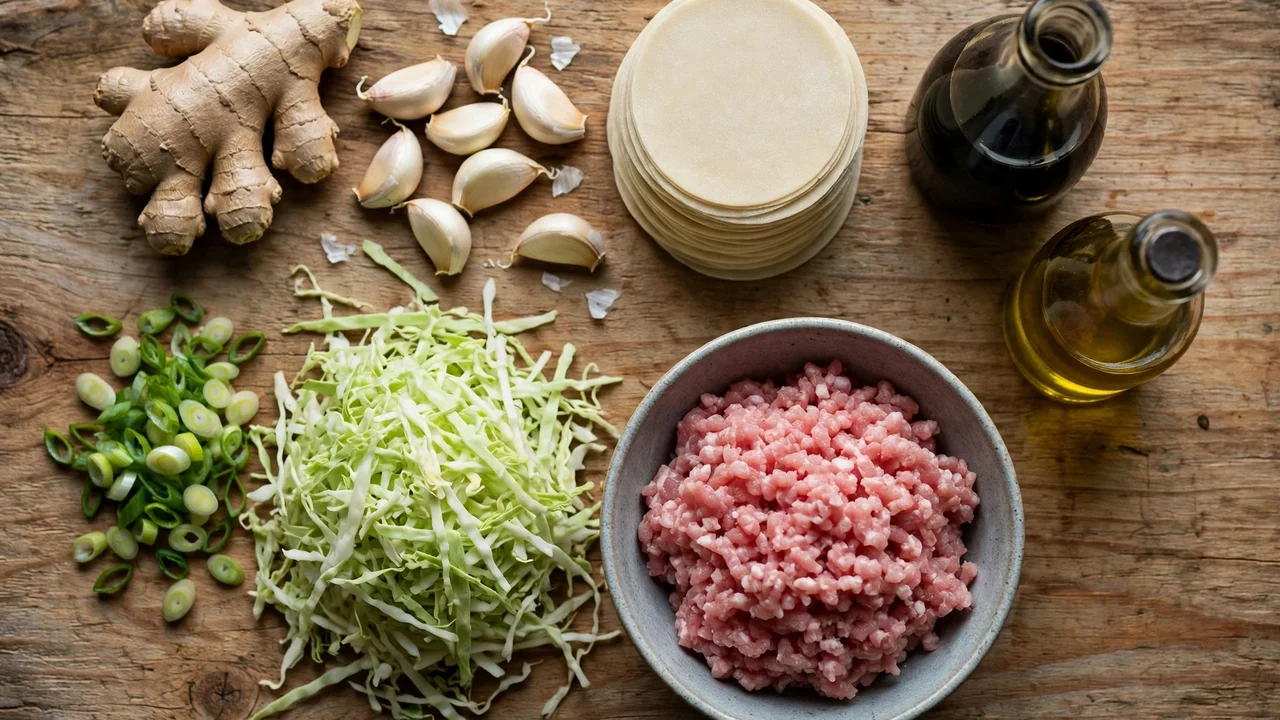
- 1 pound (450 g) ground pork (not lean — around 80/20 is ideal)
- 3 cups (about 210 g) finely shredded napa or green cabbage
- 1 teaspoon kosher salt, plus 1/2 teaspoon for the filling
- 3 scallions, finely sliced
- 1 tablespoon grated fresh ginger
- 2 garlic cloves, grated or minced
- 1 tablespoon soy sauce
- 1 tablespoon Shaoxing wine or dry sherry (optional)
- 2 teaspoons toasted sesame oil
- 1/2 teaspoon ground white or black pepper
For assembly and cooking
- About 40 round gyoza or potsticker wrappers
- Small bowl of water, for sealing
- 2 tablespoons neutral oil, per batch
- 1/3 cup (80 ml) water, per batch
- 1 teaspoon toasted sesame oil, per batch (optional finish)
For the dipping sauce
- 3 tablespoons soy sauce
- 1 1/2 tablespoons rice vinegar (or Chinkiang black vinegar)
- 1 teaspoon sugar
- 1 teaspoon chili oil or toasted sesame oil
- 1 scallion, finely sliced (optional)
Instructions
- Salt and squeeze the cabbage. Toss the shredded cabbage with 1 teaspoon of salt in a colander and let it sit for 15 minutes. The salt pulls out a startling amount of water. Then squeeze the cabbage hard, a handful at a time — really wring it — or bundle it in a clean kitchen towel and twist. You want it noticeably dry and reduced by about half. This is the step that keeps your filling juicy instead of watery.
- Mix the filling. In a large bowl, combine the pork, squeezed cabbage, scallions, ginger, garlic, soy sauce, wine if using, sesame oil, the remaining 1/2 teaspoon salt, and the pepper. Stir in one direction with chopsticks or a spoon for about a minute, until the mixture turns pale, sticky, and cohesive. Mixing in one direction develops the proteins so the filling holds together in a bouncy, sausage-like bite instead of crumbling.
- Set up your station. Line a baking sheet with parchment. Keep the wrappers under a barely damp towel so they don’t dry out and crack. Bowl of water, filling, tray — in that order.
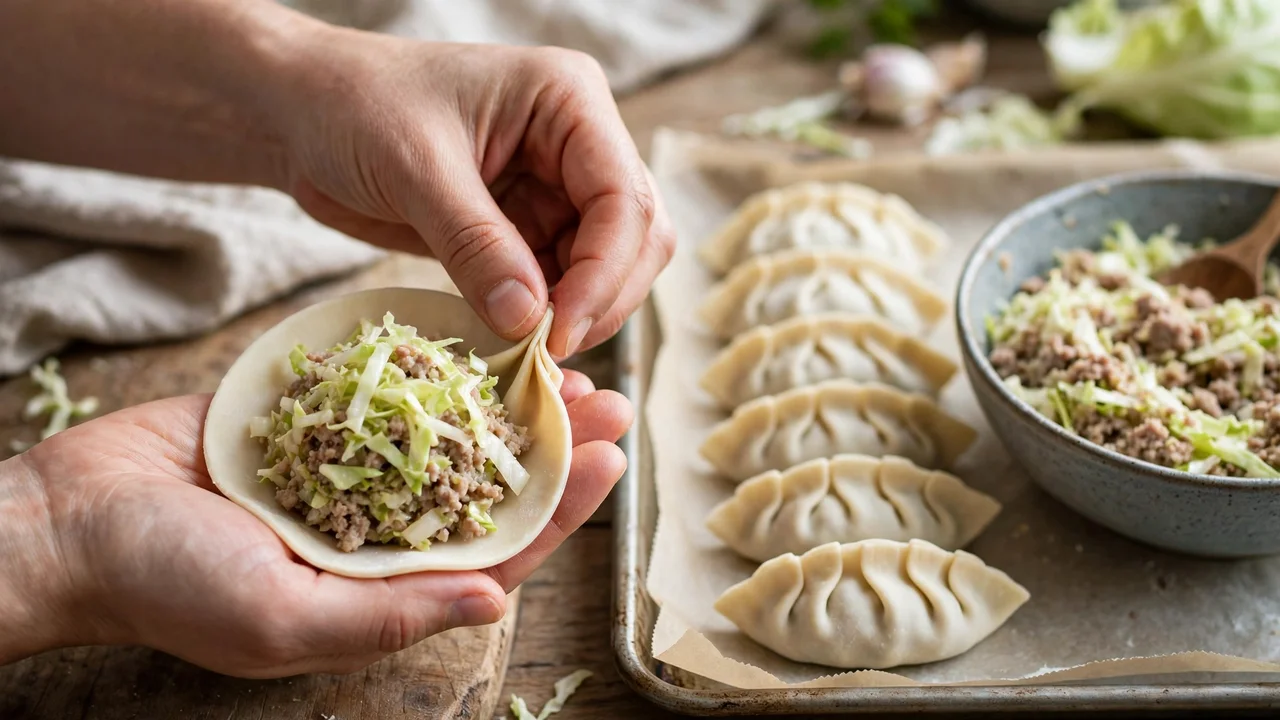
- Fill and pleat. Hold a wrapper in your palm and put about 2 teaspoons of filling in the center — resist overfilling, which is the main cause of burst dumplings. Wet the edge of the wrapper with a fingertip of water. Fold it in half over the filling. Starting at one corner, make 3 or 4 small pleats along the front edge, pressing each pleat firmly against the flat back edge to seal. Set it on the tray and press down gently so it sits flat — that flat bottom is what crisps. No pleats? A simple half-moon pressed shut with a fork works fine and tastes identical.
- Mix the sauce. Stir all the sauce ingredients together and set aside. Tasting it now and adjusting — more vinegar for brightness, more chili oil for heat — is time well spent.
- Fry. Heat a large nonstick or cast-iron skillet with a tight lid over medium-high heat. Add 2 tablespoons of neutral oil and swirl. Arrange about 10 to 12 potstickers in the pan, flat side down, close but not touching. Fry undisturbed for 2 to 3 minutes, until the bottoms are deep golden brown. Check one — the color should be unmistakable.
- Steam. Holding the lid ready, pour in 1/3 cup of water and cover immediately — it will sputter and steam aggressively. Cook covered for 3 to 4 minutes, until the wrappers turn translucent and slightly glossy and the pork is cooked through.
- Crisp again and serve. Take the lid off and let the remaining water cook away, 1 to 2 minutes, until the bottoms crisp back up. Swirl in the teaspoon of sesame oil if you like. Invert the pan over a plate if you’re feeling confident, or lift them out with a spatula. Serve bottoms-up so they stay crisp, with the sauce alongside. Repeat with the remaining batches, wiping the pan and starting fresh with oil each time.
Tips for Success
The squeeze is not optional. I said it above and I’ll say it again here: unsqueezed cabbage releases its water inside the wrapper as it cooks, and you get steamed-in-soup dumplings that tear when you lift them. Dry cabbage, sticky filling, clean pleats — that’s the whole game.
Seal with water, press with conviction. A dry spot on the seam is a leak during steaming. Run your wet fingertip around the full half-circle, and after pleating, run your fingers along the seam once more to be sure it’s closed.
Nonstick makes learning easier. Cast iron works and gives a superb crust once you know your pan, but for your first few batches, a good nonstick skillet releases the potstickers without a fight. Either way, don’t move them during the first fry — the crust needs time to form and let go on its own.
Cooking from frozen. Don’t thaw. Fry the frozen potstickers as written, then steam with 1/2 cup of water for 5 to 6 minutes instead. They take an extra couple of minutes and come out indistinguishable from fresh.
Variations
Shrimp and pork. Replace half the pork with finely chopped raw shrimp and add a pinch more ginger. The snap of shrimp against the rich pork is the classic Cantonese combination for a reason.
Chicken potstickers. Ground chicken thigh works in place of pork; add an extra teaspoon of sesame oil since chicken runs leaner. Ground turkey is fine too, for the same reason.
Vegetarian. Swap the pork for a mix of finely chopped mushrooms (cooked down until dry), firm tofu crumbled small, and the same cabbage and aromatics, plus a teaspoon of miso for depth. The squeezing rule applies to mushrooms too — cook their water off first.
Spicy chili-crisp finish. Skip the sesame swirl at the end and spoon chili crisp over the plated potstickers instead, with an extra splash of black vinegar in the sauce.
Storage and Make-Ahead
Freezing (best make-ahead): Freeze the pleated, uncooked potstickers in a single layer on the parchment-lined tray until solid, about 1 hour, then transfer to a freezer bag for up to 3 months. Cook straight from frozen as described in the tips.
Fridge, cooked: Leftovers keep 3 days refrigerated. Reheat in a lightly oiled skillet over medium heat for 2 to 3 minutes to bring the crisp bottoms back; the microwave makes them soft and a little sad.
Make-ahead filling: The filling (with the cabbage already squeezed) keeps a day in the fridge, so you can mix it in the morning and pleat in the evening. Don’t assemble the dumplings ahead and refrigerate them raw for long, though — the wrappers slowly absorb moisture from the filling and go gummy. Freeze assembled ones instead.
Frequently Asked Questions
Why do my potstickers stick to the pan and tear?
Usually the crust hadn’t finished forming, or the pan wasn’t hot enough when they went in. Give them the full undisturbed fry, make sure the water fully evaporates after steaming, and wait for the bottoms to crisp and release. A thin flexible spatula, worked under one edge first, helps.
Can I bake or air-fry them instead?
You can, but you lose the signature contrast — baked potstickers come out evenly crisp, more like little pastries. If you want to try: brush with oil and air-fry at 375°F (190°C) for 8 to 10 minutes, flipping once. Good, just a different dish.
My wrappers keep splitting at the pleats.
They’re drying out, or they’re overfilled. Keep the stack under a damp towel, work with a few at a time, and use a level 2 teaspoons of filling. If a wrapper cracks as you fold it, set it aside — a cracked wrapper will burst in the pan no matter what.
What’s the difference between potstickers and gyoza?
They’re close cousins. Gyoza are the Japanese descendant of Chinese jiaozi, usually with thinner wrappers, a finer filling texture, and more garlic. This recipe sits happily between the two and works with either wrapper you can find.
Recipe Card
Prep Time: 45 minutes (including pleating)
Cook Time: 8 to 10 minutes per batch
Total Time: About 1 hour 15 minutes
Yield: About 40 potstickers (4 servings as a main, 8 as a starter)
Ingredients (summary): Ground pork, cabbage, scallions, ginger, garlic, soy sauce, sesame oil, gyoza wrappers; sauce of soy sauce, rice vinegar, sugar, and chili oil.
Instructions (summary): Salt and squeeze the cabbage dry; mix the filling in one direction until sticky. Fill wrappers with 2 teaspoons each and pleat to seal. Fry in oil until the bottoms are deep golden, add water and steam covered 3 to 4 minutes, then uncover and crisp again. Serve bottoms-up with the dipping sauce.