
Crusty Ciabatta Bread (High-Hydration)
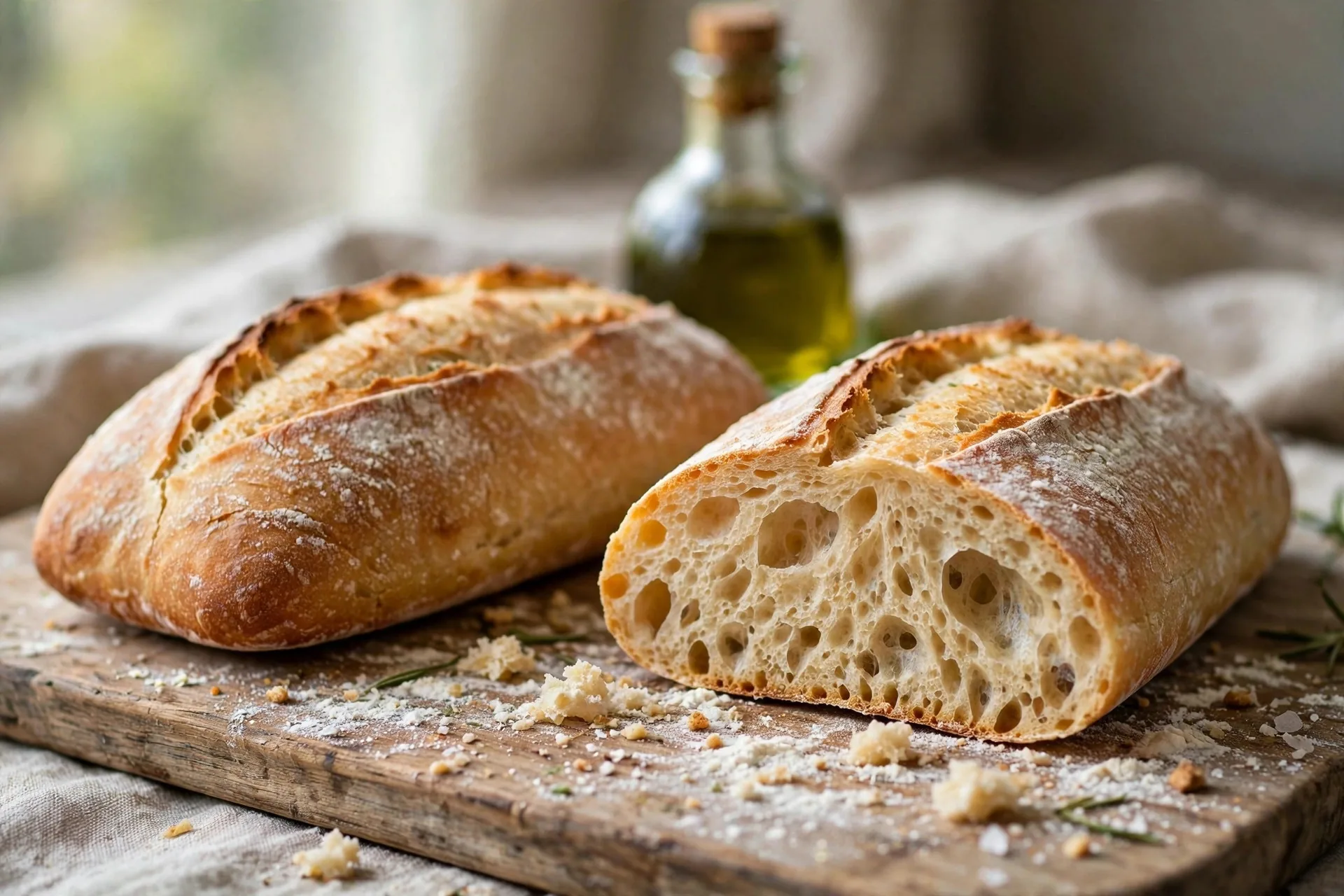
Ciabatta is the bread that made me stop being afraid of wet dough. The first time I mixed this recipe, I was convinced I’d made a mistake — the dough was more like thick porridge than anything I’d ever shaped. But that slack, sticky, 75%-hydration dough is exactly the point. All that water turns to steam in a screaming-hot oven, and the steam is what blows those gorgeous, irregular holes through the crumb.
The overnight biga — a simple pre-ferment of flour, water, and a pinch of yeast — does the heavy flavor lifting while you sleep. Twelve hours of slow fermentation builds the complex, slightly tangy taste that makes ciabatta unmistakable. It’s the difference between bread that tastes like flour and bread that tastes like bread.

Fair warning: this is a two-day project, but almost all of that time is hands-off. Your actual work is about 30 minutes of gentle folding and shaping. And when you pull those crackling, golden loaves out of the oven and hear the crust sing as it cools — that faint crackling sound bakers call “the song of bread” — you’ll understand why it’s worth it.
Why You’ll Love This Recipe
- Authentic open crumb — high hydration plus gentle handling gives you those big, irregular holes.
- Deep flavor from the biga — an overnight pre-ferment builds complexity no shortcut can match.
- Crackling crust — steam-baking at 475°F delivers a shattering, golden crust.
- Mostly hands-off — 30 minutes of active work spread across two days.
- Versatile — perfect for sandwiches, bruschetta, garlic bread, and sopping up olive oil.
Ingredients
For the biga (night before)
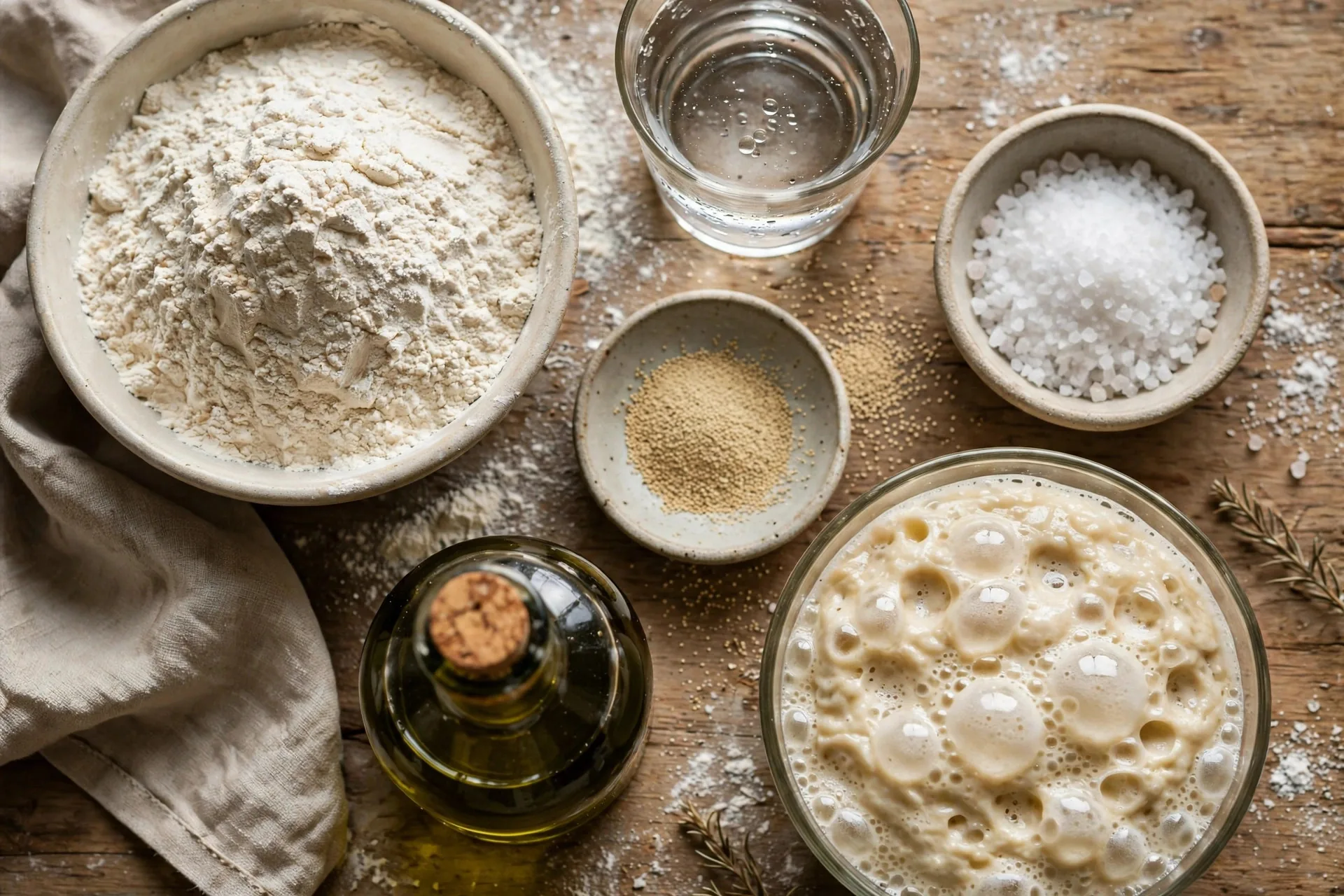
- 1 cup (125g) bread flour
- ½ cup (120ml) water, at room temperature
- ⅛ teaspoon instant yeast
For the final dough
- All of the biga (above)
- 3 cups (375g) bread flour
- 1¾ cups (420ml) water, at room temperature
- 2 teaspoons (10g) fine sea salt
- 1 teaspoon (3.5g) instant yeast
- 2 tablespoons (30ml) extra-virgin olive oil, plus more for the bowl
Instructions
- Make the biga (night before). In a medium bowl, stir the flour, water, and yeast together until no dry flour remains. It’ll be a stiff, shaggy mass — that’s fine. Cover tightly and leave at room temperature for 12–16 hours. It’s ready when it’s domed, bubbly, and just beginning to sink back in the center. It should smell pleasantly yeasty and a little tangy, like yogurt.
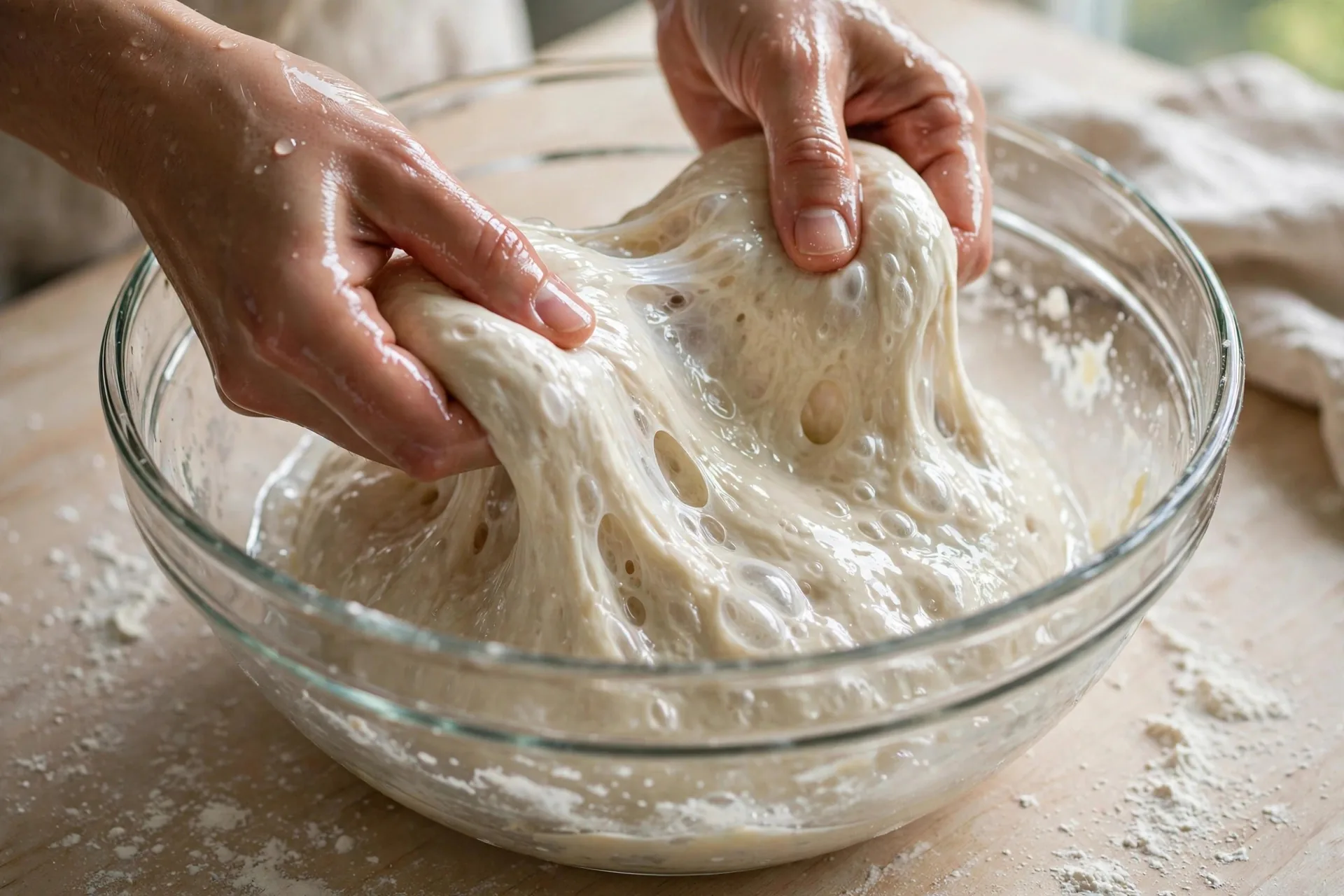
- Mix the final dough. In a large bowl, combine the biga, bread flour, water, salt, yeast, and olive oil. Mix with a wooden spoon or wet hands until a very wet, shaggy dough forms. It will look alarmingly loose — resist the urge to add flour. High hydration is the whole game here.
- Bulk ferment with folds. Cover and let rise at room temperature for 2 hours. Every 30 minutes, perform a set of gentle stretch-and-folds: with wet hands, grab one edge of the dough, stretch it up, and fold it over the center; rotate the bowl and repeat on all four sides. (A coil fold — lifting the dough from the middle and letting the ends tuck under — works even better for wet dough.) Four sets total. You’ll feel the dough gradually gain strength and structure while staying soft and jiggly.
- Divide and shape. Heavily flour your work surface — more than you think you need. Turn the dough out and, using floured hands and a bench scraper, gently divide it into 2 equal pieces. With minimal handling (every touch deflates precious bubbles), coax each piece into a rough rectangle about 9×5 inches — the classic ciabatta “slipper” shape. Flour the tops lightly and let them rest, covered, for 20 minutes. This is called bench rest; it relaxes the dough so it doesn’t spring back in the oven.
- Preheat hard. While the loaves rest, place a baking stone or heavy inverted sheet pan in the middle of the oven and a rimmed metal pan on the lower rack. Preheat to 475°F (245°C) for at least 45 minutes. Ciabatta needs serious, stored-up heat.
- Bake with steam. Slide each loaf onto a piece of parchment, then onto the hot stone (a peel or flat baking sheet makes a good shuttle). Pour 1 cup of boiling water into the lower pan — stand back, it will whoosh — and shut the door fast. Bake 20–25 minutes, until deeply golden brown all over. The loaves are done when they sound hollow when tapped on the bottom and the crust is firm and crackled.
- Cool completely. Transfer to a wire rack and cool for at least 1 hour before slicing. I know the smell is torture. But cutting hot ciabatta gives you a gummy, compressed crumb — the interior is still setting. Wait it out; it’s worth it.
Tips & Variations
- Don’t add flour to the dough. Ever. Flour your hands, flour the counter, flour the bench scraper — but never the dough itself. That wetness becomes your open crumb.
- Handle like it’s fragile, because it is. Every bubble you preserve in shaping is a hole in your finished crumb. Gentle, confident movements.
- No baking stone? A heavy inverted sheet pan preheated for 45 minutes works nearly as well. A pizza steel is even better.
- Rosemary ciabatta: fold 2 tablespoons of chopped fresh rosemary into the dough during the second set of folds.
- Olive ciabatta: fold in ¾ cup (100g) of chopped Kalamata olives during the last set of folds.
- If artisan-style loaves are your thing, you’ll also love our outdoor boys bread — and for a softer everyday loaf, try our gipfeli recipe.
Storage
Ciabatta is at its peak the day it’s baked, when the crust crackles. Store cut-side down on a cutting board or in a paper bag for up to 2 days — never plastic, which turns the crust leathery. To refresh day-old ciabatta, spritz lightly with water and bake at 375°F (190°C) for 8–10 minutes. For longer storage, slice and freeze up to 3 months; toast directly from frozen. Stale ciabatta makes phenomenal croutons, panzanella, and ribollita.
FAQ
My dough is impossibly sticky. Did I do something wrong?
No — that’s correct ciabatta dough. At around 75% hydration it will stick to dry hands and unfloured surfaces. The solution is wet hands and a floured counter, never more flour in the dough. Trust the process.
Why don’t I have big holes in my crumb?
Three likely causes: the dough was under-hydrated (measure your water and flour by weight), it was over-handled during shaping (deflating the bubbles), or the oven wasn’t hot enough. A full 45-minute preheat at 475°F (245°C) is essential.
Can I skip the biga?
You can make a direct-dough ciabatta in one day, but you’ll lose the deep, complex flavor the overnight ferment provides. If you must skip it, add an extra 2 hours to the bulk ferment for at least some flavor development.
Can I bake this in a Dutch oven instead?
It’s tricky — ciabatta’s flat shape doesn’t suit a deep pot well. The baking stone + steam pan method gives better results. If a Dutch oven is all you have, shape smaller rolls rather than full loaves.
Recipe Card
- Prep time: 30 minutes (+ overnight biga + 2h ferment)
- Cook time: 25 minutes
- Total time: 14 hours (mostly hands-off)
- Servings: 2 loaves (about 12 servings)
- Calories: ~180 kcal per serving
Crackling crust, custardy open crumb, and flavor that took all night to build — this is ciabatta worth planning ahead for.