
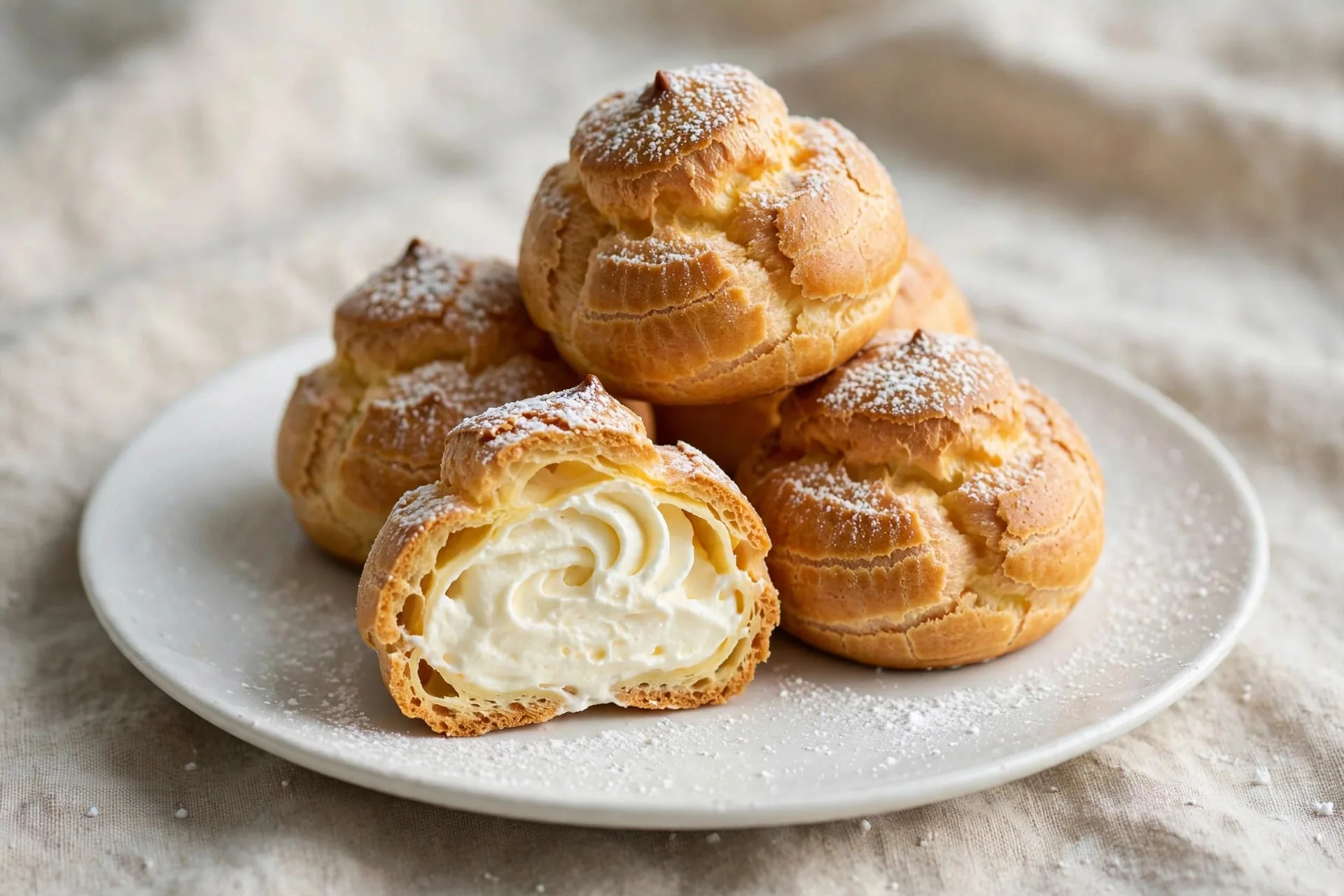
Classic Cream Puffs (Profiteroles)
Cream puffs look like the kind of thing that requires a pastry degree and a French accent, but here’s the open secret: pâte à choux is one of the easiest “fancy” doughs in all of baking. It’s just water, milk, butter, flour, and eggs cooked on the stovetop — no yeast, no rolling, no laminating. The magic happens in the oven, where the high moisture content turns to steam and puffs the dough into hollow, golden shells.
The difference between cream puffs and profiteroles is just the filling and finish: whipped cream and powdered sugar gives you cream puffs; ice cream and warm chocolate sauce makes profiteroles. Same shell, two desserts — you get both here.
One warning: don’t open the oven door. Choux needs sustained heat to set its structure, and cold air mid-bake will deflate your puffs. Trust the process and peek through the glass — you’ll be rewarded.
Why You’ll Love This Recipe
- Foolproof choux method — the panade-and-eggs technique explained step by step, with visual cues at every stage.
- Two desserts in one — make cream puffs today, profiteroles tomorrow, from the same batch of shells.
- No special equipment required — a spoon works fine if you don’t own a piping bag.
- Make-ahead shells — baked puffs freeze perfectly for up to a month.
- Impressive but simple — 5 pantry ingredients for the dough, and they look straight from a pâtisserie.
Ingredients
For the pâte à choux
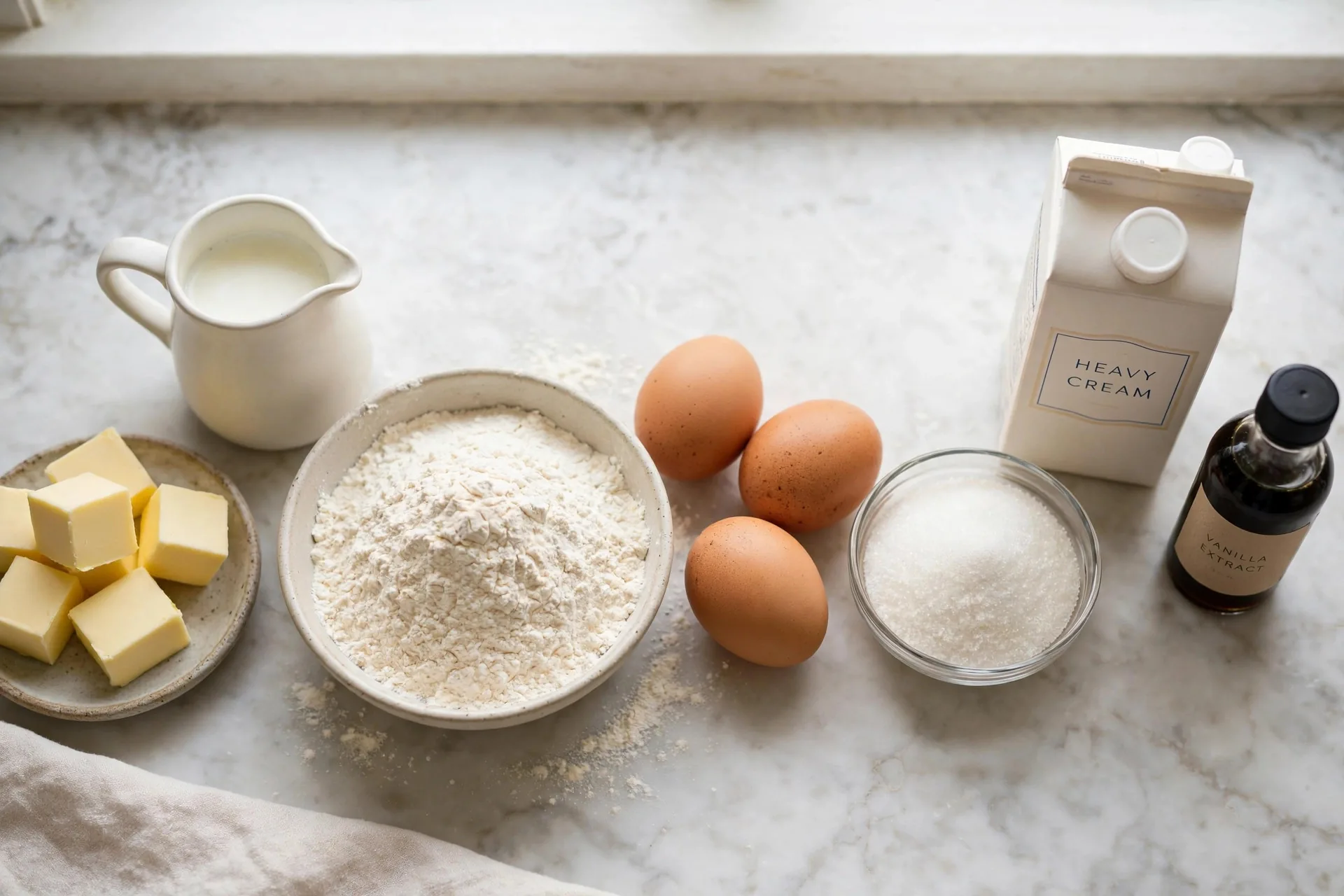
- ½ cup (120ml) water
- ½ cup (120ml) whole milk
- ½ cup (113g) unsalted butter, cut into pieces
- 1 tablespoon (12g) granulated sugar
- ½ teaspoon fine sea salt
- 1 cup (125g) all-purpose flour
- 4 large eggs, at room temperature
For the vanilla whipped cream filling
- 1½ cups (360ml) heavy whipping cream, cold
- 3 tablespoons (23g) powdered sugar
- 1½ teaspoons pure vanilla extract
To finish
- Powdered sugar, for dusting — or warm chocolate sauce, for profiteroles
Instructions
- Preheat. Position racks in the upper and lower thirds of the oven and preheat to 400°F (200°C). Line two baking sheets with parchment paper.
- Boil the base. Combine the water, milk, butter, sugar, and salt in a medium saucepan. Bring to a full rolling boil over medium-high heat — every bit of butter must be melted and the liquid actively bubbling before you add the flour.
- Add the flour (the panade). Dump in all the flour at once and stir vigorously with a wooden spoon. The mixture will look lumpy and alarming for about 30 seconds, then come together into a smooth, thick ball that pulls away from the sides of the pan. Keep cooking and stirring for 1–2 minutes more, until a thin starchy film coats the bottom of the pan. This step cooks out the raw flour taste and dries the dough so it can absorb the eggs properly.
- Add the eggs. Transfer the dough to a large bowl and let it cool for 5 minutes — hot enough to be steamy but not so hot it scrambles the eggs (aim for warm to the touch, under 140°F/60°C). Add the eggs one at a time, beating thoroughly after each addition. The dough will separate and look broken after each egg — keep beating and it will come back together, glossy and smooth. After the 4th egg, the dough should fall from the spoon in a thick ribbon that forms a V shape. That’s perfect choux.
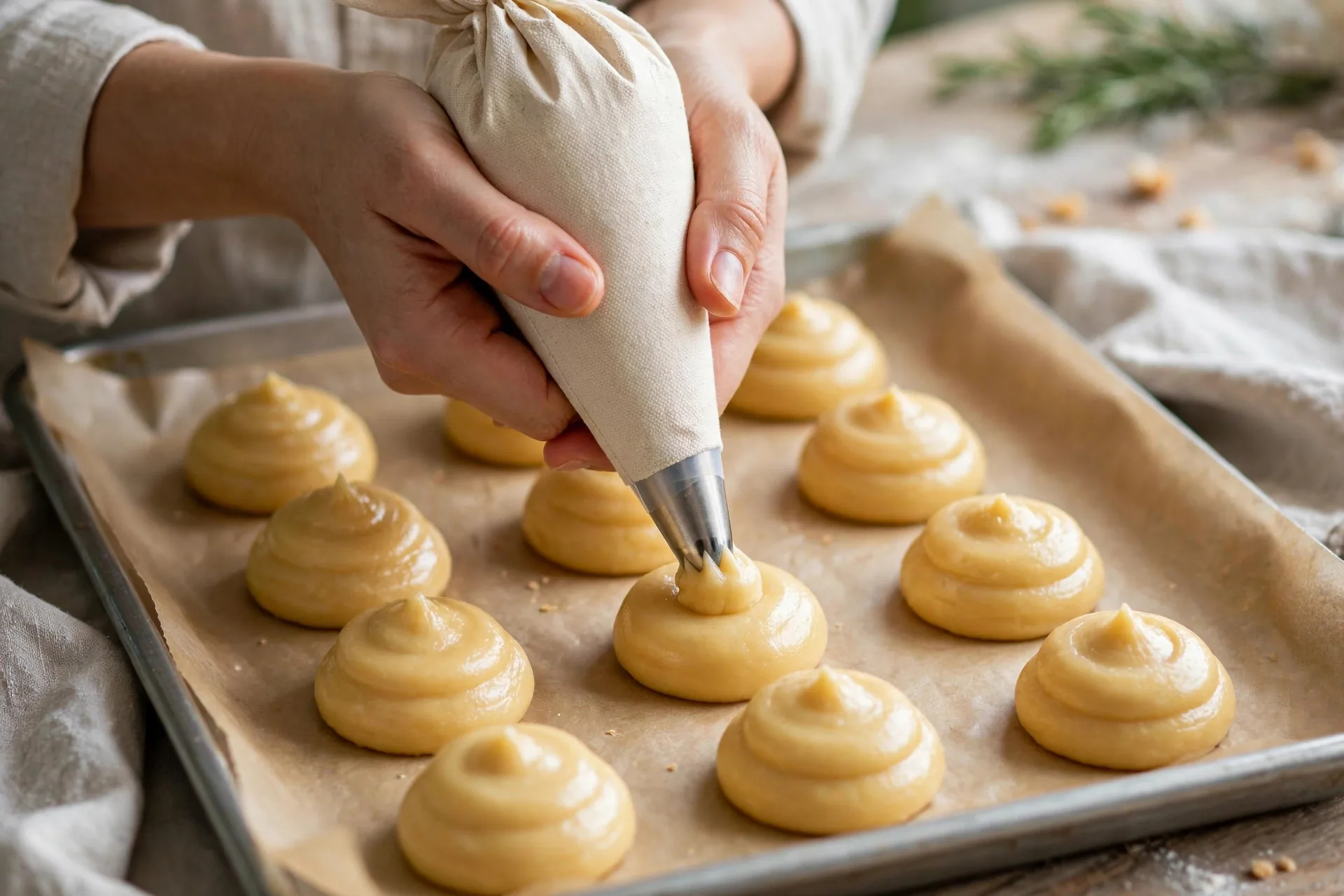
- Portion the puffs. Transfer the dough to a piping bag fitted with a large round tip (or a zip-top bag with the corner snipped), and pipe 1½-inch mounds onto the prepared sheets, spacing them 2 inches apart. No piping bag? Two spoons work fine — just aim for roughly even sizes so they bake evenly. Dip a fingertip in water and smooth down any peaks so they don’t burn.
- Bake — and don’t peek. Bake 25–30 minutes until the puffs are deeply golden brown, firm, and sound hollow when tapped. Do not open the oven door for the first 20 minutes. When they’re done, turn the oven off, crack the door open, and leave the puffs inside for 10 minutes — this dries out the interiors so they stay crisp.
- Cool and fill. Transfer to a wire rack and cool completely. Whip the cold cream with the powdered sugar and vanilla to firm peaks. Poke a small hole in the bottom of each puff with a paring knife or skewer, then pipe in the cream (a piping bag makes this easy). Alternatively, split each puff horizontally with a serrated knife and spoon in the cream like a sandwich.
- Finish. For cream puffs: dust generously with powdered sugar. For profiteroles: pile into a serving bowl and pour warm chocolate sauce over the top. Serve immediately.
Tips & Variations
- Room-temperature eggs are non-negotiable. Cold eggs seize the dough and won’t incorporate smoothly. Quick fix: cover eggs with warm (not hot) water for 10 minutes.
- The V-ribbon test never lies. Too thick (4th egg skipped)? The puffs won’t expand well. Too thin (5th egg added)? They’ll spread flat. Humidity and flour vary, so trust the visual cue over the egg count.
- Soggy puffs mean they were underbaked or filled too far ahead. Bake until truly deep golden — pale choux collapses.
- Pastry cream filling: swap the whipped cream for vanilla pastry cream for a classic French bakery version.
- Savory gougères: omit the sugar, add 1 cup (100g) grated Gruyère to the dough, and pipe smaller mounds for cheese puffs.
- Love elegant filled desserts? Try our molten chocolate lava cakes, or for a creamy chilled treat, our chocolate cream pie.
Storage
Unfilled baked shells keep in an airtight container at room temperature for 1 day, or frozen for up to 1 month — freeze them on a tray first, then bag. Crisp frozen shells in a 350°F (175°C) oven for 5 minutes before filling. Filled cream puffs must be refrigerated and are best within 4 hours; after a day in the fridge the shells soften (still tasty, just not crisp). Do not fill more than a few hours before serving.
FAQ
Why did my cream puffs collapse?
Almost always underbaking or opening the oven door too early. The puffs need to be deep golden brown and firm — pale, soft puffs have wet interiors that cave in as they cool. Bake a full 25–30 minutes and dry them in the turned-off oven.
Can I make the dough ahead?
The raw choux dough can rest in the fridge for up to 2 days (press plastic wrap directly on the surface). Let it warm slightly before piping, or it will be stiff. The baked shells freeze even better.

How do I know when the panade is done?
Look for the thin film of starch on the bottom of the pan and a dough ball that pulls cleanly away from the sides. That’s your signal — about 1–2 minutes of cooking after the flour goes in.
What’s the difference between cream puffs and profiteroles?
The shell is identical pâte à choux. Cream puffs are filled with whipped cream or pastry cream and dusted with powdered sugar. Profiteroles are filled with ice cream and served with warm chocolate sauce poured over. This recipe makes both.
Recipe Card
- Prep time: 30 minutes
- Cook time: 30 minutes
- Total time: 1 hour 45 minutes
- Servings: 20 cream puffs
- Calories: ~150 kcal per puff
Crisp golden shells, clouds of vanilla cream — pâte à choux is easier than it looks, and the payoff is pure pâtisserie.