
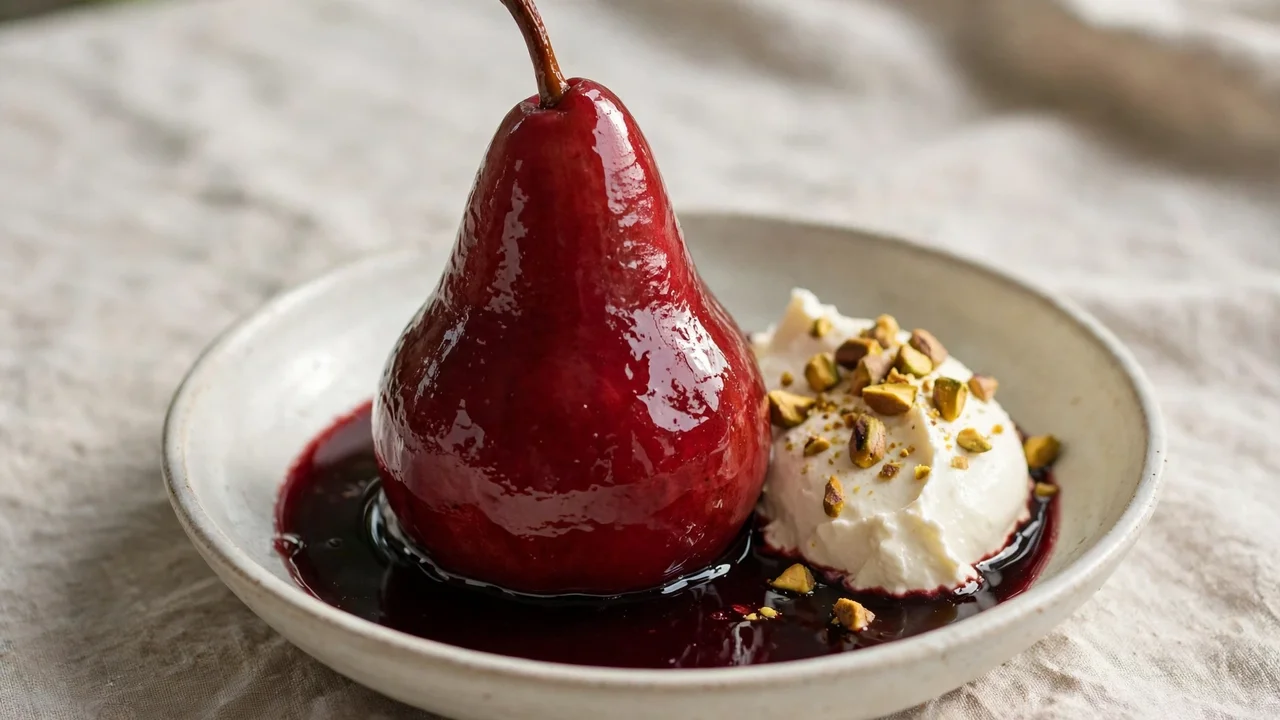
This is the dessert I make when I want people to think I am a much fancier cook than I am. A row of whole pears, stained deep ruby from their bath in spiced red wine, standing upright in a pool of glossy syrup — it looks like something from a restaurant with white tablecloths. In practice you peel some pears, simmer them in wine with sugar and spices, walk away for half an hour, and boil the liquid down at the end. That is the whole performance. The oven never even comes on.
The flavor is just as grown-up as the look. Red wine, cinnamon, star anise, cloves, and orange peel turn into something mulled and warm, and the pears absorb all of it while staying silky and light. Nothing is heavy or overly sweet, which makes this the dessert that actually gets eaten after a big dinner instead of politely pushed around the plate. Serve the pears warm or at room temperature with a spoonful of mascarpone or a small scoop of vanilla ice cream melting against them, and the syrup does the rest.
Bosc pears are the right choice here — they hold their shape through a long simmer and their long necks look beautiful on the plate. Anjou works too. What you want is fruit that is ripe enough to taste like a pear but still firm, because soft pears slump in the pot. Choose a wine you would happily drink a glass of, but not the best bottle you own; a fruity, medium-bodied red like a Merlot, Côtes du Rhône, or a Spanish Rioja is exactly right. Skip anything labeled “cooking wine,” always.
Why You’ll Love This Recipe
- Maximum elegance, minimum work. Peel, simmer, reduce. The pears do the showing off.
- Made for making ahead. The pears keep for days in their syrup and actually improve as they sit.
- Light after a heavy meal. Fruit, wine, and spice — no butter, no cream in the dish itself.
- The syrup is a bonus recipe. Reduced to a glaze, it is superb over ice cream, yogurt, or a slice of plain cake.
- Naturally gluten-free and dairy-free as written, so it covers almost every guest at the table.
Ingredients
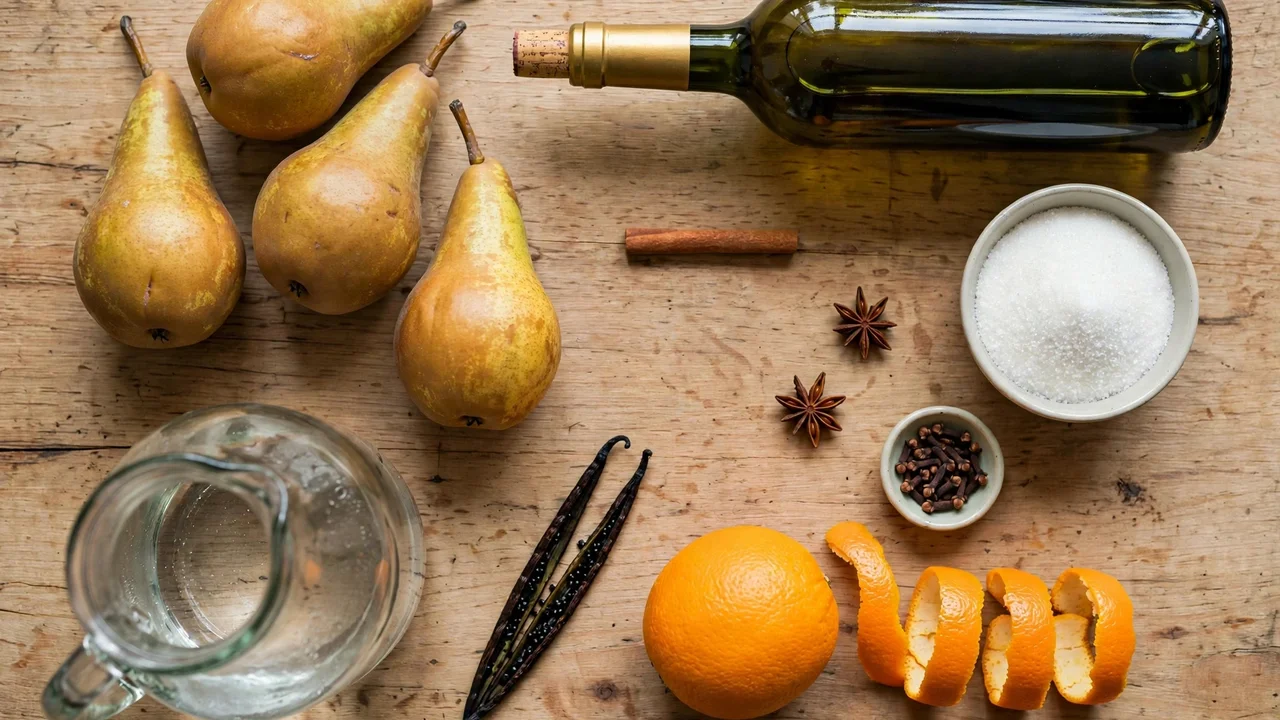
- 4 firm-ripe Bosc pears (about 2 pounds total)
- 1 bottle (750 ml) fruity red wine, such as Merlot or Rioja
- 3/4 cup granulated sugar
- 1 cup water
- 1 cinnamon stick
- 2 whole star anise
- 4 whole cloves
- 3 strips orange peel (each about 3 inches, taken off with a vegetable peeler, no white pith)
- 1 teaspoon vanilla extract, or 1/2 vanilla bean, split
- Pinch of fine sea salt
- Mascarpone, lightly sweetened whipped cream, or vanilla ice cream, for serving
- Toasted chopped pistachios or a few mint leaves, for garnish (optional)
Instructions
-
Peel the pears, keep the stems. Peel each pear smoothly with a vegetable peeler, leaving the stem intact — it is the handle and the look. With a melon baller or small spoon, scoop out the core from the bottom in a neat little cone. Slice a thin sliver off the bottom so each pear stands upright without wobbling. If the flesh browns while you work, drop finished pears into a bowl of cold water with a squeeze of lemon.
ADVERTISEMENT -
Build the poaching liquid. In a pot just wide enough to hold the pears snugly in one layer, combine the wine, sugar, water, cinnamon stick, star anise, cloves, orange peel, vanilla, and salt. Set over medium heat and stir until the sugar dissolves completely, 2 to 3 minutes. The snug pot matters: the less extra space, the deeper the liquid covers the fruit.
-
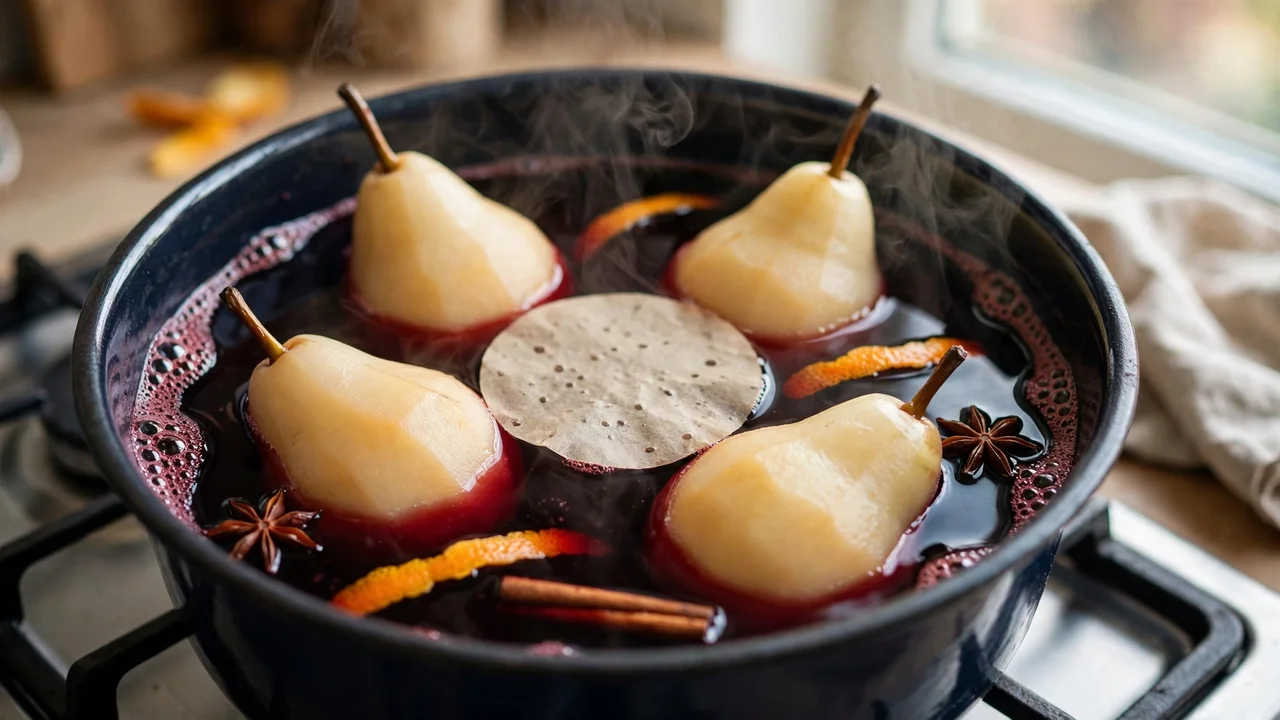
Poach low and slow. Lower the pears into the liquid on their sides. The wine should come most of the way up the fruit; top up with a splash of water if needed. Lay a circle of parchment paper directly on the surface (or a folded piece with a hole in the center) to keep the exposed tops moist and coloring evenly. Bring to the gentlest simmer — lazy bubbles at the edges, never a rolling boil — and cook for 20 to 30 minutes, turning the pears a quarter turn every 8 minutes or so. They are done when a thin knife slides into the thickest part with only slight resistance. Riper pears may take 18 minutes; firmer ones closer to 35.
-
Cool in the liquid. Take the pot off the heat and let the pears cool in the wine for at least 30 minutes, or up to overnight in the fridge. This is when they take on the deep ruby color all the way through. Do not skip it — a pear pulled out hot will be pale pink inside.
-
Reduce the syrup. Lift the pears out gently and set them upright on a plate. Strain the liquid back into the pot, discarding the spices and peel. Boil over medium-high heat until reduced to about 1 cup of syrup that coats the back of a spoon, 12 to 18 minutes. Watch the last few minutes; it goes from syrupy to burnt sugar quickly at the end. The syrup will thicken more as it cools.
-
Serve. Stand a pear upright in each shallow bowl. Spoon warm or room-temperature syrup generously over and around it. Add a dollop of mascarpone or a small scoop of ice cream at the base, and finish with pistachios or mint if using. Pass any extra syrup at the table.

Tips for Success
- Test with a knife, not the clock. Pears vary. The knife test — sliding in with slight resistance — is the only reliable signal. An overpoached pear collapses; an underpoached one is crunchy and pale inside.
- Never let it boil hard. A rolling boil batters the fruit and can crack the skins and flesh. Gentle heat keeps the pears smooth and shapely.
- Turn them. Parts above the liquid line stay pale. The parchment lid plus regular quarter-turns give you that even, jewel-like color.
- Reduce after removing the pears. Boiling the fruit in reducing syrup toughens the surface. Pears out first, then reduce.
- Strain the syrup. Star anise and cloves are pretty in photos and unpleasant to bite. Strain before reducing for a clean glaze.
Variations
- White wine and ginger. Swap the red wine for a dry white, replace the cinnamon and cloves with 3 slices of fresh ginger and a strip of lemon peel. The pears stay golden and the flavor is brighter and spicier.
- Alcohol-free. Use 3 cups of pomegranate or black cherry juice plus the water, with the same spices. The color is spectacular and kids can have it too.
- Chocolate finish. Melt 3 ounces of dark chocolate into the finished syrup off the heat for a pour-over chocolate-wine sauce.
- Pear and almond. Serve on a smear of almond frangipane or with amaretti crumbs sprinkled over the top for crunch.
- Turn them into a tart. Slice poached pears and fan them over a simple baked tart shell with a thin layer of pastry cream.
If pears are your thing this season, my spiced pear galette takes the same fruit in a rustic, buttery direction, and a table that ends with these poached pears one night can end with dark chocolate mousse the next — the two desserts cover opposite moods with equal ease.
Storage and Make-Ahead
Poached pears are one of the great make-ahead desserts because they keep, and improve, in their liquid. Refrigerate the pears submerged in the unreduced poaching liquid in a covered container for up to 5 days; the color deepens daily. When you are ready to serve, lift them out and reduce the liquid fresh, which takes 15 minutes and makes the kitchen smell wonderful while guests are still at the table. Already-reduced syrup keeps separately in a jar in the fridge for 2 weeks; warm it gently so it pours.
This is not a freezer dessert. The pears turn watery and limp after thawing. If you have leftover reduced syrup, though, freeze it in an ice cube tray and drop cubes into sparkling water, or warm one over a scoop of vanilla ice cream for an instant sauce.
For a dinner party, the whole dish can be completed the morning of: poach, cool, reduce, and refrigerate pears and syrup separately. Serve at room temperature straight from the fridge or warm the pears for 10 minutes in a low oven in their syrup.
Frequently Asked Questions
Which red wine is best for poaching?
A fruity, medium-bodied, low-tannin red. Merlot, Grenache-based blends, Côtes du Rhône, and Rioja are all reliable. Avoid heavily oaked or very tannic wines like a big Cabernet — tannin turns harsh and woody as it reduces. And use wine you would drink; the flavor concentrates.
Can I leave the pears whole without coring from the bottom?
You can poach them unpeeled-and-uncored in a pinch, but coring from the bottom takes two minutes and lets guests eat the whole pear without navigating seeds. Peeling is not optional, though — the skin blocks the color and turns leathery.
My pears are still white in the center. What went wrong?
They needed more time in the liquid, either poaching or resting. The color creeps inward as they sit. Put them back in the cooled liquid in the fridge overnight and they will be ruby nearly to the core by the next day.
How do I keep the syrup from turning bitter?
Two things: remove the orange peel with no white pith (pith is bitter), and stop the reduction as soon as the syrup coats a spoon. Pushing it darker concentrates the wine’s tannins along with the sugar.
Recipe Card
Prep Time: 15 minutes
Cook Time: 30 minutes poaching, plus 15 minutes reducing
Total Time: About 1 hour, plus at least 30 minutes cooling in the liquid
Servings: 4
Summary: Peel 4 firm Bosc pears, keeping stems; core from the bottom and trim the bases flat. Simmer 1 bottle red wine, 3/4 cup sugar, 1 cup water, a cinnamon stick, 2 star anise, 4 cloves, 3 strips orange peel, 1 teaspoon vanilla, and a pinch of salt until the sugar dissolves. Poach the pears at the barest simmer under a parchment lid for 20 to 30 minutes, turning occasionally, until a knife slides in with slight resistance. Cool pears in the liquid at least 30 minutes. Remove pears, strain the liquid, and boil it down to about 1 cup of glossy syrup. Serve pears upright with syrup, mascarpone or ice cream.