
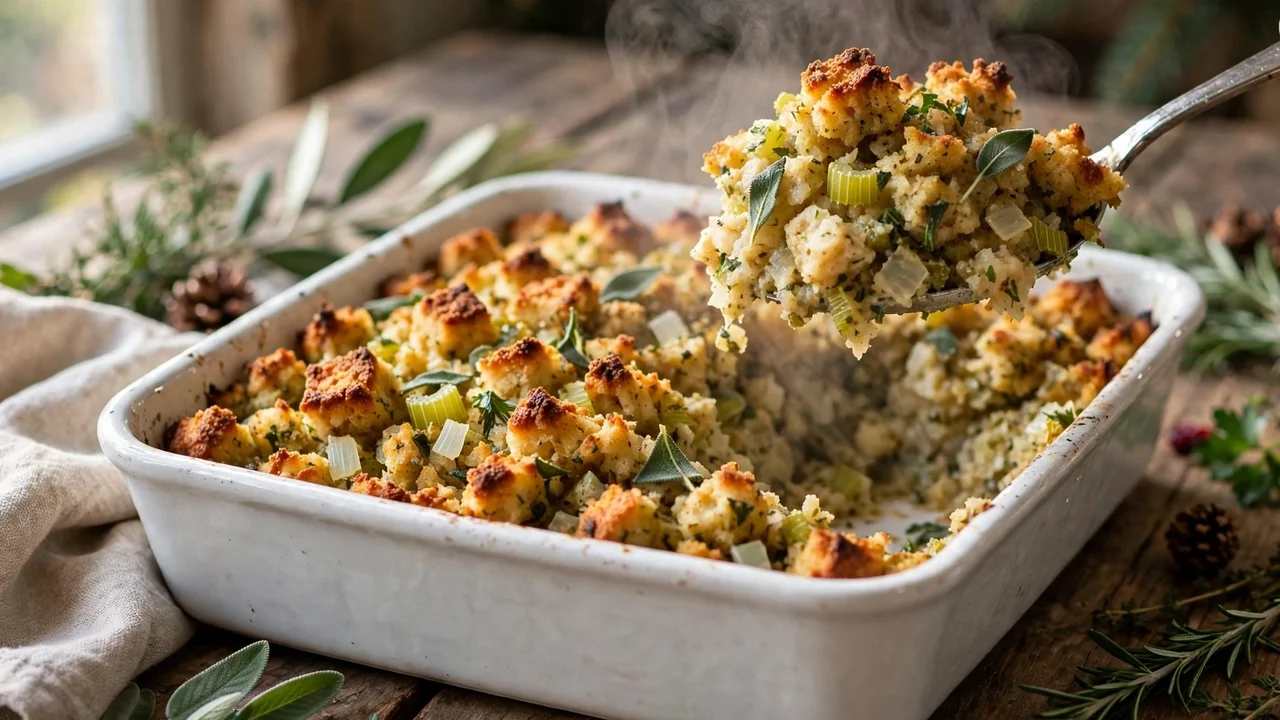
Stuffing is the dish people actually talk about after Thanksgiving, and the boxed version, convenient as it is, never quite gets there. This is the classic from-scratch version: sturdy white bread dried until crisp, a generous amount of butter, celery and onion cooked until sweet, sage and thyme, and enough good chicken broth to make the center soft without turning it to porridge. The top goes golden and crisp at the edges. That contrast — crisp top, custardy middle — is the entire point.
The single most important step happens before anything touches a pan: dry the bread. Fresh bread makes wet, gummy stuffing no matter what you do afterward. Cubes dried in a low oven (or simply left out overnight) drink up the broth and butter like a sponge and hold their shape. Everything else is seasoning and patience.
Bake this in a dish, not in the bird. A casserole gives you more of the crisp top everyone fights over, cooks evenly, and removes the food-safety guessing game of a stuffed cavity. If some of your family insists the bird must be involved, drizzle a few spoonfuls of pan drippings over the top before serving and nobody will know the difference.
Why You’ll Love This Recipe
- Crisp, buttery edges with a soft, savory center — the texture stuffing is supposed to have.
- Classic flavors only: sage, thyme, celery, onion, butter. Nothing weird.
- Built for make-ahead: assemble it the day before and bake while the turkey rests.
- Scales easily for a crowd and reheats like a champ.
- No box, no packet, no mystery seasoning.
Ingredients
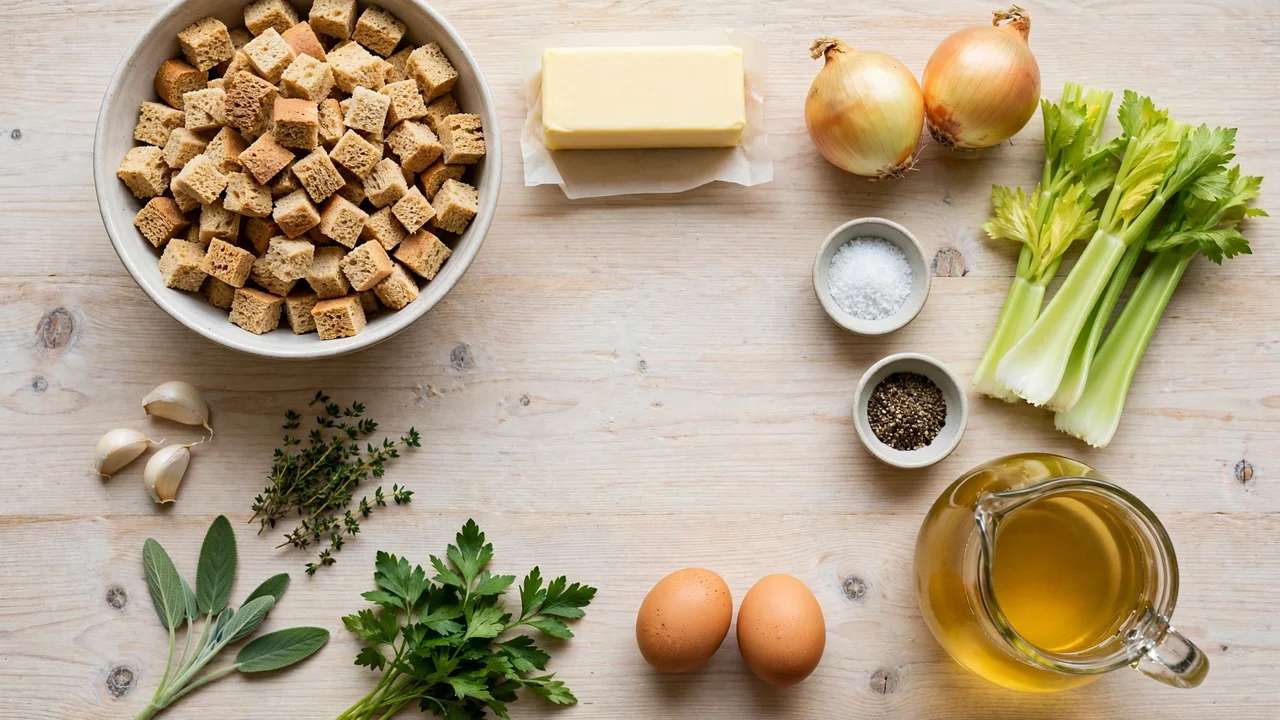
- 1 pound sturdy white sandwich bread or French bread, cut into 3/4-inch cubes (about 10 cups)
- 1/2 cup (1 stick) unsalted butter, plus more for the dish
- 2 cups finely diced yellow onion (about 2 medium onions)
- 2 cups finely diced celery (about 5 stalks), with some leaves chopped, if you have them
- 3 garlic cloves, minced
- 2 tablespoons fresh sage, finely chopped (or 2 teaspoons dried rubbed sage)
- 1 tablespoon fresh thyme leaves (or 1 teaspoon dried thyme)
- 1/4 cup fresh flat-leaf parsley, chopped
- 1 1/2 teaspoons kosher salt
- 1 teaspoon freshly ground black pepper
- 2 large eggs, lightly beaten
- 2 1/2 to 3 cups low-sodium chicken or turkey broth, warmed
Instructions
-
Dry the bread. Spread the cubes on two rimmed sheet pans. Either leave them out uncovered for 24 hours, or bake at 300°F (150°C) for 25 to 30 minutes, stirring once, until dry and crisp all the way through but not browned. Cool, then tip into the largest bowl you own.
-
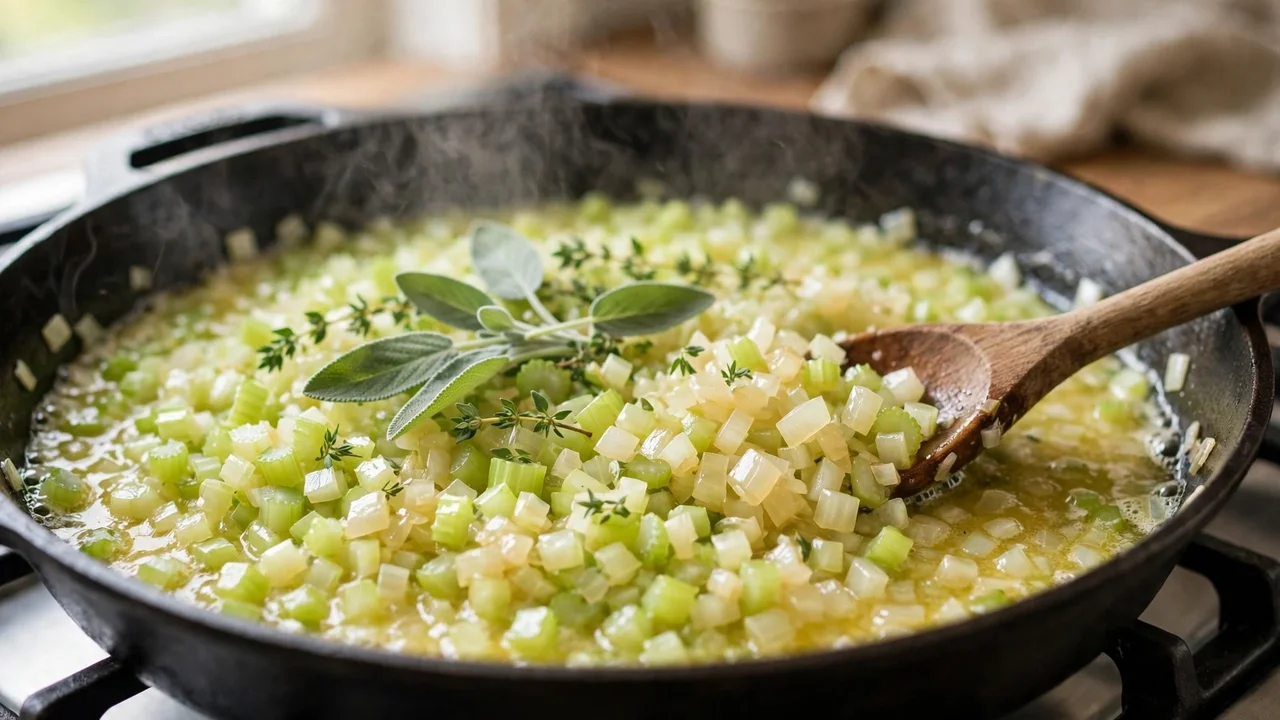
Cook the vegetables. Melt the butter in a large skillet over medium heat. Add the onion and celery with a pinch of the salt and cook, stirring often, for 10 to 12 minutes until completely soft and sweet, with no crunch left. You are not browning them; lower the heat if they start to color. Stir in the garlic for the last minute.
-
Bloom the herbs. Add the sage and thyme to the skillet and stir for 30 seconds until fragrant. Scrape everything, butter and all, over the bread cubes.
ADVERTISEMENT -
Season and toss. Add the parsley, the remaining salt, and the pepper. Toss well so the butter and vegetables coat the bread evenly.
-
Add eggs and broth. Pour the beaten eggs over the bread and toss again. Then add the warm broth a cup at a time, tossing after each addition. Stop when the cubes are thoroughly moistened and a handful squeezed gently holds together but does not drip. Different breads absorb differently, so judge by feel, not by the measuring cup. Rest the mixture 10 minutes; the bread will absorb more liquid as it sits. Add a splash more broth if it looks dry.
-
Pan and bake. Butter a 9×13-inch baking dish. Transfer the stuffing, spreading it evenly without packing it down hard. Cover tightly with foil and bake at 350°F (175°C) for 30 minutes.
-
Crisp the top. Remove the foil and bake 20 to 25 minutes more, until the top is deep golden and crisp at the edges and the center registers at least 165°F on an instant-read thermometer. Rest 10 minutes before serving.
Tips
- Dry bread is non-negotiable. If you take one thing from this recipe, take that. Day-old bread still holds too much moisture; give it the oven treatment even if it feels stale.
- Warm broth absorbs better. Cold broth beads on dry bread and pools. Warm broth soaks in evenly, which means fewer dry pockets and fewer soggy ones.
- Taste the base before the eggs go in. Once the vegetables are tossed with the bread, pinch a cube (before adding raw egg) and check the salt. Stuffing dulls as it bakes, so it should taste a touch too seasoned raw.
- Don’t pack the dish. Pressing the stuffing down hard makes it dense. Spoon it in loosely and let the top stay craggy — crags are where the crisp edges live.
Variations
- Cornbread stuffing. Replace half the white bread with day-old cornbread cubes, dried the same way. If you bake your own cornbread with honey butter a day ahead, you are most of the way there. Add a pinch of cayenne for a Southern tilt.
- Sausage stuffing. Brown 1 pound of bulk breakfast sausage, breaking it up, and fold it in with its drippings, reducing the butter to 5 tablespoons. Reduce the added salt by half and taste carefully.
- Mushroom and leek. Swap the onion for 2 large leeks (white and light green parts, well rinsed) and add 8 ounces of sliced cremini mushrooms cooked until their liquid evaporates.
- Oyster stuffing. An old coastal classic: fold in 1 pint of shucked oysters with their liquor (count the liquor as part of the broth) just before panning. Bake the same way.
- Serve it right. Stuffing anchors the plate next to the bird and something soft and warm like soft, buttery dinner rolls for soaking up gravy — plan the menu so both show up.
Storage and Make-Ahead
Assemble ahead: The stuffing can be fully assembled (through step 5) up to 24 hours ahead. Cover the dish and refrigerate. Add 10 to 15 minutes to the covered baking time since it goes in cold, and if it looks dry after its rest in the fridge, drizzle 1/4 cup of warm broth over the top before baking.
Leftovers: Refrigerate in an airtight container for up to 4 days. Reheat, covered with foil, at 350°F for about 20 minutes, adding a splash of broth first; uncover for the last 5 minutes to re-crisp the top. Single portions reheat well in a skillet with a knob of butter, which gives you a fried, crisp-edged cake of stuffing that many people prefer to the original.
Freeze: Baked stuffing freezes for up to 3 months. Thaw overnight in the refrigerator and reheat as above.
Frequently Asked Questions
How moist should the mixture be before baking?
Wetter than you expect, but not soupy. Every cube should be moistened through, and a squeezed handful should hold together and feel like a wrung-out sponge. If liquid pools in the bottom of the bowl, you have gone too far — add a handful of extra dried bread cubes to rebalance.
Can I use store-bought dried bread cubes or stuffing mix as the base?
Plain dried bread cubes from a bag are fine and save the drying step; check whether they are seasoned and cut the added salt accordingly. Avoid the full boxed mix with its seasoning packet if you want to control the flavor yourself.
Why did my stuffing come out gummy?
Almost always one of three causes: the bread was not dried thoroughly, the mixture sat too wet before baking, or the dish was packed down. Dry bread and a light hand fix nearly every case.
Can I cook this in a slow cooker?
Yes — butter the insert, add the mixture, and cook on low for 4 to 5 hours. You lose the crisp top, but it frees oven space, which on Thanksgiving is its own kind of valuable. Spoon it into a hot buttered skillet for a few minutes if you want some crisp edges back.
Recipe Card
Prep Time: 25 minutes (plus bread drying)
Cook Time: 55 minutes
Total Time: About 1 hour 20 minutes, plus drying
Servings: 10 to 12 as a side dish
Summary: Dry 10 cups of bread cubes until crisp. Soften onion and celery in butter, add sage and thyme, and toss with the bread, parsley, salt, and pepper. Moisten with beaten eggs and 2 1/2 to 3 cups warm broth until the mixture holds together when squeezed. Bake covered at 350°F for 30 minutes, then uncovered 20 to 25 minutes until golden and crisp on top.