

Roast First. Everything Else Is Easy.
There are two kinds of butternut squash soup in the world. One simmers raw squash in broth and tastes fine — sweet, mild, a little flat. The other roasts the squash until its edges caramelize and its sugars concentrate, and it tastes like a different vegetable entirely. This recipe is firmly in the second camp.
Roasting does take a little longer than dumping everything in a pot, but the work is all hands-off, and the payoff is enormous: a soup with real depth that doesn’t need a cup of cream or a pile of spices to taste like something. A bit of onion and garlic, good broth, a touch of maple to underline the sweetness, and a finish of butter are all it asks for.
The crispy sage is not decoration — well, it’s not only decoration. Thirty seconds in hot butter turns sage leaves into shattering, savory little chips, and the browned sage butter gets drizzled over the bowl. It’s the step people remember. I serve this with honey butter cornbread for dunking, or slices of rustic rye bread when I want something with more chew.
Why You’ll Love This Recipe
- Roasting builds the flavor. Caramelized squash means the soup tastes deep and sweet without tricks.
- Silky without much cream. A small amount of cream (or none — see Variations) rounds it out; the squash itself does the thickening.
- That sage butter finish. Crispy leaves and nutty brown butter over a smooth orange soup. It looks like a restaurant bowl and takes one extra minute.
- Freezer-friendly and make-ahead. The soup keeps for days and freezes for months, so one squash can set up several easy meals.
Ingredients
For the soup
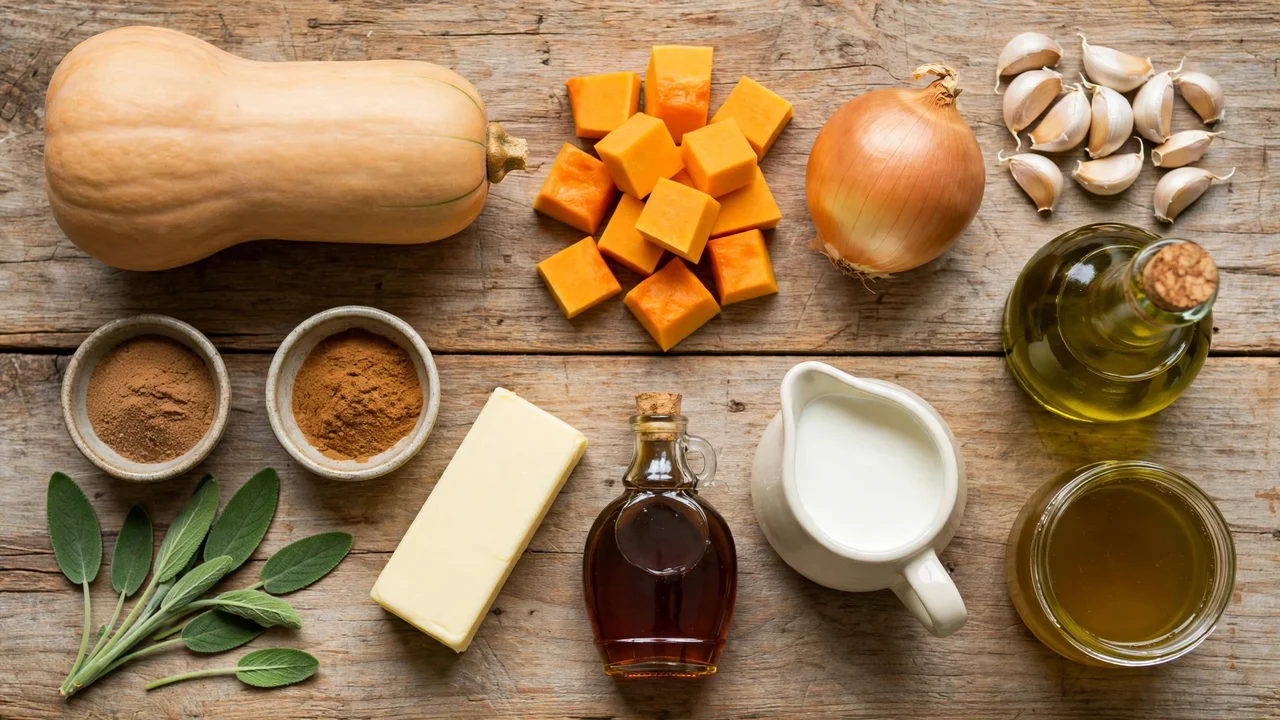
- 1 large butternut squash (about 3 pounds / 1.4 kg), peeled, seeded, and cut into 1-inch cubes
- 3 tablespoons olive oil, divided
- 1 1/4 teaspoons kosher salt, divided, plus more to taste
- 1/2 teaspoon black pepper
- 1 medium yellow onion, diced
- 3 garlic cloves, minced
- 1/2 teaspoon ground cinnamon
- 1/4 teaspoon ground nutmeg
- Pinch of cayenne pepper (optional)
- 4 cups (960 ml) low-sodium chicken or vegetable broth, plus more as needed
- 1 to 2 tablespoons maple syrup
- 1 teaspoon apple cider vinegar or fresh lemon juice
- 1/4 cup (60 ml) heavy cream (optional)
For the crispy sage
- 2 tablespoons unsalted butter
- 12 to 16 fresh sage leaves, patted dry
Instructions
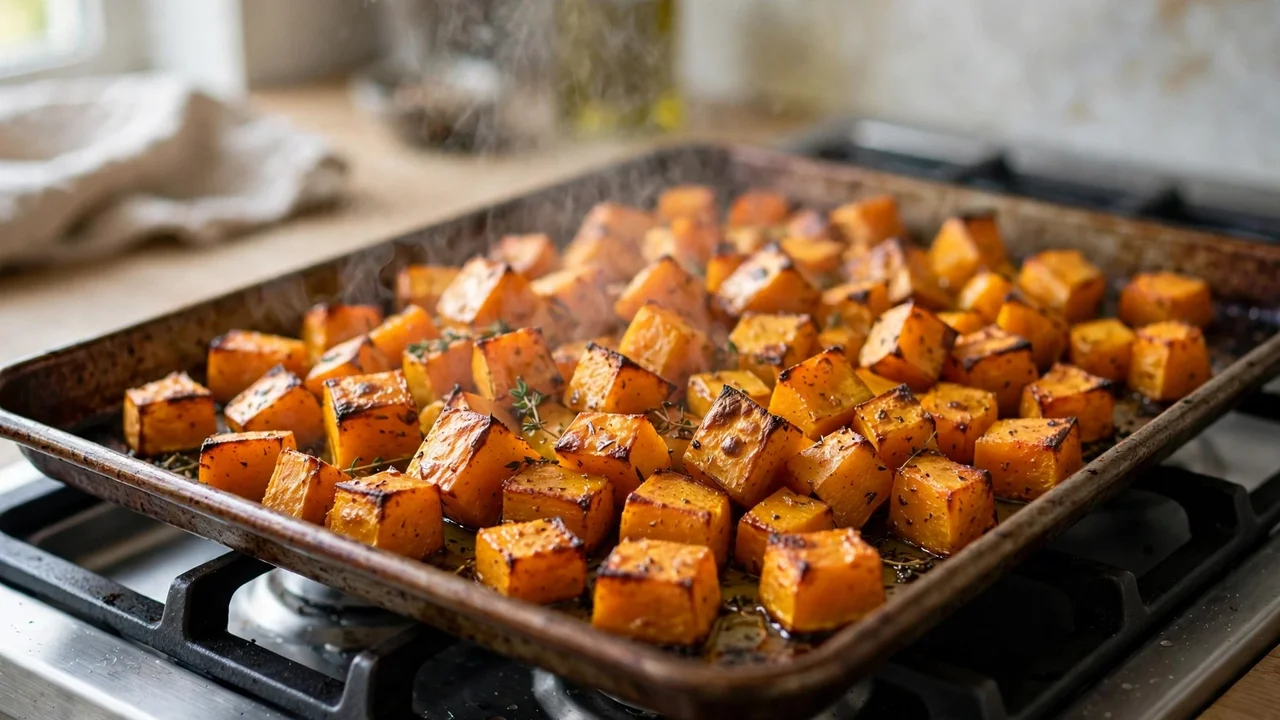
- Roast the squash. Preheat the oven to 425°F (220°C). Toss the squash cubes with 2 tablespoons of the olive oil, 3/4 teaspoon of the salt, and the pepper. Spread on a large rimmed baking sheet in a single layer — use two sheets if the pieces crowd, because crowded squash steams instead of roasting. Roast for 30 to 35 minutes, turning once halfway, until the cubes are tender and deeply golden at the edges with some caramelized brown spots.
- Start the base. While the squash roasts, heat the remaining tablespoon of olive oil in a large pot or Dutch oven over medium heat. Add the onion and the remaining 1/2 teaspoon salt and cook, stirring occasionally, for 6 to 8 minutes, until soft and translucent with light golden edges. Add the garlic, cinnamon, nutmeg, and cayenne and cook for 30 seconds, until fragrant.
- Combine. Add the roasted squash to the pot along with any browned bits scraped from the baking sheet — those bits are concentrated flavor, so get them all. Pour in the broth and stir.
- Simmer briefly. Bring to a boil, then reduce to a simmer for 10 minutes. The squash is already cooked; this simmer is about marrying flavors, not cooking anything through.
- Blend until silky. Blend the soup with an immersion blender directly in the pot until completely smooth, 1 to 2 minutes. (Alternatively, blend in a countertop blender in batches, filling it no more than halfway and venting the lid, then return the soup to the pot.) Blend a full minute longer than you think you need — that’s the difference between smooth and silky.
- Adjust the texture. The soup should pour like heavy cream. If it’s too thick, stir in more broth a splash at a time. Squash varies in water content, so trust the consistency, not the measurement.
- Season and finish. Stir in 1 tablespoon of maple syrup, the vinegar or lemon juice, and the cream if using. Taste carefully: it may want more salt (under-salted squash soup tastes bland no matter what else you do), more maple if your squash wasn’t sweet, or more acid if it tastes flat. Warm through gently without boiling.
- Fry the sage. In a small skillet, melt the butter over medium heat. When it foams, add the sage leaves in a single layer. Fry for 20 to 30 seconds, until the leaves darken slightly and crisp and the butter turns golden and nutty-smelling. Pull the leaves out onto a paper towel with a fork; keep the sage butter warm.
- Serve. Ladle the soup into warm bowls. Drizzle each with a little sage butter, top with 3 or 4 crispy sage leaves, and add a grind of black pepper. A small swirl of cream on top is pretty if you’re feeling it.
Tips for Success
Getting a squash peeled without a fight. Microwave the whole squash for 2 to 3 minutes first; the skin softens just enough to peel easily. Or cut off both ends, stand it upright, and slice the skin away in strips with a sharp knife. A sturdy Y-peeler also works. And there’s no shame in buying pre-cut squash — for this soup, it works perfectly and saves 15 minutes.
Dry vegetables roast; wet vegetables steam. Pat the squash cubes dry if they’ve been sitting cut, and give them real space on the pan. The browned edges are where all the flavor lives.
Blend hot soup safely. If you use a countertop blender, never fill it more than halfway, remove the center cap from the lid, and cover the opening with a folded towel. Hot soup expands and will blow the lid off a sealed blender. The immersion blender avoids all of this and is the tool I’d buy first for soup season.
The acid is small but essential. A teaspoon of vinegar or lemon juice won’t make the soup taste sour; it wakes everything up. Add it at the end, taste, and you’ll notice the squash flavor get louder.

Variations
- Vegan version: Use vegetable broth, skip the cream (or stir in 1/3 cup of coconut milk), and fry the sage in olive oil instead of butter. The soup is rich enough to hold up beautifully.
- Apple and squash: Add one peeled, diced tart apple (like a Granny Smith) to the roasting pan. It blends in invisibly and adds a gentle brightness.
- Curried squash soup: Swap the cinnamon and nutmeg for 1 tablespoon of curry powder and a teaspoon of grated fresh ginger, and finish with coconut milk and a squeeze of lime.
- Add some texture: Top with toasted pepitas (pumpkin seeds), a spoonful of crispy chickpeas, or homemade croutons instead of — or alongside — the sage.
- A heartier bowl: Stir in a cup of cooked white beans before blending half the soup, leaving the rest chunky. Rustic, filling, and still very much a squash soup.
Storage and Make-Ahead
Refrigerator: The soup keeps for up to 5 days in an airtight container. It thickens as it sits; thin it with a splash of broth or water when reheating and re-check the seasoning.
Freezer: Freeze the soup (without the sage topping) in portions for up to 3 months. Thaw overnight in the fridge or gently in a pot over low heat. Fry fresh sage when you serve — it takes a minute and makes the thawed soup taste freshly made.
Make-ahead for guests: Make the soup a day or two ahead; the flavor deepens overnight. Reheat gently over medium-low heat, stirring often, and do the sage and the cream swirl at serving time.
Frequently Asked Questions
Can I use frozen butternut squash?
Yes. Roast it straight from frozen at 425°F — it will release some water, so give it extra space and a few extra minutes, and expect slightly less caramelization. The soup will still be very good.
Why does my soup taste bland?
It’s almost always one of three things: the squash didn’t caramelize (crowded pan or low oven), the soup is under-salted, or the acid was skipped. Fix all three and bland soup becomes a memory.
Can I make this in a slow cooker?
You can, but you’d give up the roasting, which is the point. If time demands it, roast the squash the night before, refrigerate it, and finish the soup in 20 minutes the next day — that’s the better shortcut.
What can I substitute for heavy cream?
Half-and-half, a dollop of Greek yogurt stirred in off the heat (don’t boil it or it may split), coconut milk, or nothing at all. The soup is naturally creamy from the squash.
Recipe Card
Prep Time: 20 minutes
Cook Time: 45 minutes
Total Time: About 1 hour 5 minutes
Yield: 6 servings (about 8 cups)
Ingredients (summary): Butternut squash, olive oil, salt, pepper, onion, garlic, cinnamon, nutmeg, cayenne, broth, maple syrup, apple cider vinegar, optional cream; fried sage in butter for topping.
Instructions (summary): Roast squash cubes at 425°F (220°C) for 30 to 35 minutes until caramelized. Soften onion, add garlic and spices, then the squash and broth; simmer 10 minutes. Blend until silky, thin as needed, and finish with maple, acid, and cream. Fry sage leaves in butter for 30 seconds and serve on top with the sage butter drizzled over.