
The Soup I Make When It Gets Dark at Five
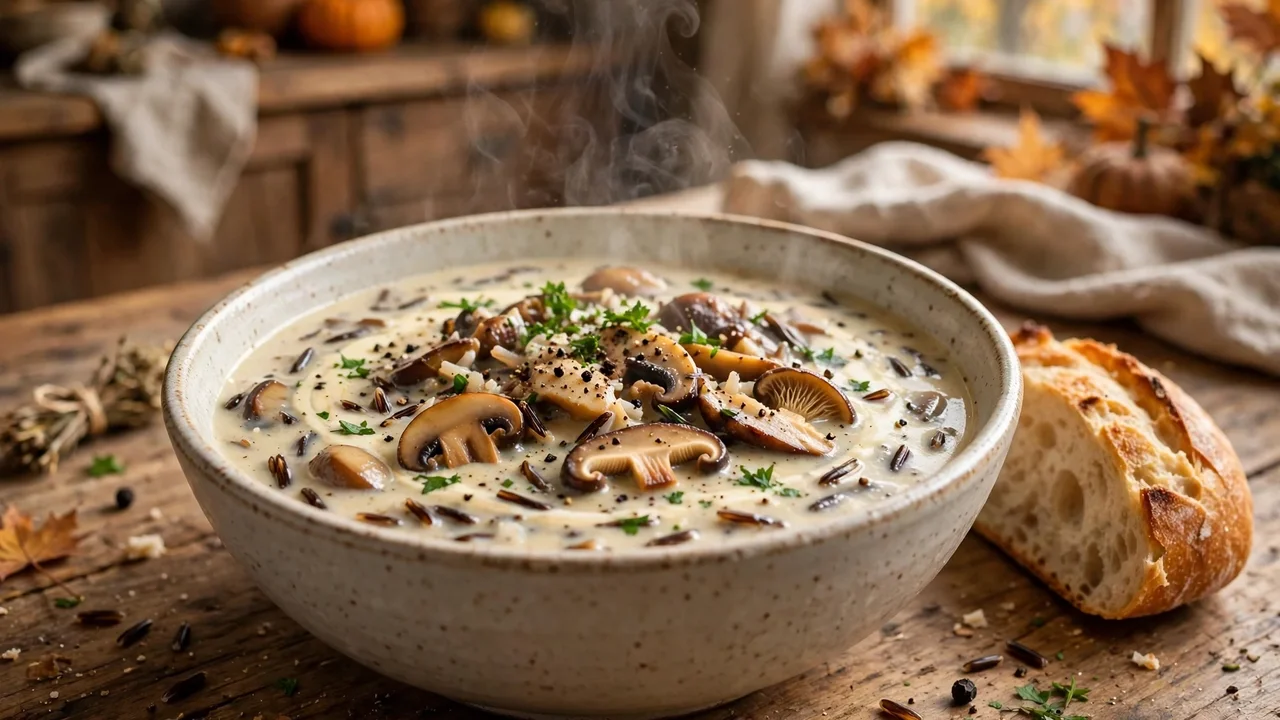
Wild rice soup is a Minnesota tradition that the rest of us are lucky to borrow. It’s the soup for the first truly cold week of the year — the one where the light changes, the radiators kick on, and everybody at the table wants something that eats less like a starter and more like the whole point of dinner.
The wild rice is the backbone. It isn’t actually rice; it’s the seed of an aquatic grass, and it cooks up chewy, nutty, and deeply savory in a way white rice never will. Paired with mushrooms — lots of them, browned properly so they taste like mushrooms instead of sponges — and finished with cream and thyme, the result is thick, earthy, and completely satisfying. There’s no chicken in my version; the mushrooms and a well-built broth carry it, which means the vegetarians at the table aren’t eating the consolation soup.
It also holds and reheats better than most creamy soups, which makes it a smart Sunday batch. If creamy comfort food is the mood of your week, my creamy chicken pot pie belongs in the same rotation, and a basket of soft, buttery dinner rolls next to either one is never a bad decision.
Why You’ll Love This Recipe
- Genuinely filling. Wild rice and mushrooms give the soup real substance. A bowl with bread is dinner, full stop.
- Layered mushroom flavor. A mix of cremini and shiitake, browned in batches, builds the deep, woodsy base that makes the soup taste like it simmered all day.
- Vegetarian without feeling like a compromise. Built from the start to stand on vegetables, herbs, and cream — no meat stock required.
- Even better reheated. The rice keeps drinking up flavor overnight, so lunch the next day might be the best bowl of the batch.
Ingredients
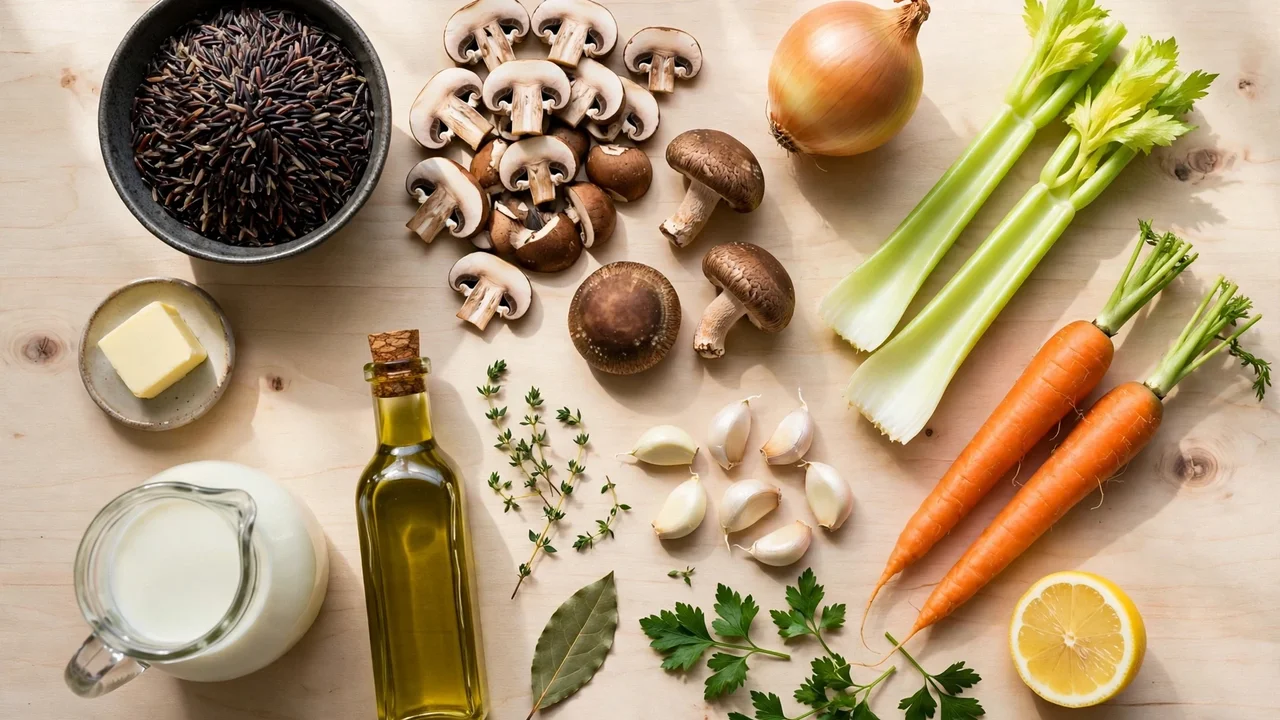
- 1 cup (180 g) wild rice blend or pure wild rice, rinsed
- 4 cups (960 ml) water, for cooking the rice
- 3 tablespoons unsalted butter, divided (or olive oil)
- 1 tablespoon olive oil
- 1 large yellow onion, diced
- 2 celery stalks, diced
- 2 medium carrots, diced
- 1 1/2 pounds (680 g) mixed mushrooms — cremini and shiitake are my pick — stems trimmed, sliced 1/4 inch thick
- 4 garlic cloves, minced
- 1 teaspoon dried thyme (or 1 tablespoon fresh leaves)
- 1/2 teaspoon smoked paprika
- 1/3 cup (42 g) all-purpose flour
- 5 cups (1.2 L) low-sodium vegetable broth (or chicken broth for a non-vegetarian version)
- 2 bay leaves
- 1 cup (240 ml) heavy cream, plus more to taste
- 1 tablespoon soy sauce (or tamari)
- 1 teaspoon Dijon mustard
- 1 to 1 1/2 teaspoons kosher salt, to taste
- 1/2 teaspoon black pepper
- 2 tablespoons chopped fresh parsley, plus more for serving
- Squeeze of lemon juice, to finish
Instructions
- Cook the wild rice separately. Combine the rinsed rice and the 4 cups of water in a medium pot with a pinch of salt. Bring to a boil, reduce to a gentle simmer, cover, and cook until the grains are tender and some have split open and curled — 40 to 45 minutes for pure wild rice, 30 to 35 for a blend. Drain any excess water and set the rice aside. Cooking it separately keeps the soup’s broth from turning starchy and gray, and lets you control the rice’s texture.
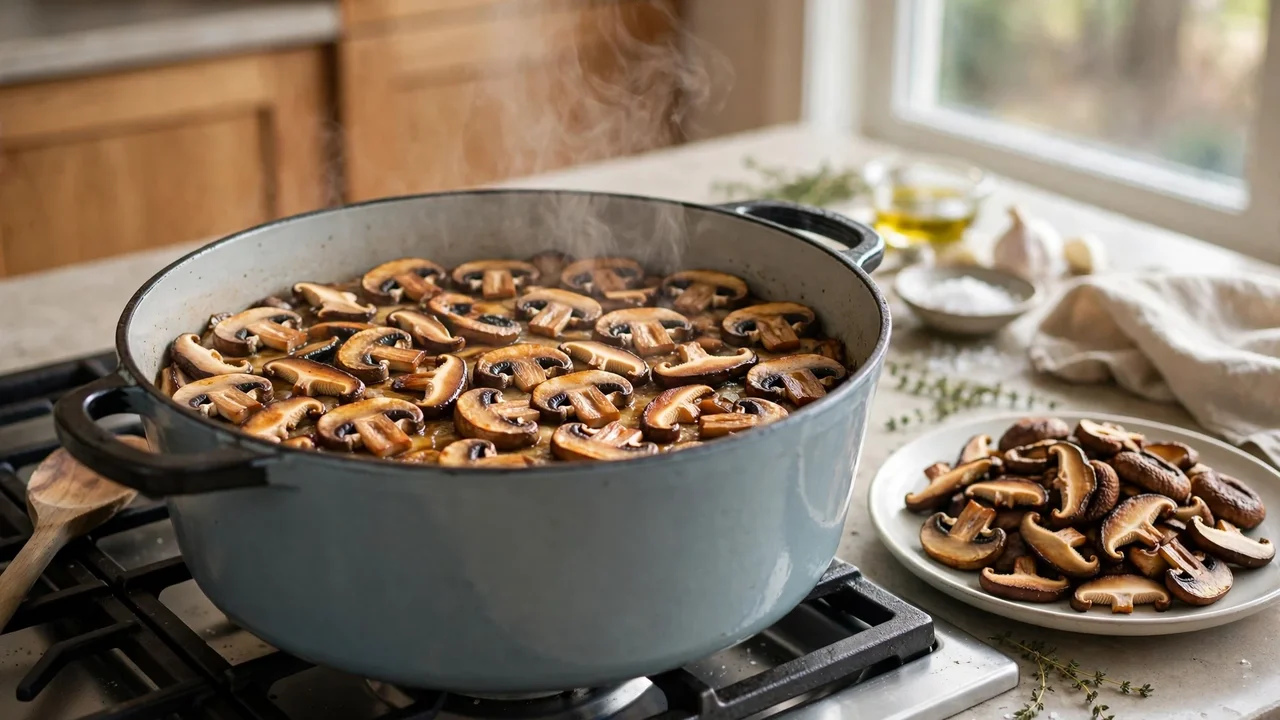
- Brown the mushrooms in batches. While the rice cooks, heat 1 tablespoon of butter and the olive oil in a large Dutch oven over medium-high heat. Add half the mushrooms in a single layer and leave them alone for 3 to 4 minutes, until the bottoms are deeply golden. Stir and cook 2 minutes more. Transfer to a plate and repeat with the second batch and another tablespoon of butter. Crowded mushrooms steam in their own liquid and never brown, so the batches are worth it.
- Soften the vegetables. In the same pot over medium heat, melt the remaining tablespoon of butter. Add the onion, celery, and carrots with a pinch of salt and cook, stirring occasionally, for 6 to 8 minutes, until softened and the onion is translucent. Scrape up any mushroom fond stuck to the pot as they release moisture.
- Add garlic, herbs, and flour. Stir in the garlic, thyme, and smoked paprika and cook 30 seconds. Sprinkle the flour over the vegetables and cook, stirring constantly, for 1 to 2 minutes. This roux is what gives the soup its body; cooking the flour briefly takes away any raw taste.
- Build the broth. Pour in the vegetable broth a little at a time, stirring well after each addition to keep the soup smooth. Add the bay leaves. Bring to a boil, then lower to a steady simmer for 10 minutes, until slightly thickened.
- Bring it together. Stir in the cooked wild rice and the browned mushrooms with any juices on their plate. Simmer 5 minutes more so the flavors mingle.
- Finish with cream and seasonings. Reduce the heat to low. Stir in the heavy cream, soy sauce, and Dijon mustard. Warm through for 2 to 3 minutes without boiling — boiling a cream soup hard can make it look grainy. Fish out the bay leaves.
- Taste and adjust like you mean it. Add salt (the soup will want close to the full amount), the black pepper, and a squeeze of lemon juice, which won’t make it taste lemony but will sharpen everything else. Stir in the parsley.
- Serve. Ladle into warm bowls, add an extra drizzle of cream or a knob of butter on top if you’re feeling generous, and finish with more parsley and black pepper. Crusty bread is strongly encouraged.
Tips for Success
Pure wild rice vs. blends. Pure wild rice has the deepest flavor and chewiest texture but takes the longest to cook and costs more. Blends (usually wild with brown and white rice) are economical and cook faster; the soup will be a little softer and starchier, which some people prefer. Either works — just follow the timing for what you bought, and when in doubt, the grains should be tender with a pleasant chew, never crunchy.
The mushroom rule: hot pan, no crowding, patience. Mushrooms are mostly water. In a crowded pan they release that water and boil in it, coming out pale and rubbery. In a hot, uncrowded pan, the water evaporates and the surfaces brown, which concentrates their flavor enormously. Wait for the sizzle to quiet down before you stir; that’s the water leaving.
Don’t boil the finished soup. Once the cream is in, keep it at a bare simmer. A hard boil can break the emulsion and give a grainy texture, and it dulls the fresh parsley and lemon at the end.
Season in layers, then again at the end. Rice absorbs salt as it sits in the soup. A bowl that was perfectly seasoned before the rice went in can taste flat ten minutes later. Always do a final taste after the rice and cream are in.
Variations
- Add chicken: Stir in 2 cups of shredded rotisserie chicken with the rice for a chicken-and-wild-rice version, and use chicken broth. Classic for a reason.
- Vegan: Use olive oil throughout instead of butter and swap the cream for full-fat coconut milk or a cashew cream. The soy sauce and mustard stay; the soup remains rich and properly savory.
- Leeks and herbs: Replace the onion with two sliced leeks (white and light green parts, well washed) and finish with fresh dill along with the parsley for a brighter, more Scandinavian bowl.
- Barley swap: No wild rice on hand? Pearl barley, cooked the same way, gives you a different but equally rib-sticking soup. Farro works too and keeps more chew.
- A little sherry: Deglaze the mushrooms with 1/4 cup of dry sherry before they come out of the pan. It adds a warm, nutty depth that suits the mushrooms perfectly.
Storage and Make-Ahead
Refrigerator: The soup keeps for up to 4 days. It will thicken considerably as the rice absorbs broth — this is normal. Thin it with a splash of broth or water when reheating, warm it gently over medium-low heat without boiling, and re-check the salt.
Freezer: Cream soups can separate slightly after freezing, but this one, with its roux base, freezes better than most — up to 3 months. For the best texture, freeze the soup before adding the cream, then stir the cream in fresh when you reheat. Thaw overnight in the refrigerator.
Make-ahead strategy: Cook the rice up to 3 days ahead and refrigerate it. The soup itself can be made a full day ahead up to the point of adding the cream; finish it when you reheat for serving. Mushrooms can be sliced a day ahead and kept in a paper-towel-lined container.
Frequently Asked Questions
Can I cook the rice directly in the soup?
You can, and it saves a pot, but there are trade-offs: the broth gets starchier and darker, the rice easily overcooks into mush while you wait for everything else, and leftovers turn into porridge as the rice keeps absorbing liquid. Cooking it separately takes no extra active time — it simmers while you build the soup — and gives you control. I recommend it.
Why is my soup too thick / too thin?
Too thick usually means the rice absorbed more than expected or the roux was heavy-handed; thin it with broth a little at a time. Too thin means the flour didn’t cook into a proper roux or the broth was very light; simmer it uncovered for 10 minutes, or mash a ladleful of the rice and mushrooms against the side of the pot and stir them back in.
What mushrooms should I avoid?
Plain white button mushrooms alone will give you a paler, milder soup — fine in a pinch, better mixed with cremini. Avoid pre-sliced mushrooms that look dried out or slimy; mushrooms should smell earthy and feel dry to the touch.
Can I make this in a slow cooker?
Mostly yes: brown the mushrooms and build the vegetable-and-roux base on the stove first (that step can’t be skipped without losing the flavor), then combine everything except the cream in the slow cooker with the uncooked wild rice and cook on LOW for 5 to 6 hours. Stir in the cream at the end.

Recipe Card
Prep Time: 25 minutes
Cook Time: 1 hour
Total Time: About 1 hour 25 minutes
Yield: 6 to 8 servings (about 3 quarts)
Ingredients (summary): Wild rice, butter, olive oil, onion, celery, carrots, mixed mushrooms, garlic, thyme, smoked paprika, flour, vegetable broth, bay leaves, heavy cream, soy sauce, Dijon mustard, salt, pepper, parsley, lemon.
Instructions (summary): Simmer the wild rice separately until tender. Brown the mushrooms in batches; soften onion, celery, and carrot in the same pot. Add garlic, herbs, and flour; stir in broth and simmer. Add rice and mushrooms, then finish with cream, soy sauce, and mustard off a hard boil. Season with salt, pepper, lemon, and parsley, and serve.