
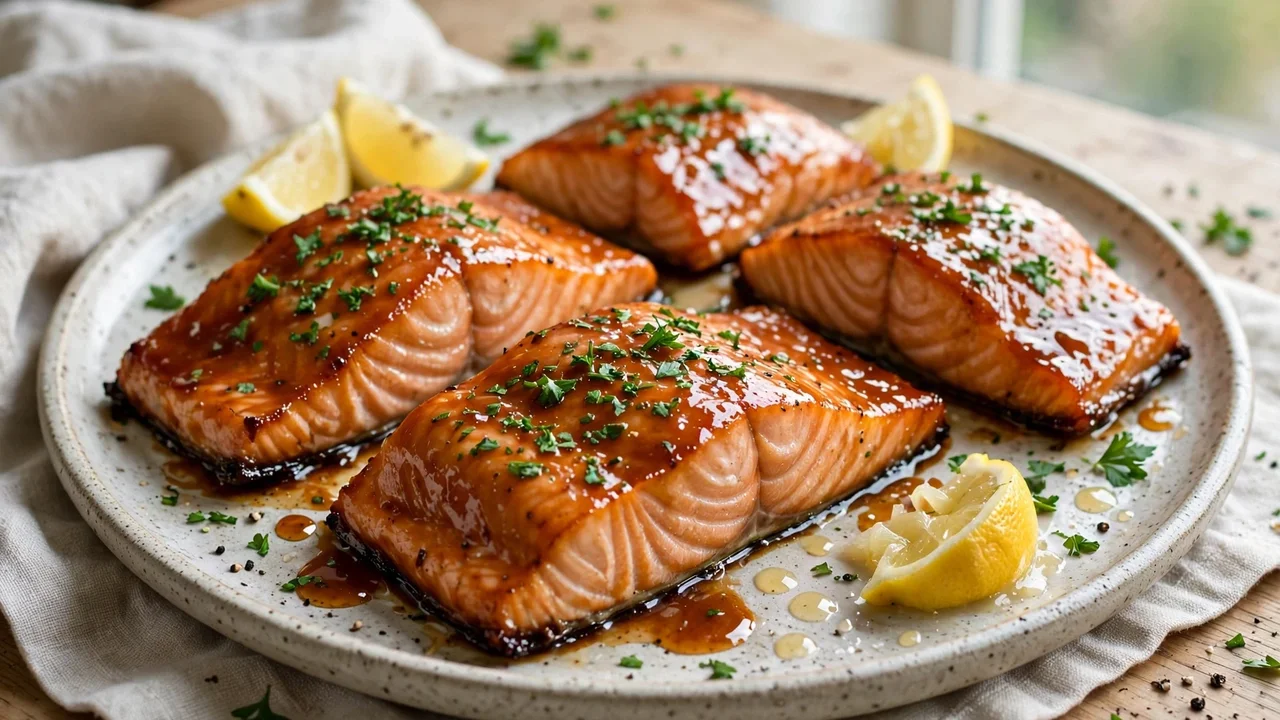
Salmon is my default answer on nights when I want a real dinner but my energy is running low. It cooks fast, it doesn’t need marinating, and it forgives small timing mistakes better than most proteins. This version gets a simple glaze of maple syrup and Dijon mustard that turns glossy and lightly caramelized in the oven, with the edges going just a little sticky. It tastes like something you’d order at a good bistro, but the whole thing is on the table in about 25 minutes.
The glaze does double duty here. Half goes on before baking, and the rest gets brushed on at the end, so you get both the deep baked-on flavor and a fresh, shiny finish. A squeeze of lemon right before serving wakes everything up. I usually serve it with rice or roasted vegetables, but it’s just as good flaked over a salad the next day.
If you like this sweet-and-savory glaze approach, my teriyaki chicken thighs use the same trick of reserving some sauce for a final brush at the end.
Why This Salmon Works
- The glaze is balanced. Maple syrup brings the sweetness, Dijon brings the tang and a gentle heat, and a little soy sauce adds salt and depth. Nothing dominates.
- High heat, short time. Baking at 425°F gives you caramelized edges while the center stays moist. Salmon dries out when it creeps up slowly at low temperatures.
- No marinating required. The glaze is thick enough to cling to the fish right away, so this is a true weeknight recipe with zero planning.
- It scales easily. Double the glaze for a larger fillet or a whole side of salmon for guests; the method stays the same.
Ingredients
For the salmon
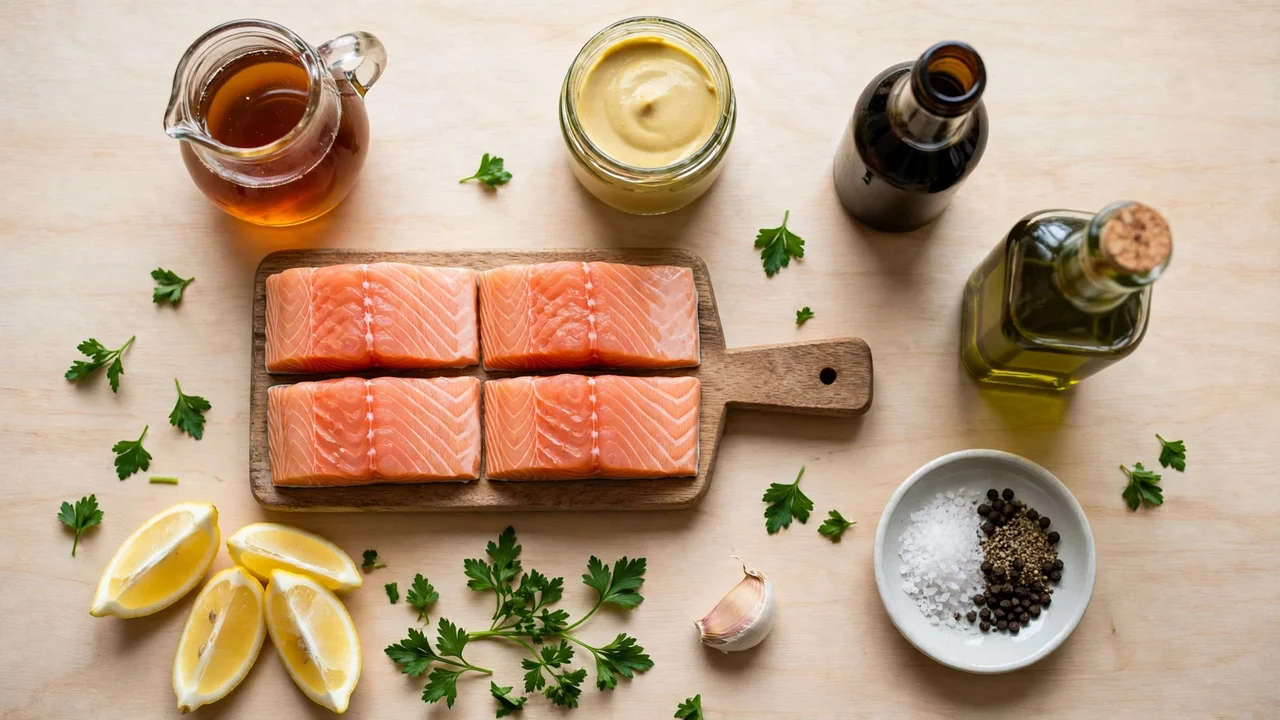
- 4 salmon fillets, about 6 ounces each, skin-on or skinless
- 1 tablespoon olive oil
- 1/2 teaspoon kosher salt
- 1/4 teaspoon black pepper
- Lemon wedges, for serving
- 1 tablespoon chopped fresh parsley or sliced scallions, for serving
For the maple Dijon glaze
- 1/4 cup pure maple syrup
- 2 tablespoons Dijon mustard
- 1 tablespoon soy sauce (low-sodium is fine)
- 1 clove garlic, finely grated or minced
- 1/2 teaspoon smoked paprika (optional, but lovely)
- Pinch of red pepper flakes (optional)
Instructions
- Heat the oven. Preheat to 425°F (220°C). Line a rimmed baking sheet with parchment paper or foil for easy cleanup. Take the salmon out of the fridge while the oven heats; 10 to 15 minutes on the counter takes the chill off and helps it cook evenly.
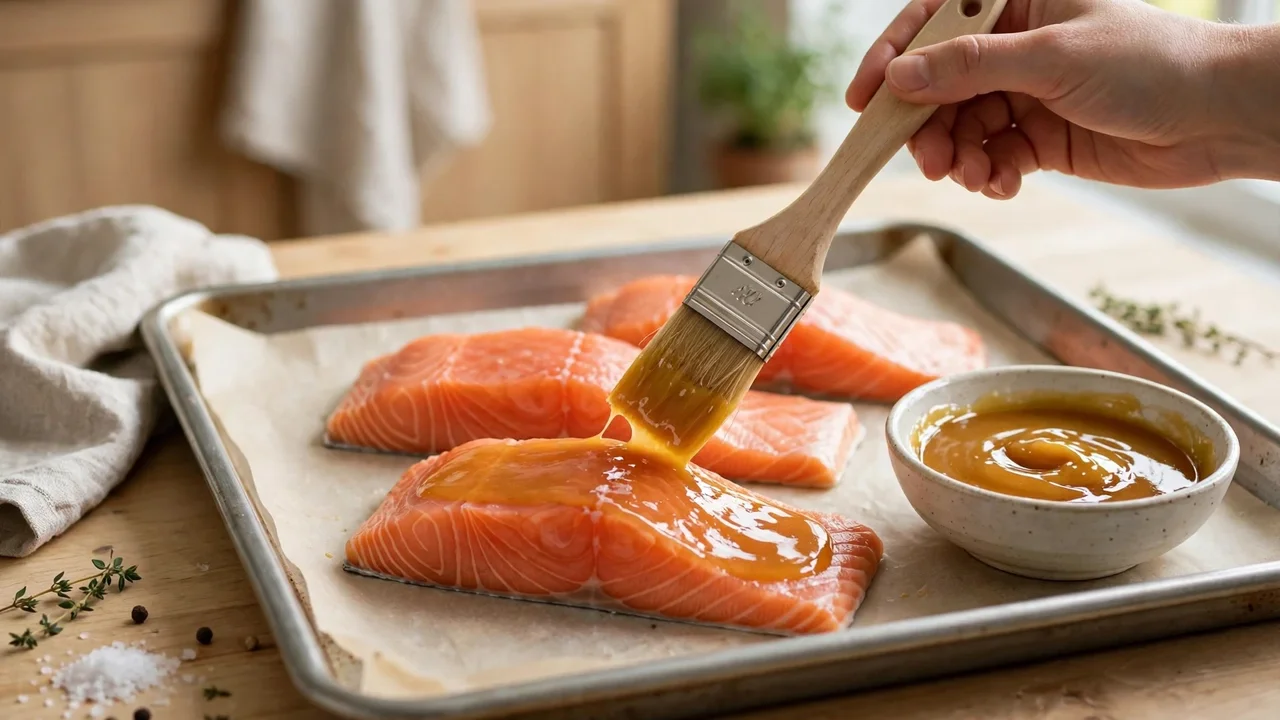
- Mix the glaze. In a small bowl, whisk together the maple syrup, Dijon mustard, soy sauce, garlic, smoked paprika, and red pepper flakes until smooth. Set aside about half in a separate small bowl for the final brush — don’t let the brush that touches raw fish go back into the reserved glaze.
- Season the fish. Pat the fillets dry with paper towels; this matters for getting a good surface. Rub with olive oil, then sprinkle with salt and pepper.
- Glaze and bake. Place the fillets on the prepared sheet, skin-side down if using skin-on. Spoon or brush the first half of the glaze generously over the tops and sides. Bake for 10 to 13 minutes, depending on thickness. The salmon is done when it flakes easily with a fork and the center is just barely translucent — an instant-read thermometer should read 125°F for medium or 135°F if you prefer it more cooked through.
- Finish. Brush the warm fillets with the reserved glaze, squeeze lemon over the top, and scatter with parsley or scallions. Rest 2 to 3 minutes and serve.
A Quick Note on Buying Salmon
Any salmon you like will work here, but a few choices make the dish easier. Center-cut fillets are the most even in thickness, which means they finish cooking at the same time — thin tail pieces are done minutes before the thick end. If your fillets vary a lot in thickness, pull the thinner ones off the sheet early rather than letting them dry out while the rest catches up.
Wild salmon (sockeye, coho) is leaner and cooks a touch faster than farmed Atlantic salmon, so start checking it at the 9-minute mark. Farmed salmon is more forgiving if it goes a minute over. Either way, look for flesh that springs back when pressed and smells like the ocean, not fishy. If you’re buying a whole side for guests, plan on about 6 ounces per person and pat the surface especially dry — more surface area means more moisture to wick away before glazing.
Tips for a Moist, Flavorful Result
- Don’t overbake. This is the single biggest mistake with salmon. Start checking at the 10-minute mark. The fish keeps cooking a little while it rests, so pull it when the center still looks slightly glossy.
- Dry fish, better glaze. Moisture on the surface thins the glaze and makes it slide off. A quick pat with paper towels fixes that.
- Room-temperature fish cooks evenly. A fridge-cold fillet will be overdone on the outside before the center warms up.
- Skin-on helps. If you have a choice, skin-on fillets stay moister and are easier to move around. The skin also crisps a bit against the hot pan and separates easily at serving.
- Real maple syrup only. Pancake syrup is mostly flavored corn syrup and burns differently. The real stuff is worth it here since it’s the headline ingredient.
Variations to Try
- Honey mustard version. Swap the maple syrup for honey and add a teaspoon of whole-grain mustard for texture.
- Miso maple. Replace the soy sauce with 2 teaspoons of white miso for a deeper, savory finish.
- On the grill. Cook over medium-high heat, skin-side down, with the lid closed for 8 to 10 minutes. Glaze in the last 3 minutes so the sugars don’t scorch over the flame.
- Whole side of salmon. For a 2-pound side, double the glaze, bake 15 to 18 minutes, and serve family-style with lemon wedges.
Storage and Make-Ahead
Leftover salmon keeps in an airtight container in the fridge for up to 2 days. Reheat gently — 10 minutes in a 275°F oven — or eat it cold flaked over greens with a drizzle of leftover glaze. It also makes an excellent salmon salad mixed with a spoonful of Greek yogurt, lemon juice, and chopped celery.
The glaze can be mixed up to 3 days ahead and kept in the fridge, which makes this even faster on a busy night. I don’t recommend freezing cooked salmon; the texture suffers. Freeze the raw fillets instead and bake within a day of thawing.
If you cook an extra fillet on purpose, tomorrow’s lunch is handled: flake it over warm rice with cucumber, a soft egg, and any glaze left in the jar, and you have a rice bowl that tastes like a different meal entirely.

Frequently Asked Questions
Can I use frozen salmon?
Yes. Thaw it overnight in the fridge or under cold running water in its sealed packaging, then pat it very dry before seasoning. Frozen fillets release extra moisture, so the drying step matters even more.
What should I serve with it?
Rice pilaf, roasted broccoli, green beans, or a simple cucumber salad all work. The sweet glaze pairs especially well with something green and a little bitter, like roasted Brussels sprouts.
How do I know the salmon is done without a thermometer?
Press the thickest part gently with a fork and twist slightly. The flakes should separate and look opaque on the outside with a slightly deeper pink center. If it resists and looks raw in the middle, give it 2 more minutes.
Can I make this with steelhead trout or arctic char?
Absolutely. Both are close relatives of salmon and take the same glaze and timing. Adjust by a minute or two for thinner fillets.
Recipe Card
- Prep Time: 10 minutes
- Cook Time: 12 minutes
- Total Time: 25 minutes (including resting)
- Servings: 4
Ingredients: 4 salmon fillets (6 oz each), olive oil, salt, pepper, maple syrup, Dijon mustard, soy sauce, garlic, smoked paprika, red pepper flakes, lemon, parsley.
Instructions summary: Heat oven to 425°F. Whisk glaze ingredients and reserve half. Season salmon, brush with half the glaze, and bake 10–13 minutes until it flakes easily. Brush with reserved glaze, add lemon and herbs, rest 3 minutes, and serve. For a sweet finish to the meal, these maple walnut blondies echo the glaze flavors beautifully.