
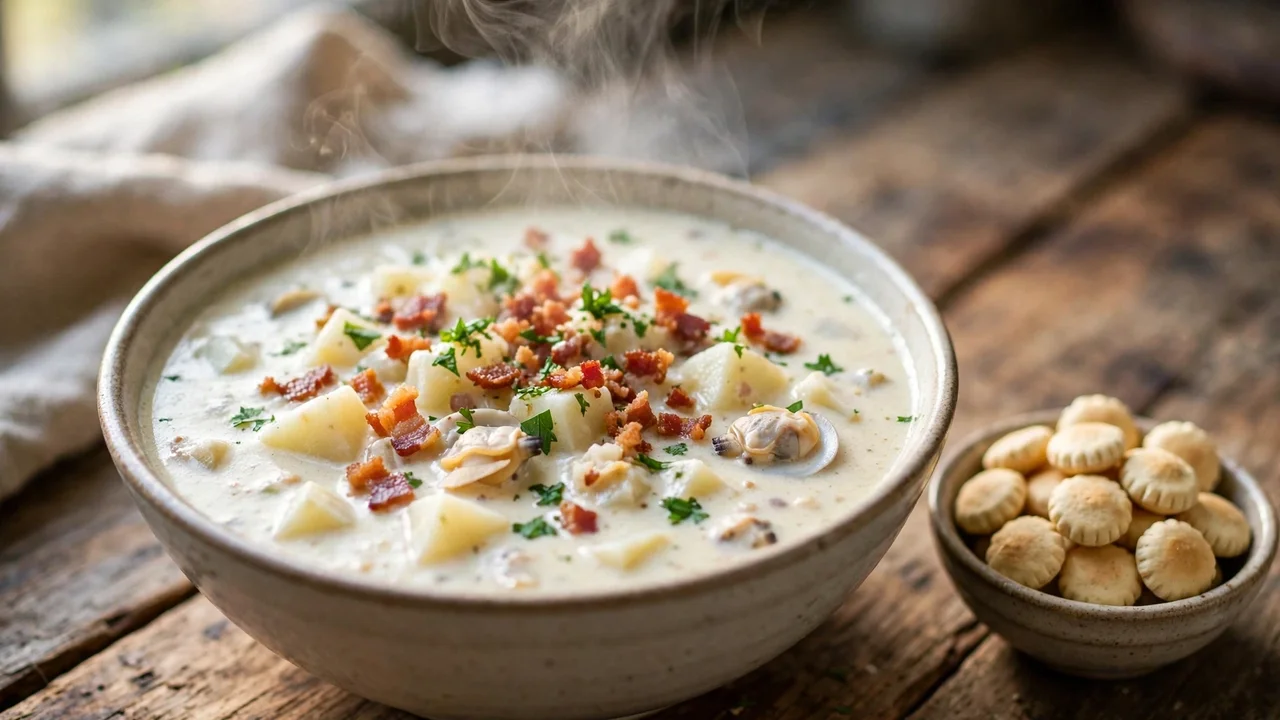
A proper New England clam chowder is a study in restraint. It is creamy but not thick like paste, briny with clam flavor all the way through, and loaded enough with clams and potatoes that a bowl is a meal. The disappointing versions fail in predictable ways: they are thickened with so much flour they eat like wallpaper paste, or the clams go in early and cook into rubber erasers, or — most common of all — the clam flavor is a rumor because the cooking liquid got poured down the drain. This recipe guards against all three. The clam liquor is saved and used, the potatoes simmer in it until they give up just enough starch to body the broth, and the clams themselves go in at the very end, off a hard boil, so they stay tender.
The base is bacon, onion, and celery cooked in the bacon’s own fat, which gives the chowder its smoky floor. From there it is potatoes, clam liquor, a bay leaf, and thyme, then cream and clams to finish. It tastes like a seaside shack’s best bowl, it comes together in about 45 minutes, and like most chowders it is even better the next day, when the flavors have had a night to settle into each other.
Why You’ll Love This Recipe
- Real clam flavor throughout. The liquor from the clams is strained and simmered with the potatoes, so every spoonful tastes of the sea — not just the bites that happen to contain a clam.
- Thick the right way. Potato starch and a modest roux give the chowder body without flouriness. It coats a spoon; it does not stand up in it.
- Tender clams, every time. The clams are added at the end and heated gently, never boiled, so they stay plump instead of turning chewy.
- One pot, weeknight pace. Bacon, vegetables, potatoes, finish. Forty-five minutes and most of it is a quiet simmer.
- Better on day two. The flavors meld overnight, making this an ideal make-ahead soup for company.
Ingredients
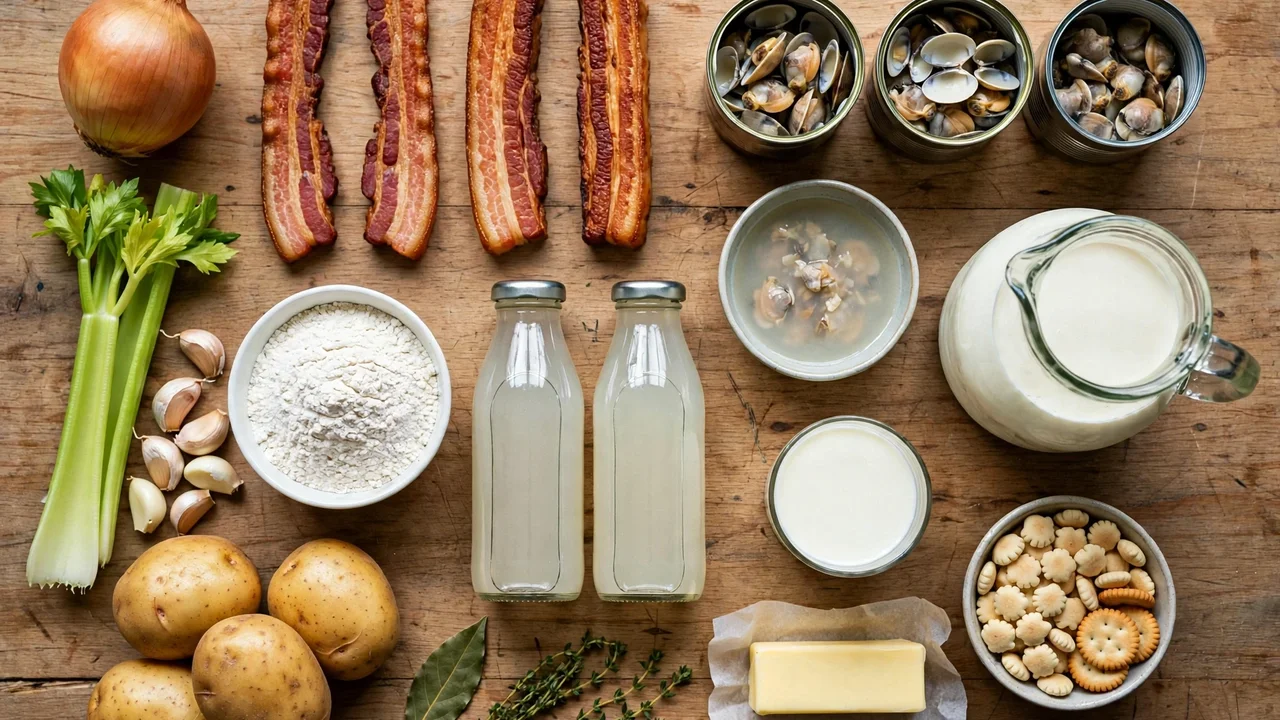
- 4 slices thick-cut bacon, diced (about 4 ounces)
- 1 medium yellow onion, finely diced
- 2 celery stalks, finely diced
- 2 garlic cloves, minced
- 3 tablespoons all-purpose flour
- 2 bottles (8 ounces each) clam juice
- 1 1/2 cups water or light chicken broth
- 1 1/2 pounds Yukon Gold potatoes, peeled and cut into 1/2-inch cubes
- 1 bay leaf
- 1 teaspoon fresh thyme leaves (or 1/2 teaspoon dried)
- 3 cans (6.5 ounces each) chopped clams, drained, liquor reserved
- 1 cup heavy cream
- 1/2 cup whole milk
- 1 tablespoon unsalted butter
- Fine salt and black pepper, to taste
- 2 tablespoons chopped fresh parsley or chives
- Oyster crackers, to serve
A note on the clams: Canned chopped clams are the practical choice for a weeknight chowder and they are genuinely good here, as long as you reserve the liquor — that liquid is the flavor base of the whole pot, and it goes in with the bottled clam juice. If you have access to fresh clams, steam 3 pounds of littlenecks in a cup of water until they open, chop the meats, strain the steaming liquid through a coffee filter, and use it in place of one bottle of clam juice.
Instructions
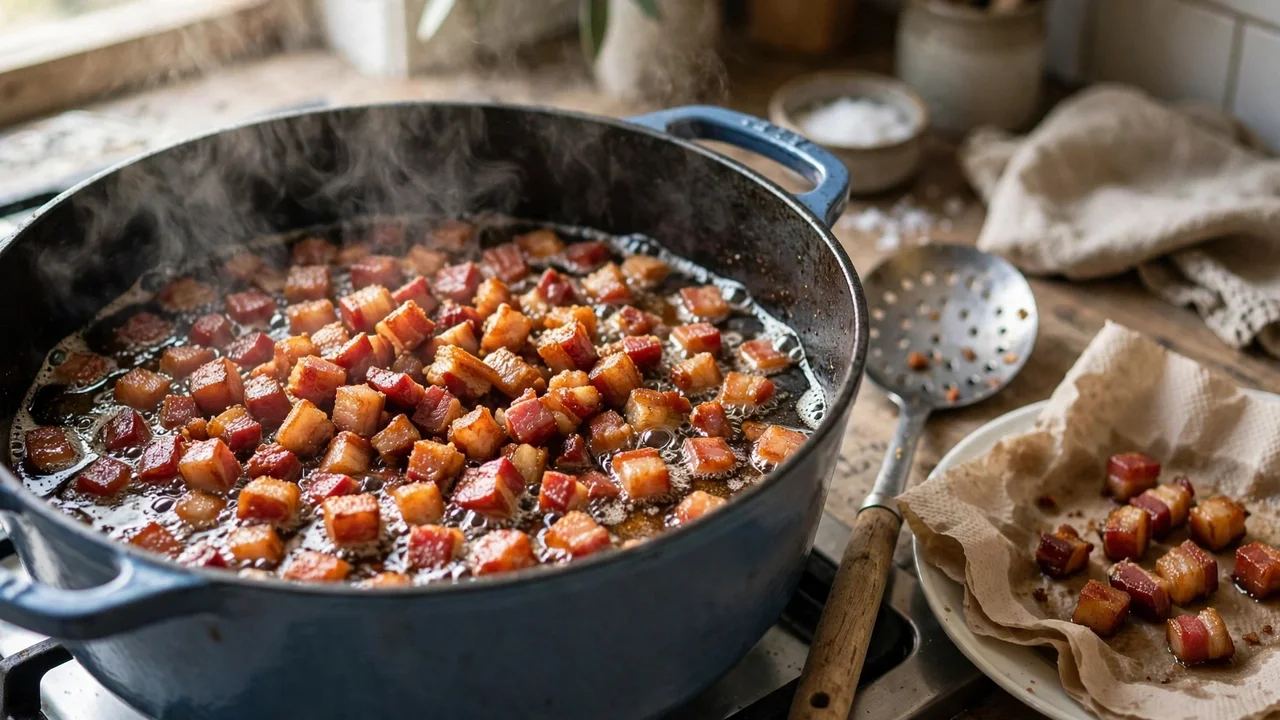
- Crisp the bacon. In a large Dutch oven over medium heat, cook the diced bacon, stirring occasionally, 6 to 8 minutes, until crisp and the fat has rendered. Lift the bacon out with a slotted spoon onto a paper towel, leaving the fat in the pot.
- Soften the vegetables. Add the onion and celery to the bacon fat with a pinch of salt and cook 5 to 6 minutes, until soft and translucent but not browned. Stir in the garlic for 30 seconds.
- Make the roux. Sprinkle the flour over the vegetables and stir constantly for 1 to 2 minutes, until it coats everything and smells faintly nutty. This cooks out the raw flour taste.
- Add the liquids and potatoes. Slowly pour in the reserved clam liquor, the bottled clam juice, and the water, whisking as you go to keep the roux smooth. Add the potatoes, bay leaf, and thyme. Bring to a boil, then lower to a steady simmer.
- Simmer until the potatoes give. Cook 12 to 15 minutes, until the potatoes are completely tender and a few cubes break apart when pressed against the side of the pot. Lightly mash a spoonful of potatoes against the side and stir them in — this is the chowder’s natural thickener.
- Finish, gently. Lower the heat to the barest simmer. Stir in the cream, milk, butter, and the clams. Warm through 3 to 4 minutes, until steaming and just hot — do not let it boil from this point on, or the clams toughen and the cream can separate.
- Season and serve. Fish out the bay leaf. Taste and season with salt and plenty of black pepper — the clam liquor is salty, so taste before adding much. Ladle into warm bowls, top with the reserved bacon and parsley, and pass the oyster crackers.
Tips
- Never boil the finished chowder. Heat is the enemy twice over at the end: it toughens the clams and can break the cream. Keep the pot at a bare simmer after the dairy goes in, and reheat leftovers the same patient way.
- Strain the clam liquor. Canned clam liquor occasionally carries a bit of grit or shell. Pour it through a fine-mesh strainer or a paper towel set in a sieve before it goes in the pot.
- Cut the potatoes evenly. Half-inch cubes cook at the same rate, so the chowder thickens from the potatoes that break down while the rest stay in distinct, tender pieces.
- Undercook nothing, overcook less. Potatoes must be fully tender before the cream goes in — they will not soften much more afterward, since the heat drops and the dairy buffers the simmer.
Variations
- Fresh clam version. Use the steamed littlenecks described in the ingredient notes. The flavor is brighter and sweeter; the method is identical from the roux onward.
- Corn and clam chowder. Add 1 cup of corn kernels with the potatoes for a sweeter, late-summer bowl.
- Smokier pot. Swap the bacon for 4 ounces of diced salt pork or add a pinch of smoked paprika with the flour.
- Lighter chowder. Use half-and-half in place of the cream and milk, and add an extra handful of potato cubes to keep the body. It will be a little less rich but still tastes like chowder — a milder cousin of the creaminess in chicken pot pie, which gets its comfort from the same roux-and-dairy logic.
Storage and Make-Ahead
Chowder keeps, refrigerated, up to 3 days, and the flavor genuinely improves over the first night as the potatoes and clams settle into the broth. Reheat slowly over low heat, stirring often, and do not let it reach a boil. For make-ahead, cook the chowder through step 5, cool, and refrigerate up to 2 days; when ready to serve, warm it gently and finish with the cream, milk, butter, and clams — this protects both the dairy and the clams and gives the freshest-tasting bowl. Freezing is not kind to this soup: potatoes turn grainy and cream sauces can separate, so freeze only if necessary and expect a slightly looser texture after thawing. Warm soft, buttery dinner rolls are the classic partner for dunking when oyster crackers run out.

Frequently Asked Questions
My chowder is too thin. How do I fix it? Simmer it a little longer with the lid off, or mash more of the potatoes into the broth. If it is still loose, whisk 1 tablespoon of cornstarch with 2 tablespoons of cold milk, stir it in, and hold at a bare simmer 2 minutes.
My chowder is too thick and gluey. It was over-floured or boiled down too far. Whisk in milk or clam juice a splash at a time until it pours like heavy cream, and warm it gently back through.
Can I use frozen clams or clam meat? Yes — thaw them in the refrigerator, drain them, and reserve any liquid they give off for the pot. Add frozen-then-thawed clams exactly like the canned ones, at the very end.
What potatoes work best? Yukon Golds are the sweet spot: waxy enough to hold their shape, starchy enough that the broken pieces thicken the broth. Russets break down too completely and can turn the chowder grainy; red potatoes hold up but thicken nothing.
Recipe Card
- Prep Time: 15 minutes
- Cook Time: 30 minutes
- Total Time: About 45 minutes
- Servings: 6 bowls
Bacon, onion, and celery in a light roux, simmered with potatoes in reserved clam liquor and clam juice until the potatoes body the broth, then finished with cream and chopped clams kept off the boil so they stay tender. Briny, creamy, and thick in the natural way — a seaside chowder that is better on day two and worth making on day one.