
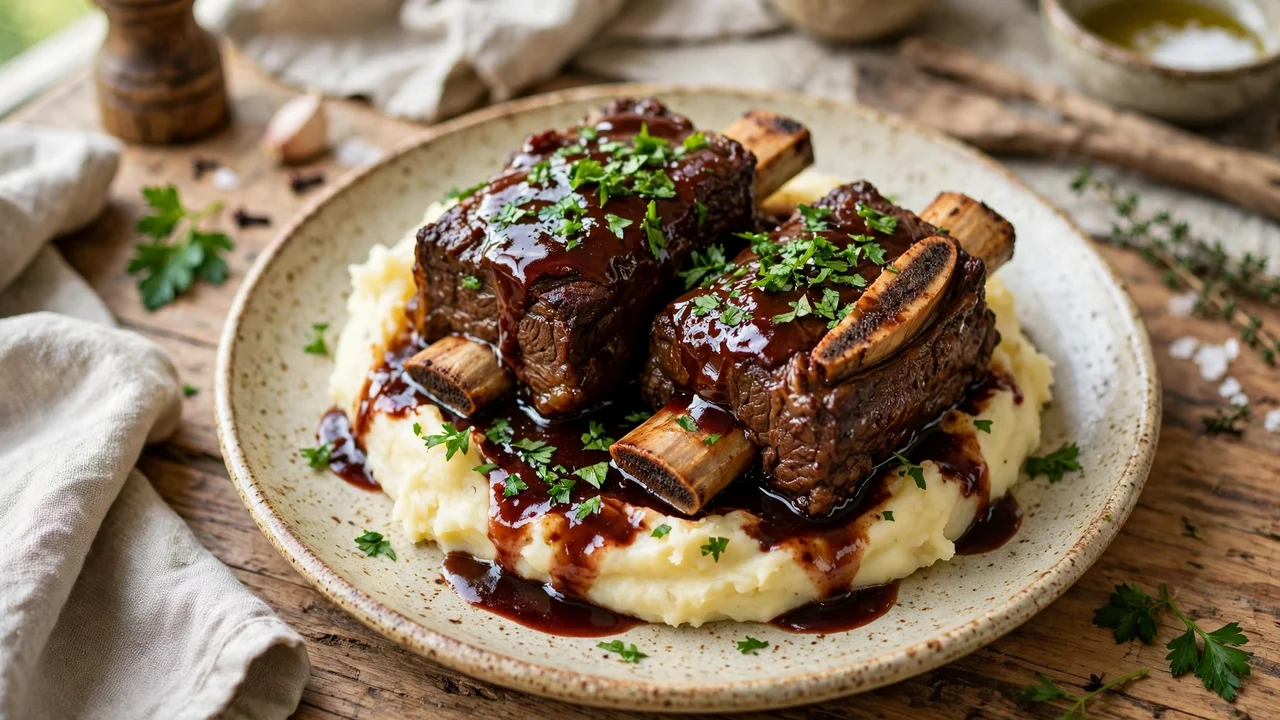
Short ribs ask for two things: a hard sear and a long, patient braise. Give them both and the meat does something no quicker cut can do — it relaxes into the sauce, rich and silky, ready to fall off the bone but still holding together on the plate. The red wine, the browned bits from the searing pan, and a few hours of low heat turn into a sauce with real depth, the kind that makes people ask what you put in it.
This is a technique recipe at heart. The sear builds the fond, the fond builds the sauce, and the braise does the rest. None of the steps are hard, but the order matters and the sear is not the place to rush — pale ribs make a pale sauce, no matter how long they cook.
Make it for a Sunday, or for company, or on a Friday night so Saturday’s dinner is already done. Braised short ribs are better the next day, once the meat has spent a night in its own sauce. That is not a shortcut talking; it is why this dish shows up on restaurant menus as the thing that tastes like someone cooked all day.
Why You’ll Love This Recipe
- A sauce with actual depth. Wine, tomato paste, and the fond from a proper sear — no shortcuts, no thin gravy.
- Mostly hands-off. Twenty minutes of work up front, then the oven takes over for three hours.
- Better the next day. Make it ahead for company and it genuinely improves.
- Falls apart, but slices clean. Tender enough to shred, structured enough to plate beautifully.
- One pot. Sear, braise, and sauce all happen in the same Dutch oven.
Ingredients
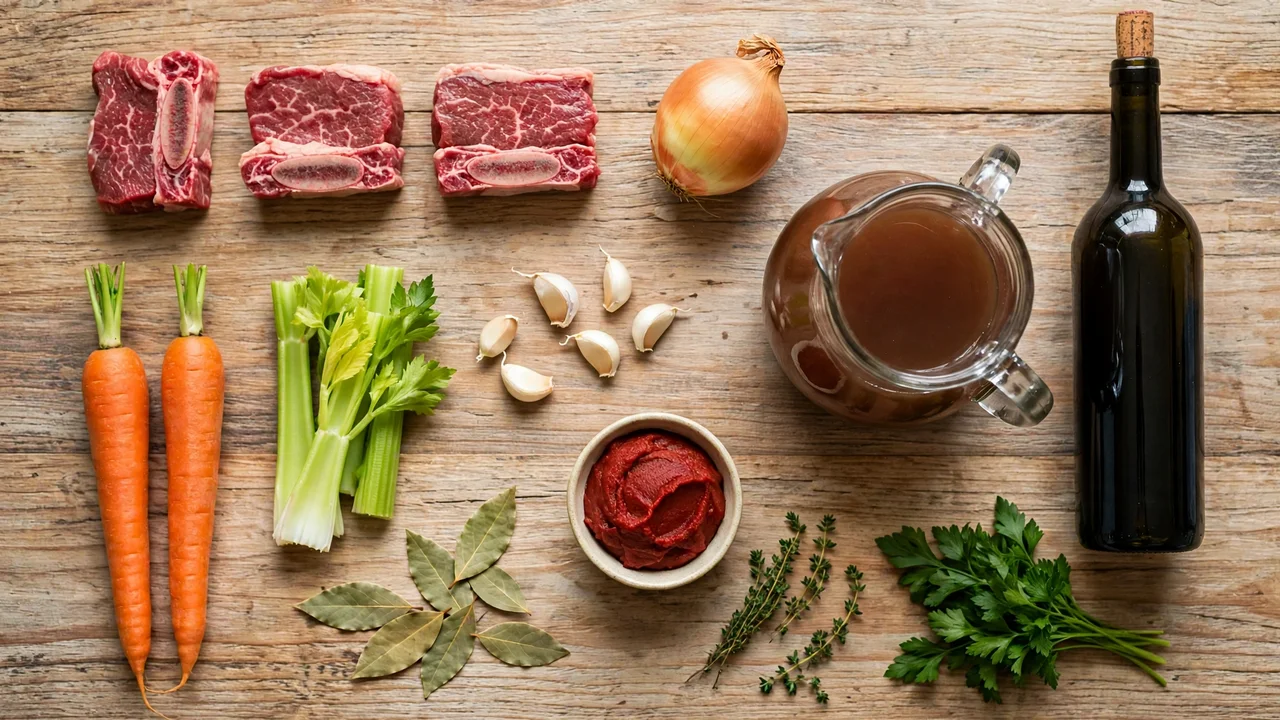
- 4 pounds bone-in beef short ribs, English cut (about 8 ribs)
- 2 teaspoons fine sea salt, plus more to taste
- 1 teaspoon black pepper
- 2 tablespoons neutral oil (avocado or grapeseed)
- 1 large yellow onion, diced
- 2 medium carrots, diced
- 2 celery stalks, diced
- 4 garlic cloves, minced
- 2 tablespoons tomato paste
- 2 cups dry red wine (something you’d drink — Côtes du Rhône, Chianti, or a sturdy merlot)
- 2 to 3 cups low-sodium beef broth, enough to come about two-thirds up the ribs
- 2 bay leaves
- 4 sprigs fresh thyme, or 1 teaspoon dried
- 1 tablespoon balsamic vinegar or a pinch of sugar, to finish
- 2 tablespoons chopped fresh parsley, for serving
Instructions
-
Dry and season the ribs. Pat the ribs very dry with paper towels — moisture is the enemy of browning. Season all over with the salt and pepper. Let them sit at room temperature 30 to 45 minutes while the oven heats to 325°F (165°C).
-
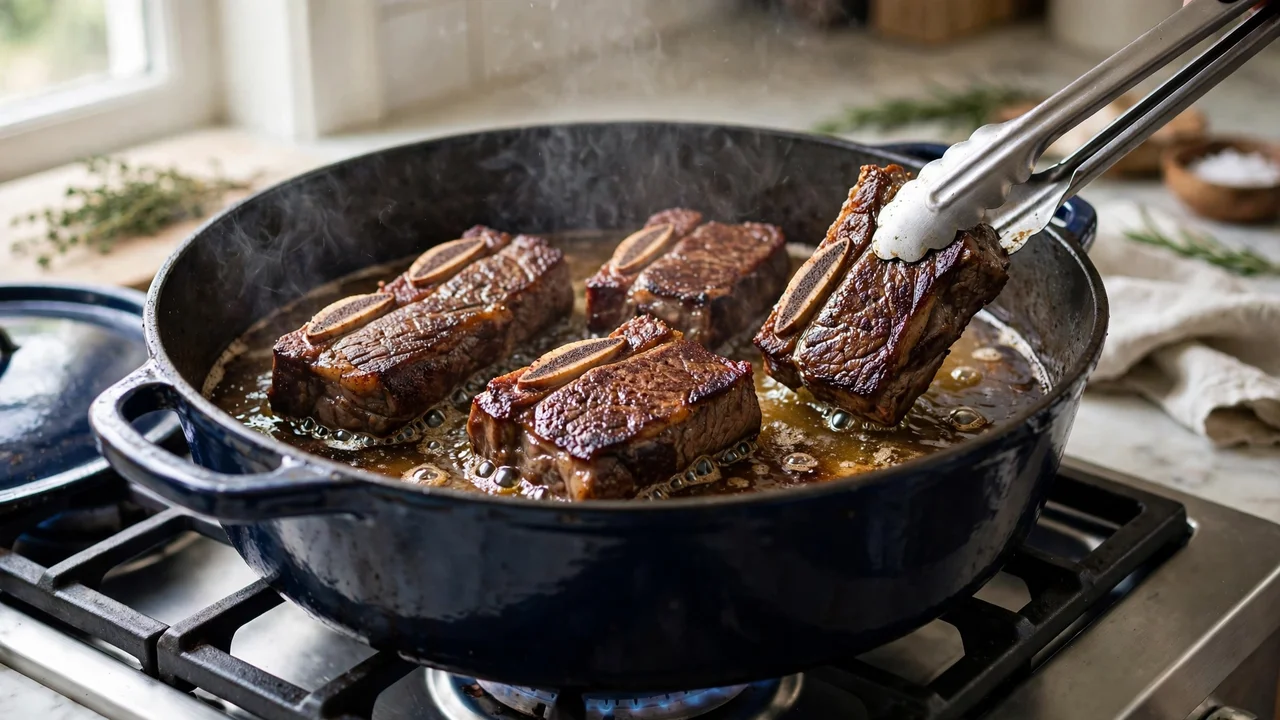
Sear in batches. Heat the oil in a large Dutch oven over medium-high heat until it shimmers. Sear the ribs in a single layer, uncrowded, 3 to 4 minutes per side, until deeply browned on all sides including the ends. This takes patience and probably two batches. Transfer the ribs to a plate. If you crowd the pan, the ribs steam instead of sear, and the sauce pays for it.
-
Build the base. Pour off all but about 2 tablespoons of fat. Lower the heat to medium and add the onion, carrots, and celery with a pinch of salt. Cook, stirring and scraping up the browned bits, until softened and starting to color, 7 to 8 minutes. Stir in the garlic for 30 seconds, then the tomato paste, and cook 2 minutes more, until the paste darkens to a brick red — this cooks out its tinny edge.
-
Deglaze with the wine. Pour in the wine and scrape the bottom of the pot thoroughly; every browned speck is flavor you seared on purpose. Simmer until the wine reduces by about a third and the sharp alcohol smell softens, 4 to 5 minutes.
ADVERTISEMENT -
Braise. Return the ribs to the pot, bone side down if they’ll sit that way, along with any juices on the plate. Add broth to come about two-thirds up the meat — the ribs should peek out of the liquid, not swim. Add the bay leaves and thyme. Bring to a gentle simmer, cover, and move to the oven.
-
Cook low and slow. Braise 2 1/2 to 3 hours, turning the ribs once halfway, until the meat is very tender, pulls easily from the bone, and offers no resistance to a fork. If it fights back, it needs more time — check every 20 minutes rather than guessing.
-
Finish the sauce. Lift the ribs out gently and tent with foil. Strain the braising liquid through a fine-mesh strainer into a bowl, pressing on the vegetables, then let it sit 10 minutes and skim the fat from the surface (or chill it and lift the solid fat off — easier and cleaner). Return the liquid to the pot and simmer until it coats the back of a spoon, 8 to 12 minutes. Stir in the balsamic, taste, and adjust salt and pepper.
-
Serve. Return the ribs to the sauce for 5 minutes to warm through and gloss over. Serve over mashed potatoes, polenta, or buttered noodles, spooning extra sauce over each portion and scattering parsley on top.
Tips for a Braise That Behaves
- The sear is the sauce. Brown means flavor. Take the extra minutes, work in batches, and let each side sit undisturbed until it releases easily from the pan.
- Choose wine you’d drink. It doesn’t need to be expensive, but cooking concentrates whatever is in the bottle. If it tastes harsh in the glass, it will taste harsh in the pot.
- Two-thirds up, not submerged. Braising is a mix of simmering and steaming; meat above the liquid line bastes in the pot’s steam and browns a little more as it goes.
- Test with a fork, not the clock. Ribs vary in size. Done means the meat yields completely, with the bone loosening when you wiggle it.
- Defat the sauce. Short ribs are fatty, and the braising liquid will be rich. Skimming makes the difference between silky and greasy.
Variations
- Guinness braise. Replace the wine with a stout and add a tablespoon of brown sugar and a teaspoon of mustard to the braising liquid — the method sits in the same family as a classic beef bourguignon and is just as forgiving.
- Tomato-braised. Skip the wine, use 1 cup of broth plus a 14-ounce can of crushed tomatoes, and add a cinnamon stick and a strip of orange peel for a warmer spice profile.
- Asian-style. Swap the wine for 1/2 cup sake and 1 1/2 cups broth, and add 1/4 cup soy sauce, 2 tablespoons brown sugar, ginger slices, and star anise. Finish with sesame oil and scallions.
- Boneless ribs. Boneless short ribs work with the same method; check tenderness 30 minutes earlier.
- Slow cooker. Sear and build the sauce on the stove as written — do not skip this — then transfer everything to a slow cooker for 8 hours on low.
Storage and Make-Ahead
This is the rare main dish that improves with a head start. Refrigerate the ribs in their strained sauce for up to 4 days; the fat solidifies on top and lifts off in one clean layer. Reheat gently, covered, in a 300°F oven for 25 to 30 minutes, until the meat is warmed through.
Freeze in the sauce for up to 3 months. Thaw overnight in the fridge and reheat the same way. The sauce may look split when thawed; it comes back together as it warms and you whisk it.
Frequently Asked Questions
Can I make this without wine?
Yes. Replace it with an equal amount of beef broth plus 1 tablespoon of red wine vinegar or balsamic for acidity. The sauce will be a little less layered but still rich — the same trade-off you accept in an oven-braised brisket when you braise in broth alone.
Why are my ribs tough after 3 hours?
They are underdone, not ruined. Braising goes through a phase where the meat tightens before it relaxes. Put the lid back on and give them another 30 to 45 minutes — collagen needs time, and rushing it is the one mistake you can’t fix afterward.
Should I flour the ribs before searing?
You can — a light dusting thickens the sauce slightly and deepens the crust — but it also risks a scorched fond. This recipe thickens the sauce by reduction instead, which keeps the flavor cleaner.
What cut can I substitute?
Chuck roast cut into large chunks is the best stand-in and cooks in about the same time. Oxtails also braise beautifully; allow an extra 30 to 45 minutes.
Recipe Card
- Prep Time: 25 minutes
- Cook Time: 3 hours 15 minutes
- Total Time: About 3 hours 45 minutes, mostly hands-off
- Servings: 4 to 6
- Summary: Bone-in short ribs, seasoned and seared hard in batches, braised in red wine with onion, carrot, celery, tomato paste, and thyme until fork-tender. The strained braising liquid is skimmed and reduced into a glossy sauce that gets spooned over the top — Sunday cooking at its most rewarding.