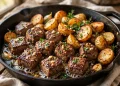

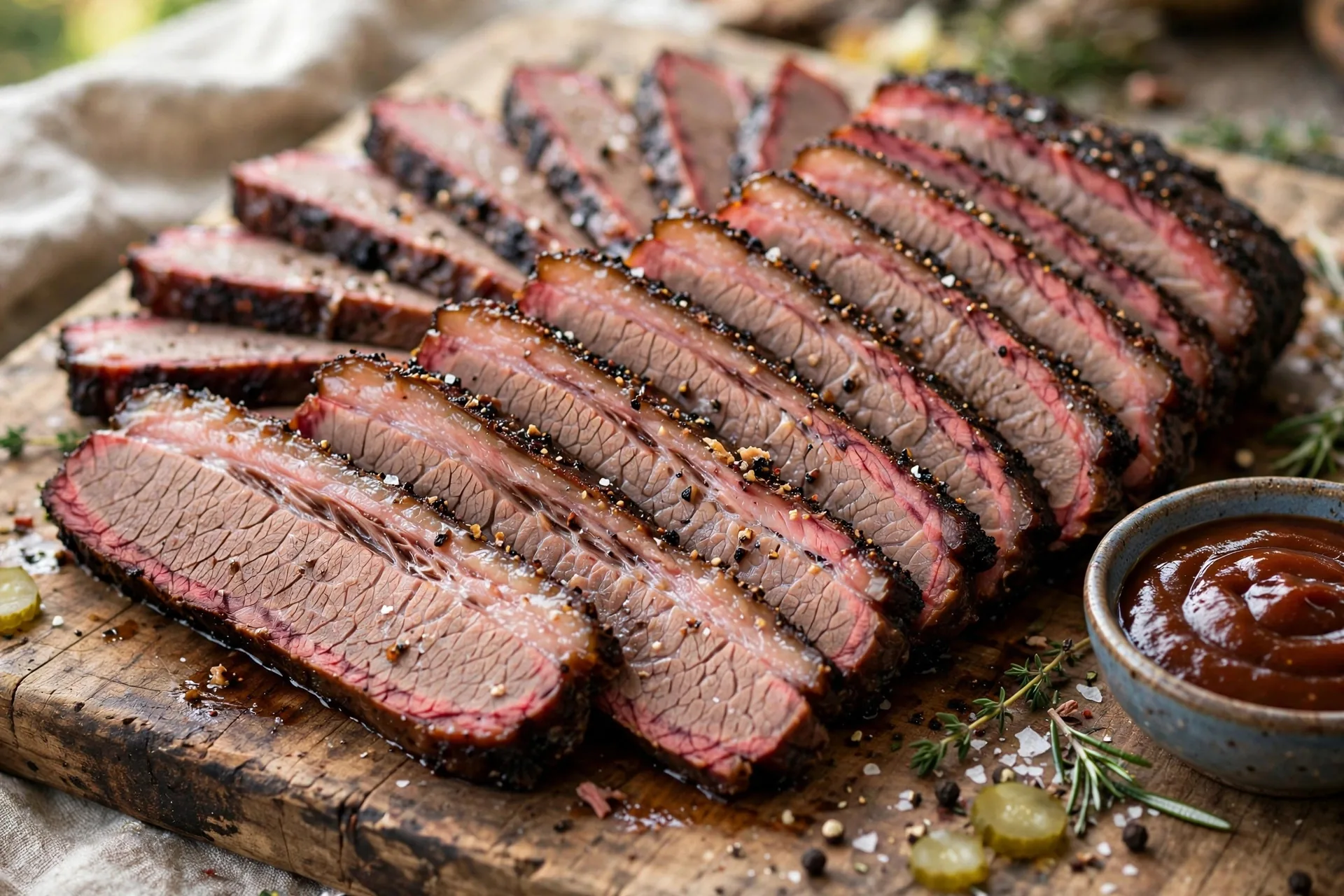
You do not need a smoker, a backyard or a 2 a.m. alarm to make transcendent brisket. What you need is a heavy roasting pan, a low oven and the patience to let collagen do its slow magic. This oven method delivers everything you want from BBQ brisket — a dark, flavorful bark, meat that yields to a fork, and juices that glisten — with none of the equipment.
The technique borrows the two pillars of great barbecue: low and slow, then wrapped. The dry rub builds the bark, the foil wrap (the famous “Texas crutch”) powers through the stall, and a long rest lets every fiber relax and reabsorb moisture. If you love low-and-slow beef, you will also love these easy sloppy joes for a weeknight fix, and our guide to smart meat thermometers will help you nail the temperatures that matter most here.
Plan this for a lazy Sunday: six hours in the oven sounds like a lot, but your active work is about 20 minutes. The oven — and the thermometer — do the rest.
Why You’ll Love This Recipe
- No smoker required: A regular kitchen oven and a roll of foil produce genuinely great brisket.
- Real bark, real tenderness: The smoky dry rub forms a dark crust while the wrap keeps the meat juicy.
- Feeds a crowd: A 5 to 6-pound brisket serves 10 generously — perfect for gatherings and game day.
- Thermometer-driven: Exact target temperatures remove all guesswork from a notoriously tricky cut.
- Leftover gold: Brisket makes legendary sandwiches, tacos, chili and hash the next day.
Ingredients
For the brisket
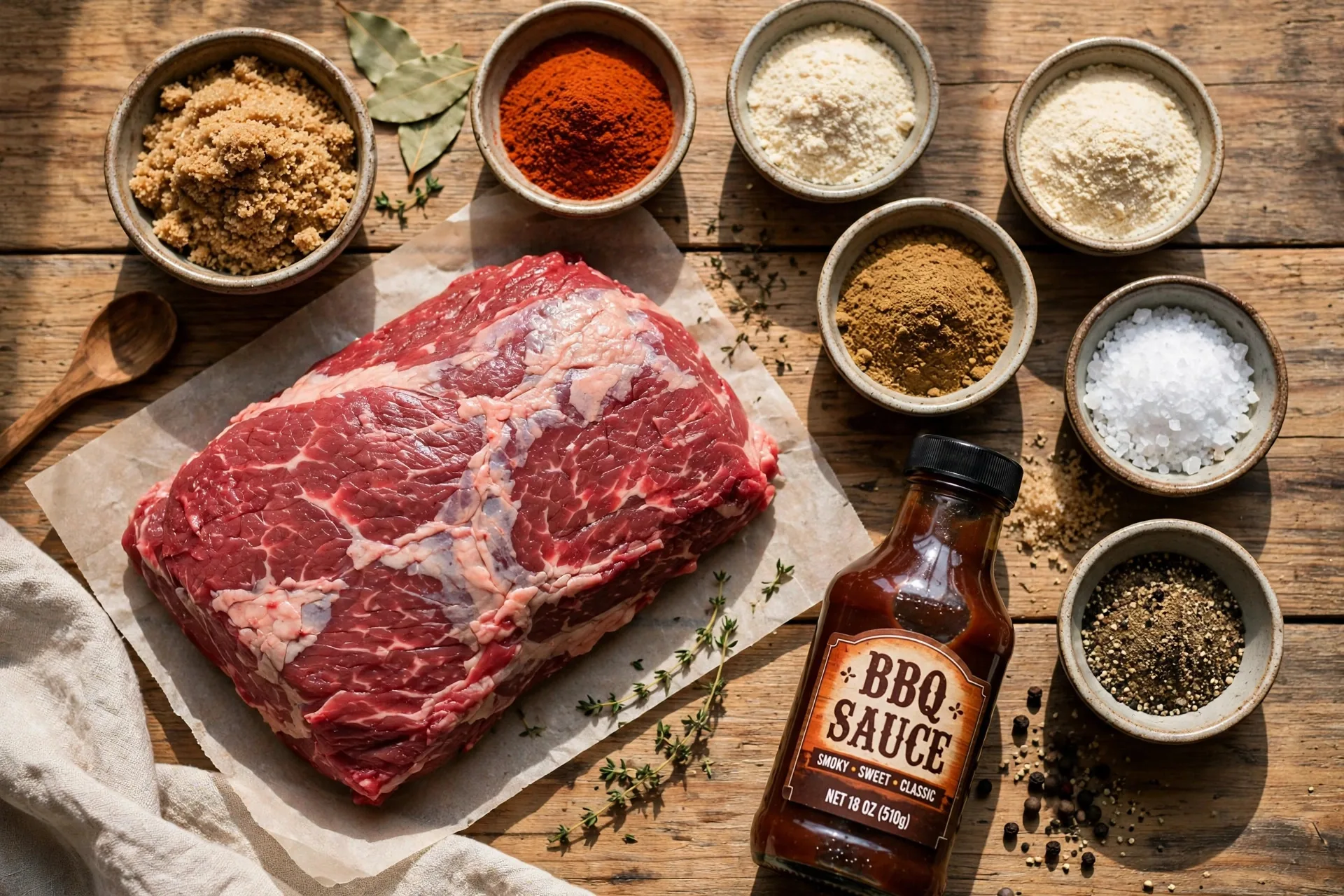
- 1 beef brisket flat, 5 to 6 lb (2.3 to 2.7 kg), fat cap trimmed to 1/4 inch
- 1 cup (240 ml) beef broth
- 1/2 cup (120 ml) barbecue sauce, plus more for serving
For the dry rub
- 1/4 cup (55 g) packed brown sugar
- 2 tbsp (14 g) smoked paprika
- 1 tbsp (9 g) garlic powder
- 1 tbsp (9 g) onion powder
- 2 tsp (4 g) ground cumin
- 1 tbsp (18 g) kosher salt
- 1 tbsp (6 g) coarsely ground black pepper
- 2 tsp (4 g) mustard powder (optional, adds tang)
Instructions
- Trim and season. If your brisket has a thick fat cap, trim it down to an even 1/4 inch — you want enough fat to baste the meat, but not a thick slab that blocks the rub. Pat the brisket dry. Mix all the dry rub ingredients in a small bowl, then coat the brisket generously on every side, pressing the rub in with your hands. Let it rest at room temperature for 1 hour so the salt starts working, or refrigerate uncovered overnight for an even deeper bark (a dry brine effect).
- Start low and slow. Preheat the oven to 275°F (135°C). Set a wire rack inside a large roasting pan and pour the beef broth into the bottom of the pan — this creates a humid environment that keeps the brisket from drying out. Place the brisket fat-side up on the rack (the melting fat will baste the meat as it cooks). Roast unwrapped for 3 hours. The rub will darken and set into a crust; do not be alarmed by how dark it gets — that is bark, and it is delicious.
- Wrap it. After about 3 hours, the internal temperature will likely be hovering around 160°F (71°C) and may stall there — this is normal; evaporative cooling holds the temperature steady, sometimes for hours. This is when you deploy the Texas crutch: lay out a double layer of heavy-duty foil, place the brisket in the center, spoon over a few tablespoons of the hot pan juices, and wrap it as tightly as you can without tearing the foil. The wrap traps moisture and pushes the brisket through the stall.
- Finish to tenderness. Return the wrapped brisket to the oven and cook for 2 1/2 to 3 hours more. Start checking at the 2-hour mark, aiming for 195 to 205°F (90 to 96°C) — but temperature is only half the story. Slide an instant-read thermometer or skewer into the thickest part — it should glide in with almost no resistance, like probing soft butter. If there is any tug, give it another 30 minutes. Total oven time is typically 5 1/2 to 6 hours.
- Rest — seriously, rest. Transfer the still-wrapped brisket to a cutting board and let it rest for 45 to 60 minutes. Cutting too early will flood the board with juices that belong in the meat. During the rest, the internal temperature will settle and the fibers will relax and reabsorb moisture. This step is as important as the cooking itself.
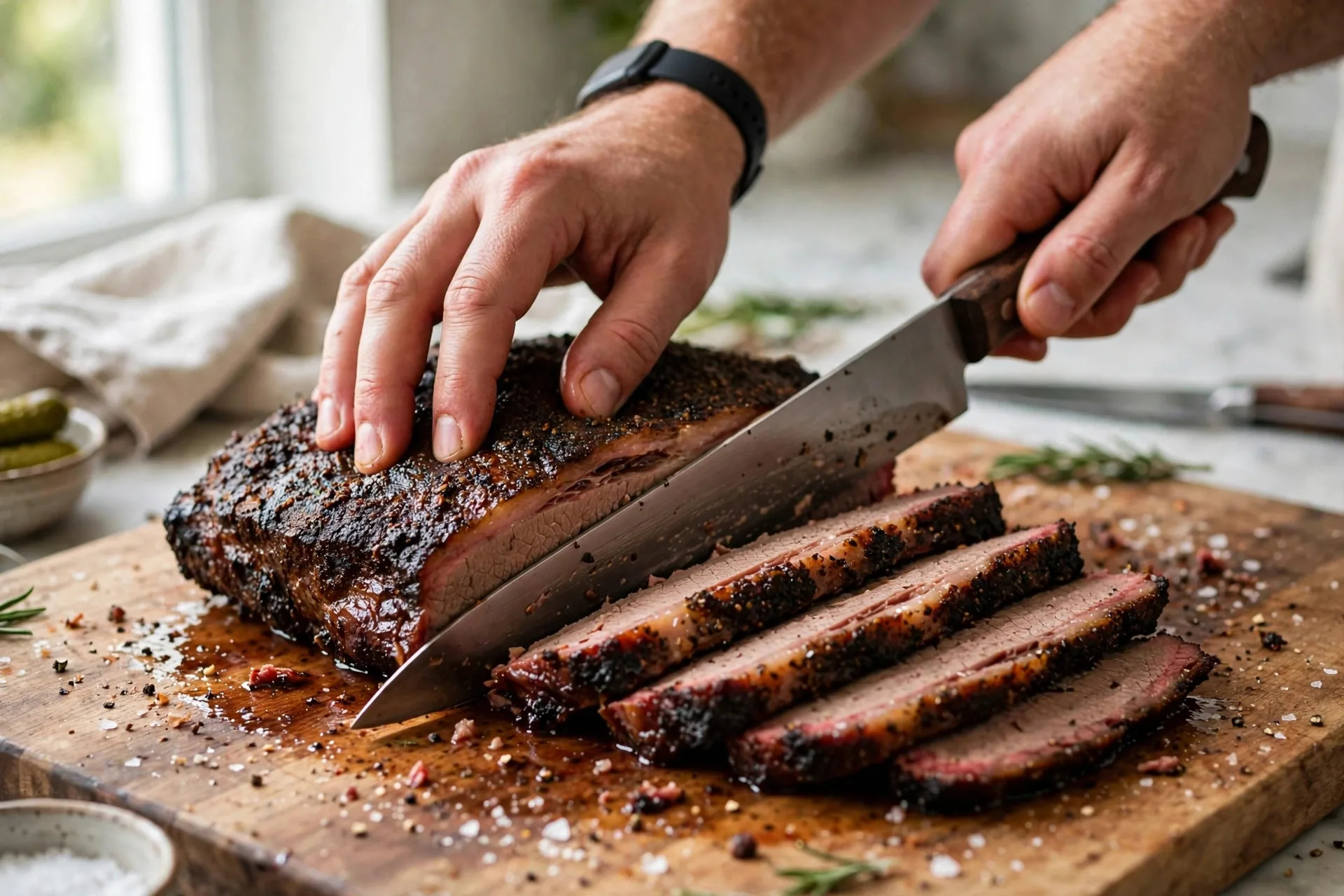
- Slice and serve. Unwrap the brisket (save those foil juices — drizzle them over the slices). Notice the direction of the grain and slice against it into 1/4-inch slices; cutting with the grain gives you chewy, stringy meat no matter how well you cooked it. If you like, brush the slices lightly with warm barbecue sauce, or serve the sauce on the side and let people decide. Arrange on a platter, spoon over some of the reserved juices, and watch it vanish.
Tips & Variations
- Buy the flat, not the point: The flat is the lean, uniform half of the brisket that slices beautifully. The point (deckle) is fattier — great for burnt ends, but the flat is what you want for slicing.
- Do not skip the rest: A full 45 to 60-minute rest is mandatory. Tent it loosely if your kitchen is cool; it will stay plenty hot.
- Make it ahead: Brisket reheats wonderfully. Cook it a day early, refrigerate whole, then reheat wrapped in foil at 300°F (150°C) until warmed through, about 1 hour.
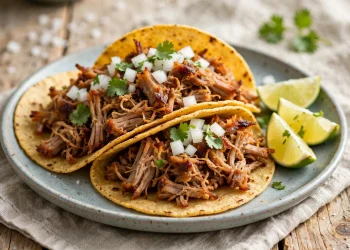
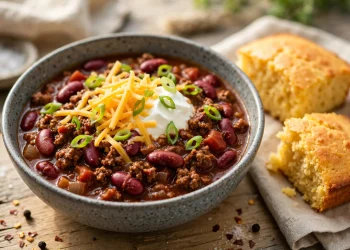
- Leftover ideas: Chopped brisket makes incredible tacos, sandwiches with pickles and slaw, chili, or a breakfast hash with fried eggs.
- Sauce on the side: Great brisket needs no sauce, but a tangy Kansas City-style barbecue sauce on the side never hurts.
Storage
Refrigerate leftover brisket in an airtight container (ideally with some of the cooking juices) for up to 4 days. Freeze sliced brisket with its juices for up to 3 months. Reheat gently: wrapped in foil at 300°F (150°C) until warmed through, or sous-vide style in a sealed bag in hot water.
FAQ
Why is my brisket tough?
It is almost certainly undercooked. Brisket must reach 195 to 205°F (90 to 96°C) for the collagen to fully convert to gelatin — if the probe meets resistance, give it another 30 to 60 minutes and check again.
What is the stall, and should I worry about it?
Around 150 to 165°F (65 to 74°C), evaporative cooling can hold the brisket’s temperature steady for hours. It is completely normal. Wrapping in foil (the Texas crutch) powers through it by trapping moisture.
Fat side up or fat side down?
In an oven, fat side up: the rendering fat bastes the meat as it cooks, and the rack keeps the bottom from sitting in liquid. (On a smoker with heat from below, fat side down protects the meat — different setup, different answer.)
Can I use a smaller brisket?
Yes, but do not go below about 4 pounds — smaller briskets dry out more easily. Reduce the rub proportionally and start checking for doneness about an hour earlier.
Recipe Card
- Prep time: 20 minutes
- Cook time: 6 hours
- Total time: 6 hours 20 minutes
- Servings: 10
- Calories: 480 kcal per serving
Dark bark, juicy slices, zero special equipment — this is the oven brisket that will make you the hero of every cookout.