
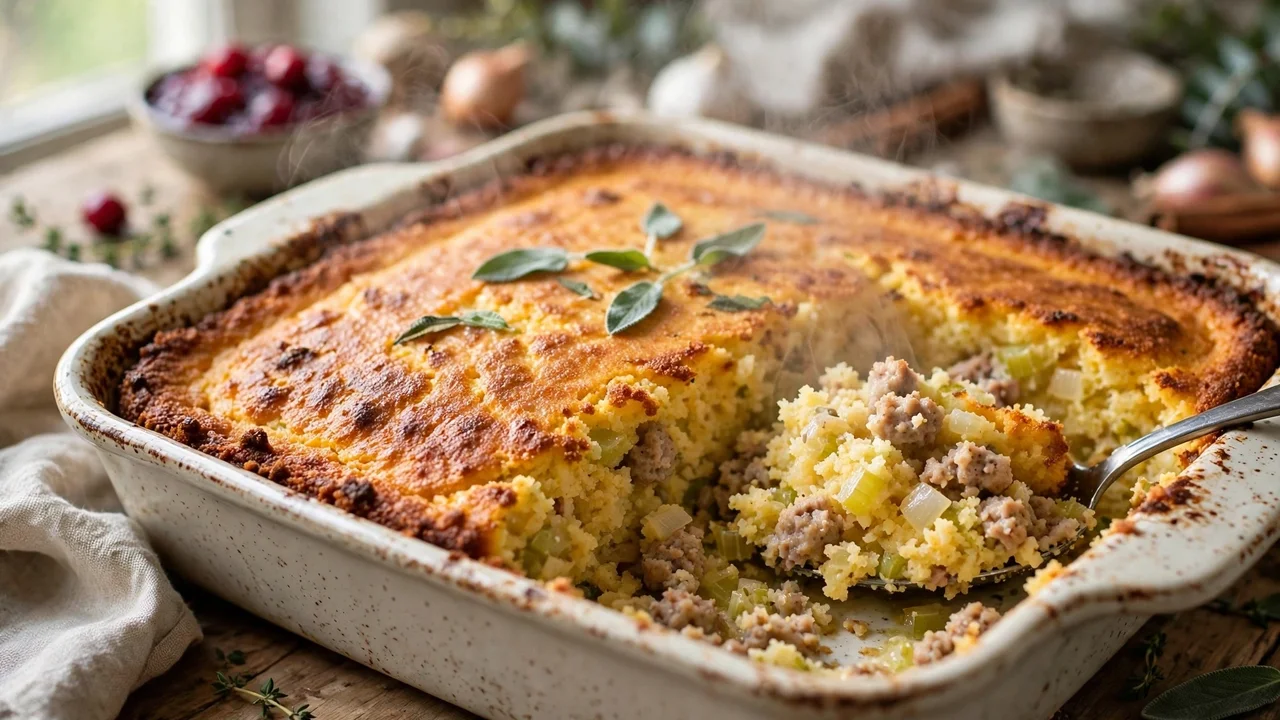
Ask a Southern cook about Thanksgiving dressing and you will get a strong opinion and, if you are lucky, a recipe card written in someone’s grandmother’s handwriting. It is dressing rather than stuffing because it bakes in its own pan, not inside the bird, and down South that pan is almost always built on cornbread. This version follows the classic blueprint: a full batch of sturdy cornbread, crumbled and dried, folded with browned pork sausage, the onion-celery-pepper trio, sage, and enough stock to make it set up moist and sliceable, never soupy.
The cornbread matters more than any other choice. A sweet, cake-like cornbread makes sweet dressing, and most traditional cooks want a savory, plain cornbread with little or no sugar. Bake it a day ahead if you can. Day-old cornbread crumbles cleaner, dries faster, and drinks up stock without disintegrating into mush.
The texture you are aiming for is specific: moist and tender in the center, almost like a savory bread pudding, with a top that has gone golden and crisp at the edges where the butter pooled. Getting there is mostly about how wet the mixture is before it goes into the oven, and this recipe gives you a clear visual test for that.
Why You’ll Love This Recipe
- Real cornbread base. A full skillet of from-scratch cornbread, not a box shortcut, though a mix works in a pinch.
- Sausage in every bite. A full pound of pork sausage, browned with its drippings kept for flavor.
- The classic aromatics. Onion, celery, bell pepper, and sage, the foundation this dish has stood on for generations.
- Moist center, crisp top. Clear cues for the right amount of stock so it never bakes up dry or gummy.
- Built for making ahead. Assemble a day early, bake when the turkey rests.
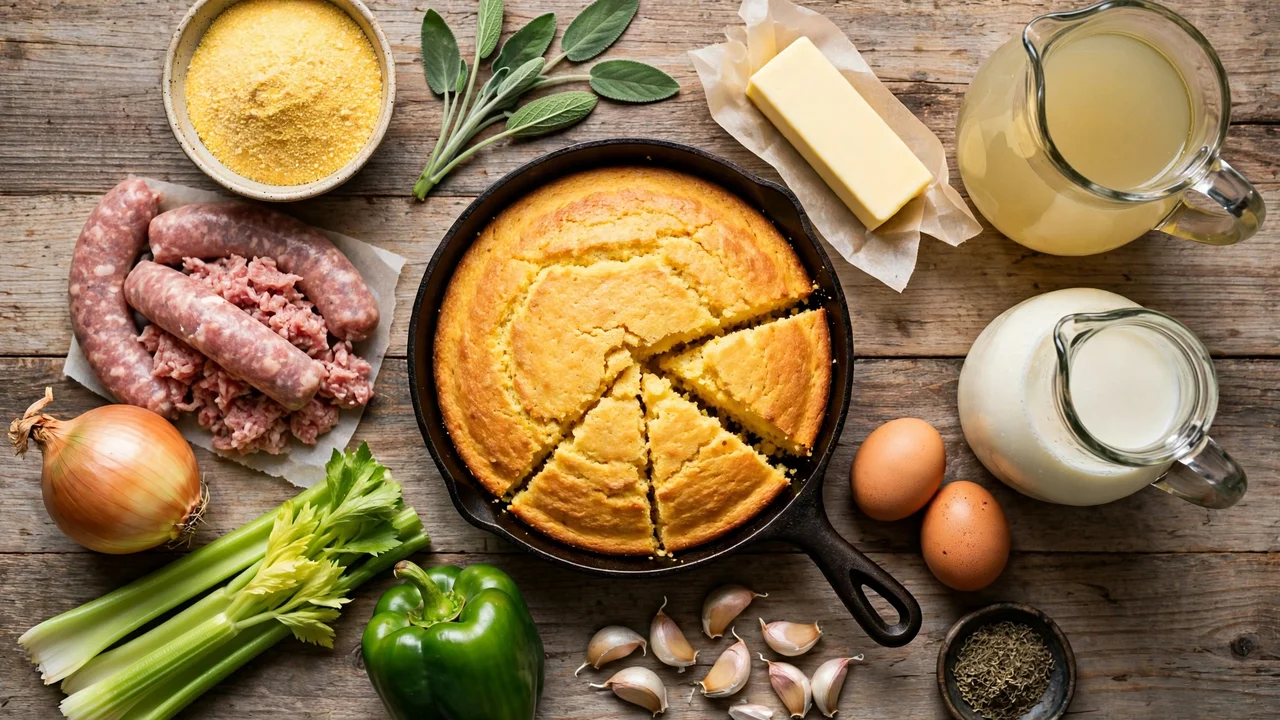
Ingredients
For the Cornbread
- 2 cups fine or medium-grind yellow cornmeal
- 1 cup all-purpose flour
- 1 tablespoon baking powder
- 1 teaspoon fine sea salt
- 1 teaspoon granulated sugar (optional; traditional versions often skip it)
- 2 large eggs
- 1 1/4 cups buttermilk
- 1/4 cup melted butter or bacon drippings, plus more for the skillet
For the Dressing
- 1 pound bulk pork sausage (sage-flavored if you can find it)
- 4 tablespoons unsalted butter, plus more for the top
- 1 large yellow onion, finely diced (about 1 1/2 cups)
- 3 celery stalks, finely diced (about 1 cup)
- 1 medium green bell pepper, finely diced (about 3/4 cup)
- 3 garlic cloves, minced
- 2 teaspoons dried sage (or 2 tablespoons chopped fresh sage)
- 1 teaspoon dried thyme
- 1 teaspoon poultry seasoning
- 1/2 teaspoon black pepper, plus more to taste
- 1/2 teaspoon kosher salt, plus more to taste
- 3 to 3 1/2 cups low-sodium chicken or turkey stock, warmed
- 2 large eggs, beaten
- 1/4 cup chopped fresh parsley
Instructions
- Bake the cornbread (up to 2 days ahead). Heat the oven to 425°F (220°C) and set a 10-inch cast-iron skillet inside to heat. Whisk the cornmeal, flour, baking powder, salt, and sugar if using. In a second bowl, whisk the eggs, buttermilk, and melted butter. Stir the wet into the dry just until combined. Swirl butter or drippings in the hot skillet, pour in the batter, and bake for 20 to 22 minutes, until golden and pulling from the sides. Cool, then crumble into a very large bowl in a mix of coarse chunks and crumbs. Leave the crumbles out, uncovered, for several hours or overnight to dry slightly.
- Brown the sausage. In a large skillet over medium-high heat, cook the sausage, breaking it into small crumbles, until well browned and cooked through, 8 to 10 minutes. Transfer the sausage to the bowl of cornbread crumbles, leaving the drippings in the pan.
- Soften the vegetables. Add the butter to the sausage drippings and melt over medium heat. Add the onion, celery, and bell pepper and cook, stirring now and then, until softened and sweet, 8 to 10 minutes. Stir in the garlic, sage, thyme, and poultry seasoning and cook 1 minute more, until fragrant.
- Combine. Scrape the vegetables and all their butter into the cornbread bowl. Add the parsley, salt, and pepper, and toss to distribute everything evenly.
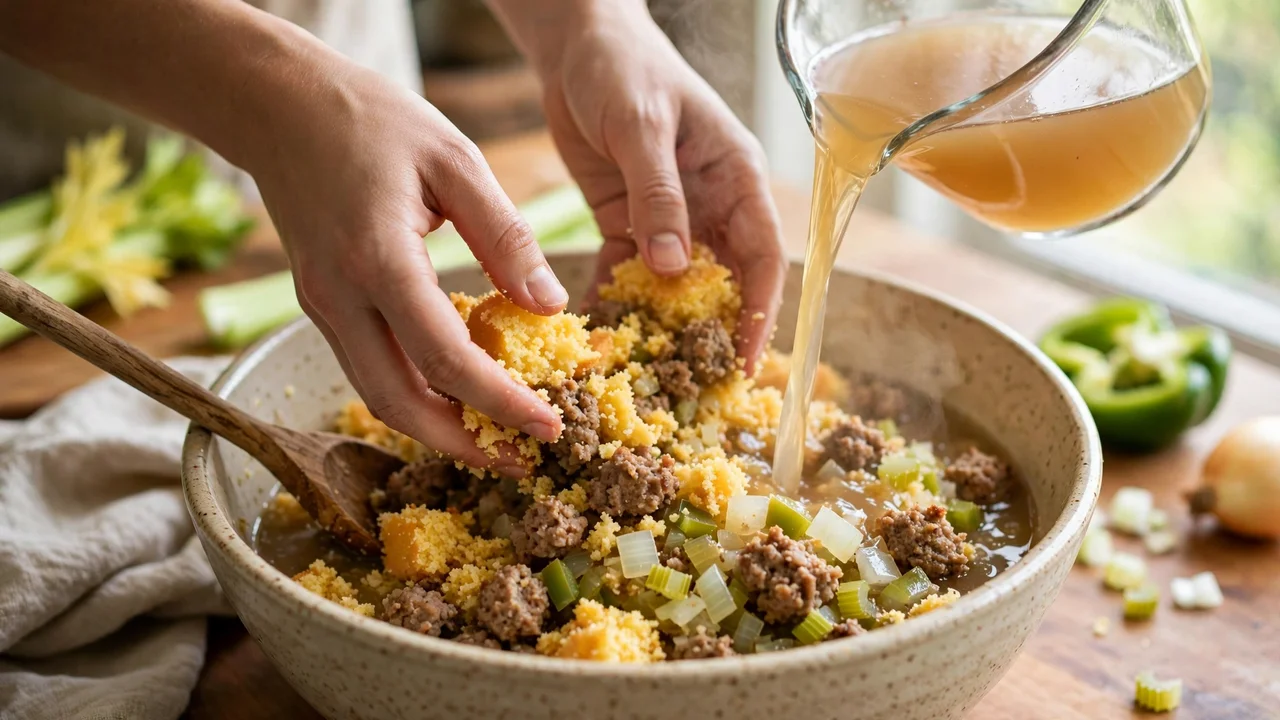
- Add stock and eggs. Pour in 3 cups of warm stock and toss well. The mixture should be thoroughly moist, like a very thick, spoonable batter, with no dry pockets and no puddle of liquid at the bottom. If it looks dry, add the remaining stock a little at a time. Let it sit 5 minutes so the cornbread absorbs the liquid, then fold in the beaten eggs. Taste a pinch and adjust salt and pepper; the sausage and stock vary a lot.
- Pan and top. Butter a 9×13-inch baking dish. Spread the dressing in evenly, roughing up the top a bit so there are plenty of peaks to crisp. Dot the surface with thin slices of butter.
- Bake. Bake at 375°F (190°C) for 35 to 45 minutes, until the top is deeply golden, the edges are crisp, and the center is set and hot (an internal temperature of 165°F / 74°C if you want to check). If the top browns early, cover loosely with foil for the remaining time.
- Rest and serve. Rest 10 minutes before serving. The dressing will set slightly and scoop in clean, steaming portions.
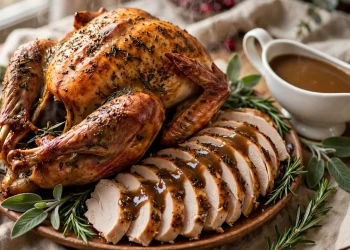
Serve it shoulder to shoulder with slices of turkey and a spoonful of gravy, and set out a pan of cornbread with honey butter for the bread basket plus a stack of soft, buttery dinner rolls so everyone gets their favorite.
Tips for Success
- Dry crumbles, better dressing. If the cornbread is fresh and soft, spread the crumbles on a sheet pan and dry them in a 300°F oven for 15 minutes. Dry bread absorbs stock instead of collapsing.
- The spoon test. Before baking, the mixture should hold its shape on a spoon but still look wet. Too dry now means dry dressing later; there is no fixing it after the bake.
- Taste before the eggs go in. Once raw egg is added, you cannot taste safely. Season the mixture fully first.
- Keep the drippings. Sausage fat carries a lot of the flavor in this dish. If your sausage is very lean, add an extra tablespoon or two of butter.
Variations
- Oyster dressing: Fold in a pint of shucked oysters, drained and roughly chopped, with the stock. A Gulf Coast classic.
- Spicy version: Use hot pork sausage and add a diced jalapeño with the vegetables.
- Half white bread: Replace a third of the cornbread with torn day-old white bread or biscuits for a lighter texture. Many families swear by the blend.
- Vegetarian: Skip the sausage, use vegetable stock, and add 8 ounces of sautéed mushrooms for savoriness. Add an extra tablespoon of butter.
Storage and Make-Ahead
Assemble ahead: Build the dressing through step 6, cover, and refrigerate up to 24 hours. Let it sit at room temperature for 30 minutes, then bake, adding 5 to 10 minutes since it starts cold.
Leftovers: Refrigerate for up to 4 days. Reheat covered at 350°F with a splash of stock over the top to restore moisture, about 20 minutes. Single servings reheat well in the microwave with the same trick.

Freezing: Baked dressing freezes for up to 3 months. Thaw in the refrigerator and reheat as above. Unbaked dressing can also be frozen; thaw fully before baking.
Frequently Asked Questions
What is the difference between dressing and stuffing?
The ingredients are usually identical. Stuffing cooks inside the bird; dressing cooks in its own dish. Cooking it separately is safer, gives you crisp edges, and lets you control the moisture exactly.
Can I use a boxed cornbread mix?
Yes. Prepare two standard boxes (or enough to equal about 8 cups of crumbles). Choose a mix that is not very sweet, or balance a sweet mix with extra sage and pepper.
Why is my dressing gummy?
Too much stock, cornbread crumbled too fine, or overmixing after adding the liquid. Keep some coarse chunks, measure the stock, and fold gently.
Can I make it without eggs?
The eggs bind the dressing and help it set. Without them it will be looser and more crumbly but still tasty; add an extra 1/4 cup of stock and handle it gently.
Recipe Card
Prep Time: 30 minutes, plus baking the cornbread
Cook Time: 45 minutes
Total Time: About 1 hour 30 minutes (with cornbread baked ahead)
Servings: 10 to 12
Crumbled day-old cornbread folded with browned pork sausage, onion, celery, bell pepper, and sage, moistened with stock and baked until the center is tender and the top is golden and crisp. The Thanksgiving side that disappears first.