
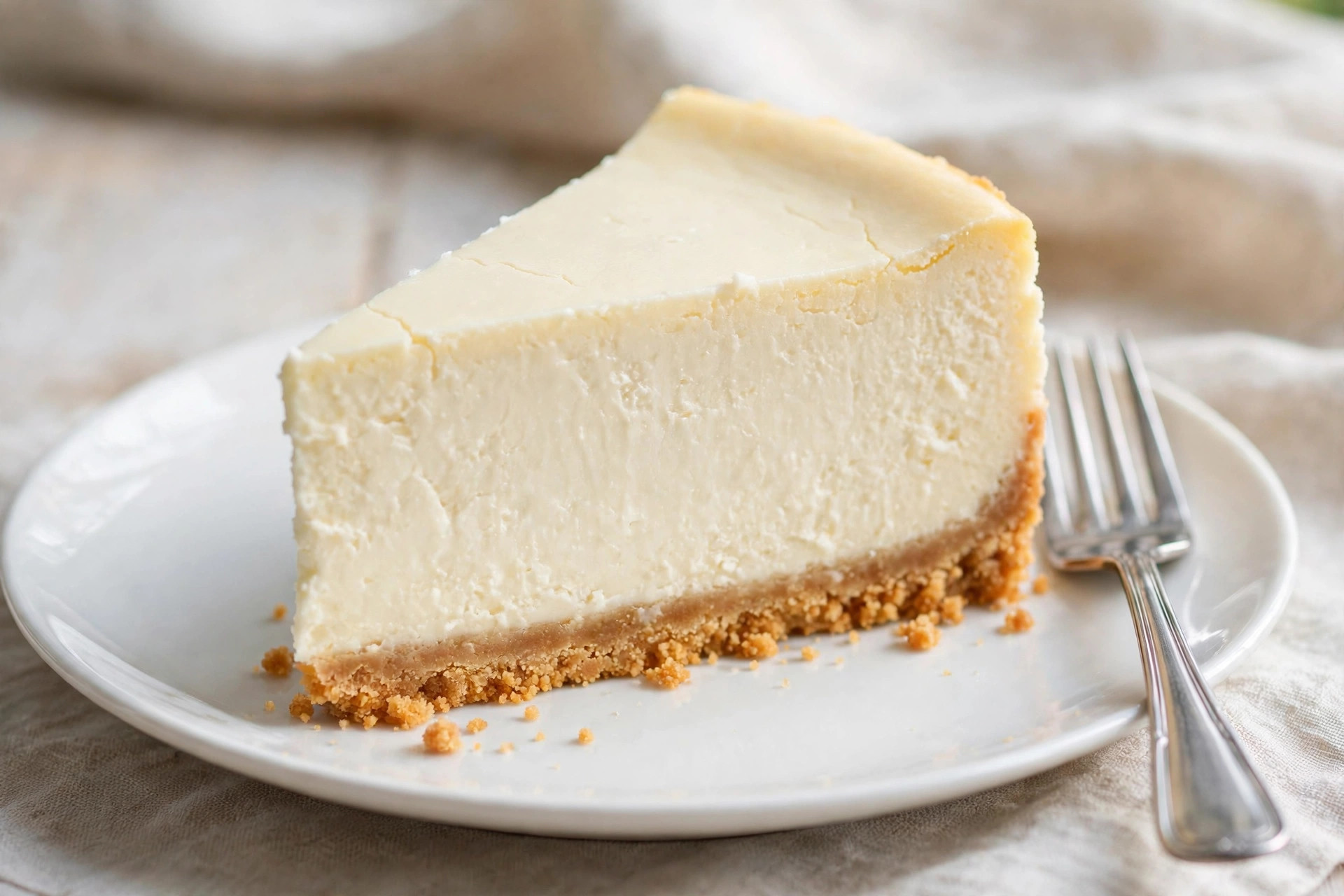
Classic New York Cheesecake
Few desserts command a room quite like a classic New York cheesecake. Tall, dense, impossibly creamy, with that faint tang that keeps you going back for “just one more sliver” — it is the gold standard of cheesecakes, and it is absolutely worth making at home. I know the water bath and the long chill can sound intimidating, but I promise the process is mostly hands-off, and the payoff is a bakery-worthy cheesecake that will make you feel like a pastry chef.
What separates a true New York-style cheesecake from its lighter cousins is density and richness. Four full blocks of cream cheese, a generous measure of sour cream, and an extra yolk create a filling that is firm enough to slice cleanly yet melts on the tongue.
This recipe walks you through every step with the little details that matter: room-temperature ingredients, low-speed mixing to keep air out of the batter, and a slow oven cool-down that prevents cracking. Follow it once, and you will have a showstopper dessert in your repertoire forever.
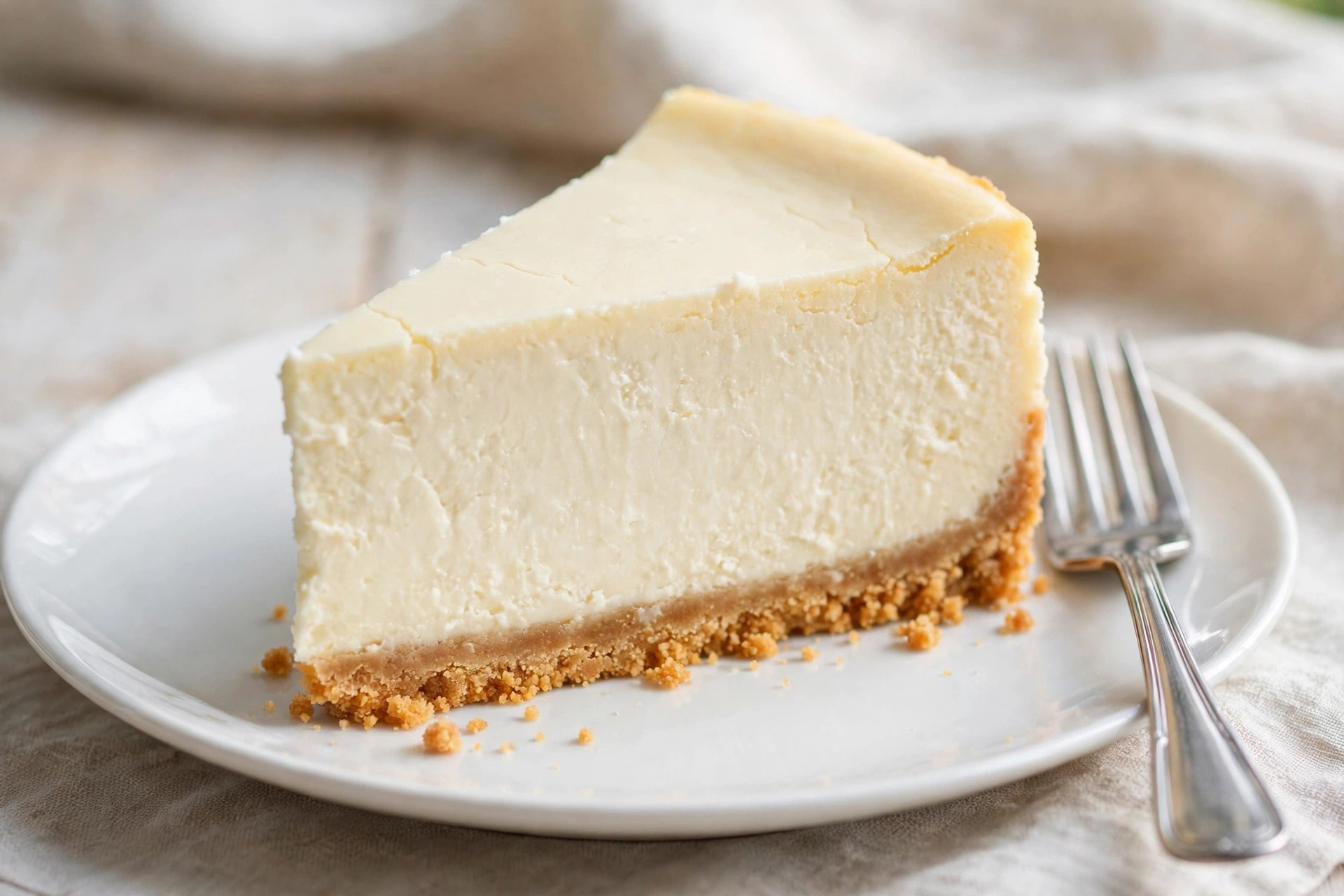
Why you’ll love this recipe
- Authentically dense and creamy — the true New York texture: rich, smooth, and sliceable.
- Crack-free top — the water bath plus slow cooling method virtually guarantees a flawless surface.
- Buttery graham crust — pressed up the sides for the perfect crust-to-filling ratio in every bite.
- Make-ahead perfection — it must chill overnight, so it is the ideal plan-ahead celebration dessert.
- Endlessly adaptable — a blank canvas for fruit toppings, chocolate ganache, or caramel.
Ingredients
For the crust
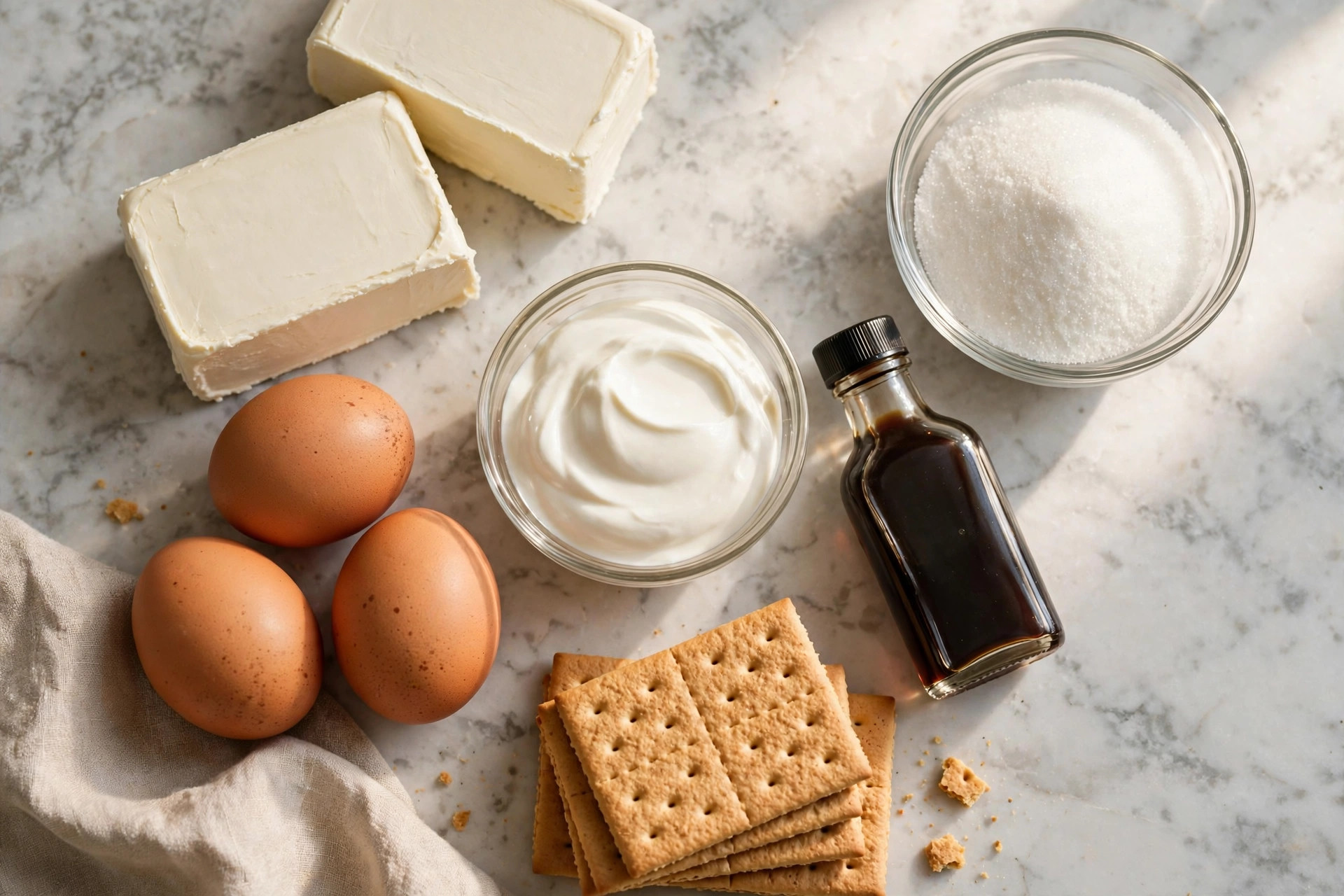
- 2 cups (200 g) graham cracker crumbs (about 14 full sheets)
- 1/2 cup (113 g) unsalted butter, melted
- 1/4 cup (50 g) granulated sugar
For the filling
- 4 packages (8 oz / 226 g each) cream cheese, at room temperature
- 1 1/4 cups (250 g) granulated sugar
- 1 cup (240 g) sour cream, at room temperature
- 2 teaspoons pure vanilla extract
- 1 teaspoon fresh lemon juice
- 3 large eggs, at room temperature
- 1 large egg yolk, at room temperature
- 3 tablespoons (24 g) all-purpose flour
- 1/4 teaspoon fine salt
Instructions
- Prep the pan and oven. Preheat the oven to 325°F (165°C). Wrap the outside of a 9-inch springform pan with two layers of heavy-duty aluminum foil, bringing the foil all the way up the sides — this waterproofs the pan for the water bath. Set a kettle of water to boil.
- Make the crust. Stir the graham cracker crumbs, melted butter, and sugar until the mixture looks like wet sand. Press it firmly and evenly into the bottom of the pan and about 1 inch up the sides, using the bottom of a measuring cup to compact it. Bake for 10 minutes, then set aside to cool.
- Beat the cream cheese. In a large bowl (or stand mixer with the paddle attachment), beat the room-temperature cream cheese on medium speed until completely smooth and fluffy, about 3 minutes, scraping down the bowl twice. This is the step that determines silkiness — take your time and eliminate every lump now.
- Add sugar and sour cream. Beat in the sugar until smooth, then add the sour cream, vanilla, and lemon juice, mixing until fully incorporated and creamy.
- Add the eggs gently. Reduce the speed to low and add the eggs and yolk one at a time, mixing just until each one disappears. Sprinkle in the flour and salt and mix on low just until combined. Overbeating at this stage whips in air, which causes puffing, cracking, and sinking.
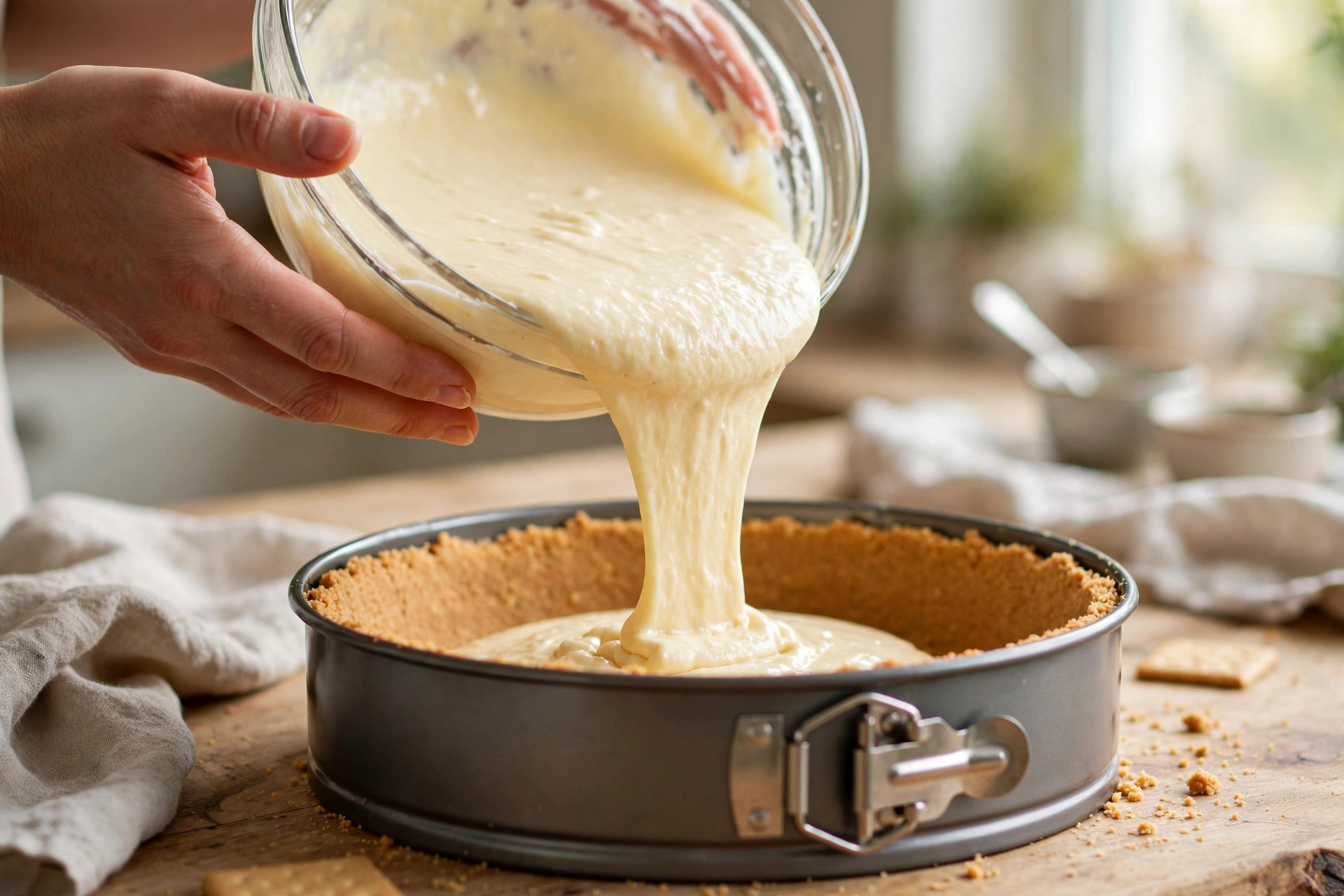
- Assemble the water bath. Pour the batter into the cooled crust and smooth the top. Set the springform pan inside a large roasting pan, place it on the oven rack, and carefully pour the hot water into the roasting pan until it reaches halfway up the sides of the springform.
- Bake low and slow. Bake for 65 to 75 minutes. The cheesecake is done when the outer 2 to 3 inches look set and matte, while the center still jiggles like set gelatin when you nudge the pan. Turn off the oven, crack the door open, and let the cheesecake cool in the oven for 1 hour — this gentle cool-down is the crack-prevention secret.
- Chill thoroughly. Remove the pan from the water bath, run a thin knife around the edge (this lets the cake contract without cracking), and cool to room temperature. Refrigerate for at least 6 hours, preferably overnight. Slice with a long, thin knife dipped in hot water and wiped dry between cuts.
Tips for success
- Room temperature is non-negotiable. Cold cream cheese leaves lumps that no amount of beating will fix. Set everything out 1 to 2 hours before baking.
- Mix low and slow after the eggs go in. Air is the enemy of a dense, crack-free cheesecake. Keep the mixer on low and stop as soon as ingredients are incorporated.
- Waterproof the pan well. Two layers of wide, heavy-duty foil — or a silicone springform wrap — keep bath water out of your crust.
- Trust the jiggle. An overbaked cheesecake is dry and cracked. The center should wobble; residual heat finishes the job.
- Chill overnight. The texture transforms in the fridge from soft to perfectly dense and sliceable. Do not rush it.
Variations
- Fresh berry topping: Macerate 2 cups of mixed berries with 2 tablespoons of sugar for 30 minutes and spoon over each slice.
- Chocolate ganache: Pour a warm ganache (6 oz / 170 g chopped dark chocolate + 3/4 cup / 180 ml hot cream) over the chilled cheesecake and let it set.
- Oreo crust: Swap the graham crumbs for 2 cups (200 g) of crushed chocolate sandwich cookies (filling included), omitting the added sugar.
Storage and make-ahead
Cheesecake must be refrigerated. Tightly covered, it keeps for up to 5 days in the refrigerator, and the flavor actually improves after the first day. This makes it one of the best make-ahead desserts for holidays and dinner parties — bake it two days before serving without any loss of quality.
For longer storage, freeze the whole cheesecake (or individual slices) for up to 3 months. Wrap first in plastic wrap, then in foil, and thaw overnight in the refrigerator. Do not freeze with fresh fruit toppings; add those after thawing.
Frequently asked questions
Why did my cheesecake crack? The usual suspects are overbaking, overbeating the eggs (too much air), or cooling too quickly. The water bath, the jiggle test, and the slow oven cool-down in this recipe address all three.
Can I skip the water bath? You can, but the top is far more likely to crack and the texture will be less creamy. If you must skip it, place a pan of hot water on the rack below the cheesecake to add steam to the oven.
Can I use low-fat cream cheese? Not for this recipe. Full-fat block cream cheese is essential for the dense New York texture; low-fat versions and tub-style spreads contain stabilizers and extra water that prevent proper setting.

How do I get clean slices? Use a long, thin knife dipped in very hot water and wiped completely dry between every single cut. It feels fussy, but the slices look bakery-perfect.
Recipe card
| Prep time | 30 minutes |
|---|---|
| Cook time | 70 minutes |
| Total time | 100 minutes (plus 1 hour oven cooling and overnight chilling) |
| Servings | 12 servings |
| Calories per serving | 540 kcal |
Rich, creamy, and utterly classic, this New York cheesecake is the kind of dessert that turns any dinner into an occasion. If you love creamy desserts, our no-bake strawberry cheesecake cups are a wonderful no-oven alternative — and you will find plenty more inspiration in our desserts collection.