
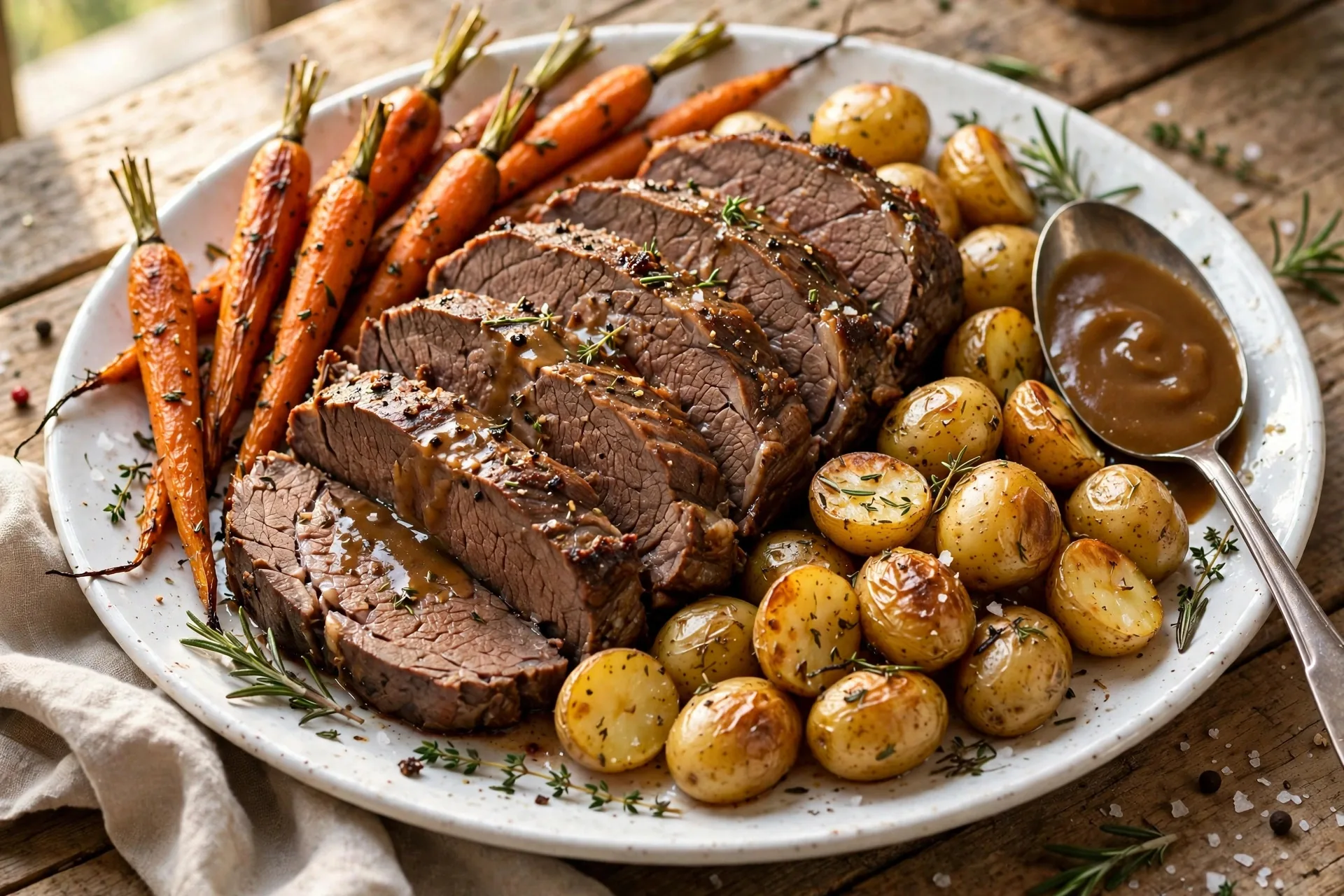
There is a reason pot roast has anchored Sunday dinners for generations. A well-marbled chuck roast, a heavy Dutch oven, and a few hours of low, lazy heat turn one of the most affordable cuts of beef into something spoon-tender and deeply savory. This classic beef pot roast is the version I come back to every time: seared hard for flavor, then braised with red wine, beef broth, and aromatics until it practically falls apart at the touch of a fork.
What makes this recipe work is patience, not skill. Once the roast goes into the oven at 325°F (165°C), your job is essentially done — the collagen in the chuck slowly melts into silky gelatin, the vegetables soak up the rich braising liquid, and the whole house starts to smell incredible. About three and a half hours later, you lift the lid on a one-pot dinner that tastes like you fussed all day.
If your family loves a hearty beef dinner, our classic homemade beef lasagna is another cozy favorite. And a bowl of creamy tomato basil soup makes a lighter start to the meal. But today, let’s talk pot roast — and how to get it right every single time.
Why You’ll Love This Recipe
- One-pot wonder — everything cooks in a single Dutch oven, which means minimal cleanup and maximum flavor as the vegetables braise right in the savory juices.
- Fork-tender every time — low-and-slow braising breaks down tough connective tissue, so even a budget-friendly chuck roast turns meltingly tender.
- Built-in side dish — carrots and baby potatoes cook alongside the beef, soaking up all that rich gravy. Dinner is genuinely complete in one pot.
- Feeds a crowd — one roast comfortably serves eight, and the leftovers might be even better the next day.
- Make-ahead friendly — braise it a day ahead; the flavors deepen overnight and reheating is effortless.
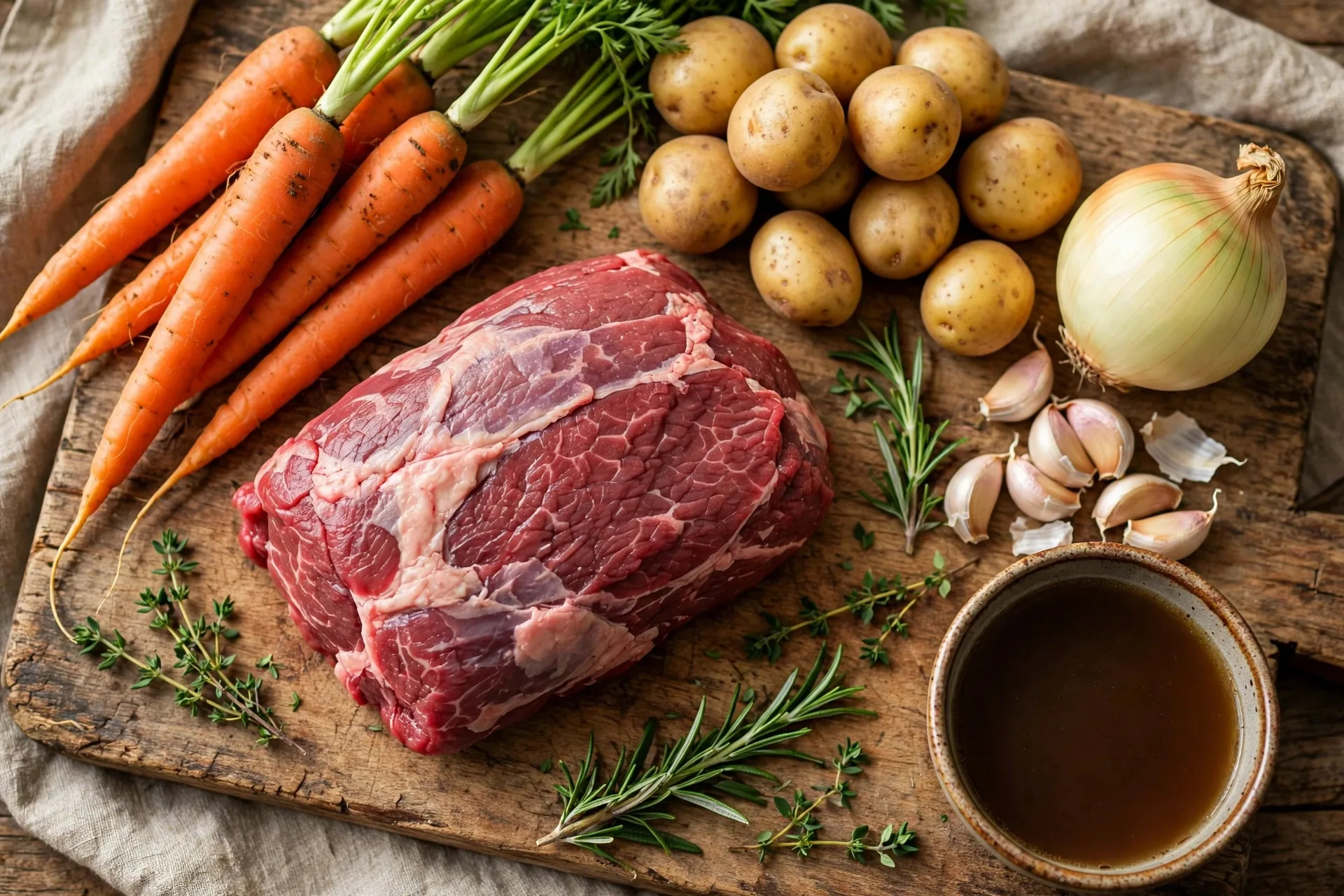
Ingredients
For the Roast
- 1 (3½ to 4-lb / 1.6 to 1.8-kg) boneless beef chuck roast
- 2 teaspoons (12 g) kosher salt, plus more to taste
- 1 teaspoon (2 g) freshly ground black pepper
- 2 tablespoons (30 ml) olive oil
For Braising
- 1 large yellow onion, cut into thick wedges (about 10 oz / 280 g)
- 4 garlic cloves, smashed
- 2 tablespoons (32 g) tomato paste
- 1 cup (240 ml) dry red wine, such as Cabernet Sauvignon or Merlot
- 2 cups (475 ml) low-sodium beef broth
- 2 bay leaves
- 4 sprigs fresh thyme (or 1 teaspoon dried)
- 1 sprig fresh rosemary
Vegetables & Serving
- 1½ pounds (680 g) baby potatoes, halved
- 4 large carrots (about 1 lb / 450 g), peeled and cut into 2-inch pieces
- 2 tablespoons chopped fresh parsley, for serving
- Flaky sea salt, to finish (optional)
Instructions
- Preheat the oven to 325°F (165°C). Pat the chuck roast completely dry with paper towels — a dry surface is the secret to a deep, flavorful sear. Season all over with the kosher salt and black pepper, pressing the seasoning firmly into the meat.
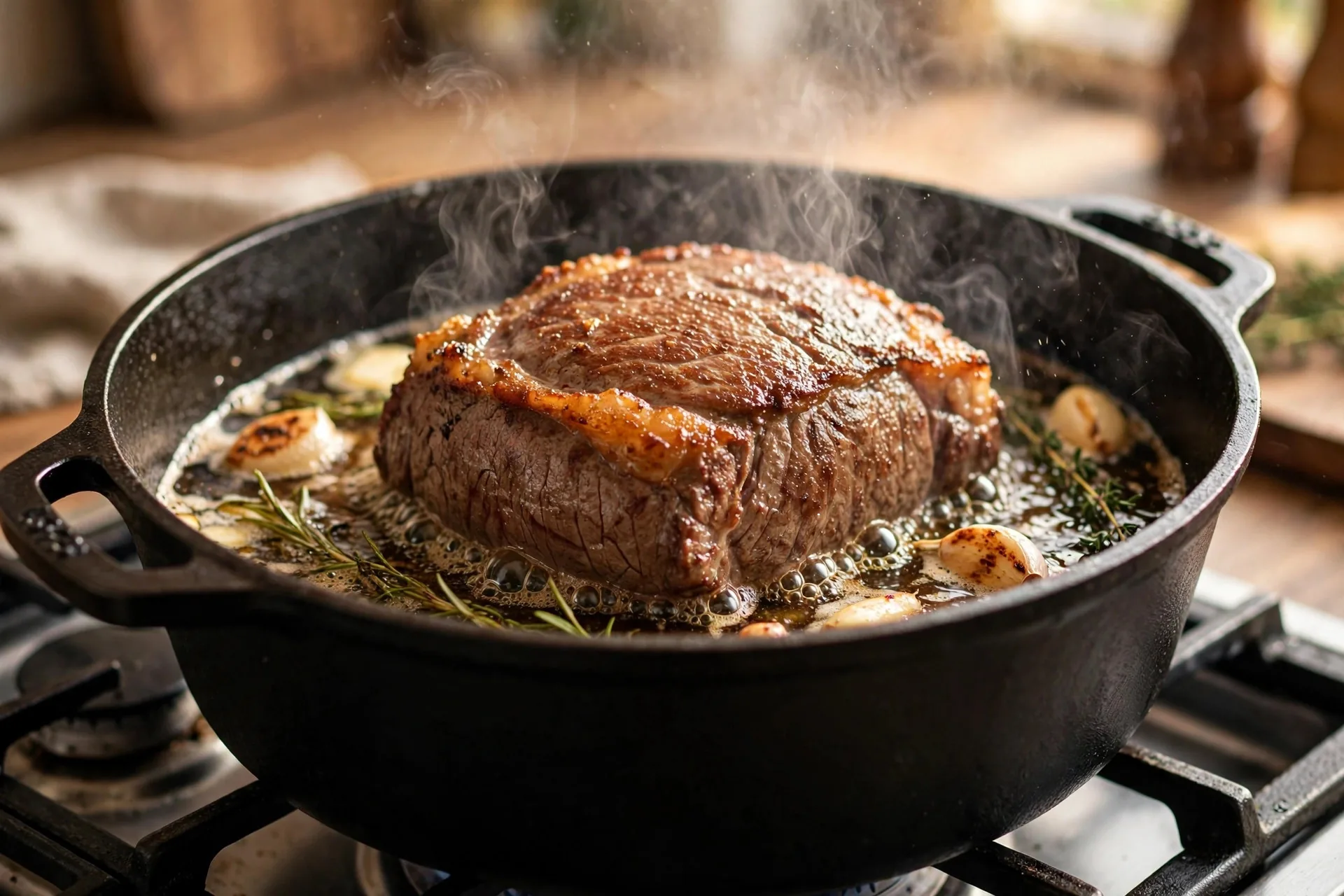
- Heat the olive oil in a large Dutch oven over medium-high heat until shimmering. Sear the roast 4 to 5 minutes per side until deeply browned all over — those caramelized bits (the fond) are the foundation of your gravy, so don’t rush it. Transfer the roast to a plate.
- Reduce the heat to medium and add the onion wedges to the pot. Cook 4 to 5 minutes, stirring occasionally, until softened and picking up some color from the fond. Stir in the garlic and tomato paste and cook 1 minute more, until the paste darkens slightly and smells sweet and toasty.
- Pour in the red wine, scraping the bottom of the pot with a wooden spoon to release every browned bit. Let it bubble for 2 to 3 minutes until slightly reduced and no longer smelling sharply of alcohol, then stir in the beef broth, bay leaves, thyme, and rosemary.
- Return the roast — and any juices that collected on the plate — to the pot. The liquid should come about halfway up the sides of the meat; that’s perfect for braising. Cover with the lid and transfer to the oven. Braise for 2 hours, undisturbed.
- Nestle the potatoes and carrots around the roast in the braising liquid. Cover and return to the oven for 1 to 1½ hours more, until the vegetables are soft and a fork slides into the meat with almost no resistance (about 195–205°F / 90–96°C internally, as the collagen melts into gelatin).
- Transfer the roast and vegetables to a platter and tent loosely with foil. Rest 15 minutes so the juices redistribute and every slice stays moist.
- Meanwhile, skim excess fat from the braising liquid and simmer over medium heat. For a thicker gravy, whisk 1 tablespoon of cornstarch with 2 tablespoons of cold water, stir it in, and simmer 2 minutes until glossy. Slice the roast against the grain (or shred into hearty chunks), arrange the vegetables alongside, spoon over the gravy, and shower with parsley.
Tips & Variations
- Choose chuck, not lean cuts. Its marbling and connective tissue are what make pot roast luscious; lean cuts like eye of round turn out dry and stringy no matter what.
- Don’t skip the sear. That mahogany crust adds roasted, beefy depth no seasoning can replicate. Pat the meat dry first — moisture is the enemy of browning.
- No wine? No problem. Replace it with an equal amount of beef broth plus a tablespoon of balsamic or red wine vinegar to keep that touch of acidity that balances the richness.
- Add more vegetables. Parsnips, pearl onions, or a handful of quartered mushrooms can join the pot alongside the carrots and potatoes in step 6.
- Slow cooker option. Sear and build the braise exactly as directed, then cook on LOW for 8 to 9 hours. Add the vegetables during the last 3 hours so they don’t turn to mush.
Storage
Cool completely, then refrigerate in an airtight container with some braising liquid for up to 4 days — meat stored in its juices stays noticeably moister. Freeze with gravy for up to 3 months; thaw overnight in the fridge. Reheat gently in a covered pot over low heat, adding a splash of broth if the gravy thickened too much.

FAQ
What is the best cut of beef for pot roast?
Boneless chuck roast. Its fat and collagen melt during the long braise, giving you tender meat and a naturally rich gravy. Brisket or bottom round work in a pinch, but chuck is the most forgiving.
Why is my pot roast tough?
It almost always needs more time. Toughness means the collagen hasn’t finished converting to gelatin yet. Give it another 30 to 45 minutes and check again — the fork test never lies.
Can I make pot roast without red wine?
Absolutely. Swap the wine for extra beef broth and add a tablespoon of balsamic or red wine vinegar to keep that touch of acidity. The gravy will still be deeply savory.
Should the braising liquid cover the roast completely?
No — braising is not boiling. The liquid should come about halfway up the meat: the exposed top browns gently while the submerged part stays succulent, and you get a more concentrated gravy.
Recipe Card
- Prep time: 20 minutes
- Cook time: 3 hours 30 minutes
- Total time: 3 hours 50 minutes
- Servings: 8
- Calories: 480 kcal per serving
Set it on the table with some crusty bread for mopping up the gravy — this is Sunday dinner the way it was meant to be.