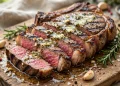

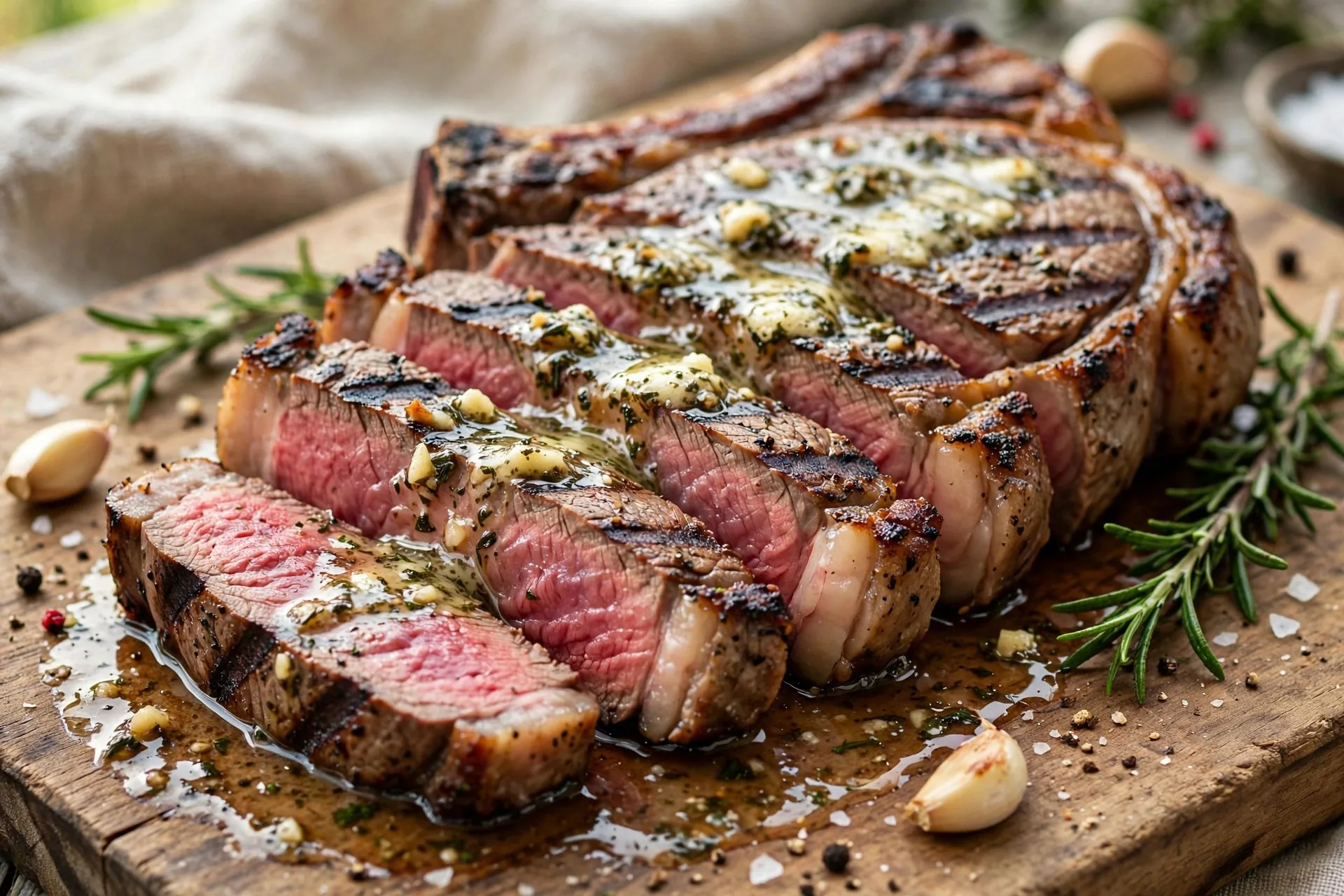
A great ribeye does not need much — just fire, salt and confidence. This is the steakhouse formula stripped down to its essentials: a thick, well-marbled ribeye seasoned simply, seared over ripping-high heat until the outside is deeply crusted, and finished with a melting knob of garlic-herb butter that pools into every slice.
The two things that separate a good home steak from a great one are temperature control and rest. An instant-read thermometer takes all the guesswork out — if you do not own one yet, our guide to smart meat thermometers will change your grilling life. And for another beefy favorite with a completely different vibe, this classic homemade beef lasagna is always worth the effort.
From fridge to plate in about 30 minutes (plus resting), this is weeknight-fast but special-occasion good. Light the grill — dinner is about to get serious.
Why You’ll Love This Recipe
- Steakhouse crust at home: Screaming-high heat and a dry surface create that dark, flavorful sear you thought only restaurants could achieve.
- Foolproof doneness: Exact temperatures for every level of doneness mean you never have to guess — or cut into the steak to check.
- Garlic-herb butter: It melts over the hot meat and bastes every slice in garlicky, herby richness. This is the move.
- 30 minutes start to finish: Faster than delivery, infinitely better, and impressive enough for date night.
- Just 10 ingredients: Great steak is about technique, not a long shopping list.
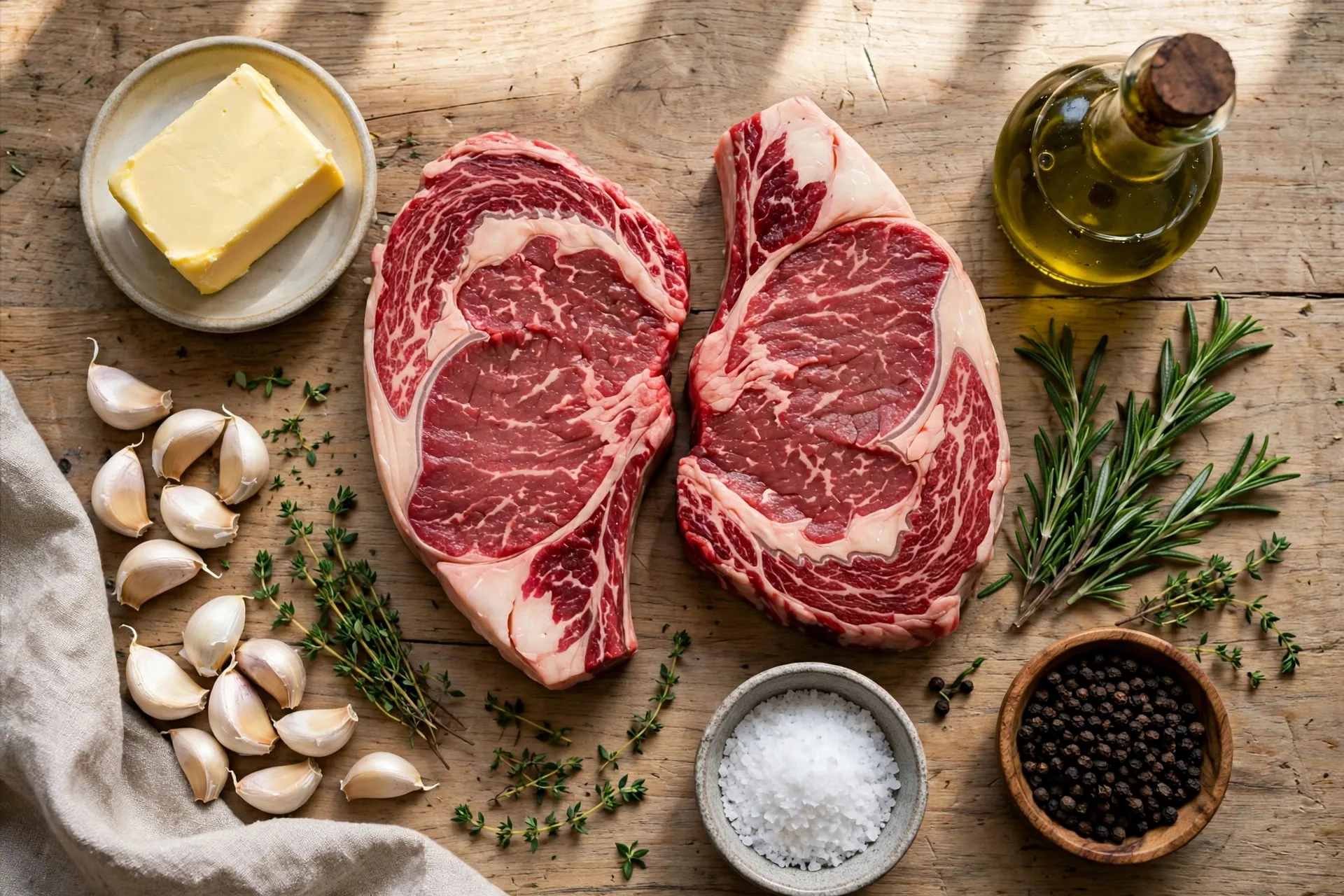
Ingredients
For the steaks
- 2 ribeye steaks, 1 1/2 inches thick (about 1 lb / 450 g each)
- 1 tbsp (18 g) kosher salt
- 1 tsp (2 g) coarsely ground black pepper
- 1 tbsp (15 ml) olive oil
For the garlic-herb butter
- 4 tbsp (56 g) unsalted butter, softened
- 3 cloves garlic, minced
- 1 tbsp chopped fresh rosemary
- 1 tbsp chopped fresh thyme leaves
- 1 tsp lemon zest
- Flaky sea salt, for finishing
Instructions
- Bring the steaks to room temperature. Take the ribeyes out of the refrigerator 30 to 45 minutes before grilling. A steak that starts closer to room temperature cooks more evenly — the center will not still be cold when the outside is perfectly seared. Pat the steaks very dry with paper towels, rub lightly with olive oil, and season generously on all sides (including the edges) with the kosher salt and coarsely ground pepper. Be bolder with the salt than feels natural; a thick steak needs it.
- Make the garlic-herb butter. In a small bowl, mash the softened butter with the minced garlic, rosemary, thyme and lemon zest until completely combined. The lemon zest is subtle but important — it cuts the richness and keeps the butter from tasting heavy. Set aside at room temperature so it is soft and spreadable when the steaks come off the grill. (You can make this up to 3 days ahead and refrigerate it; just soften before using.)
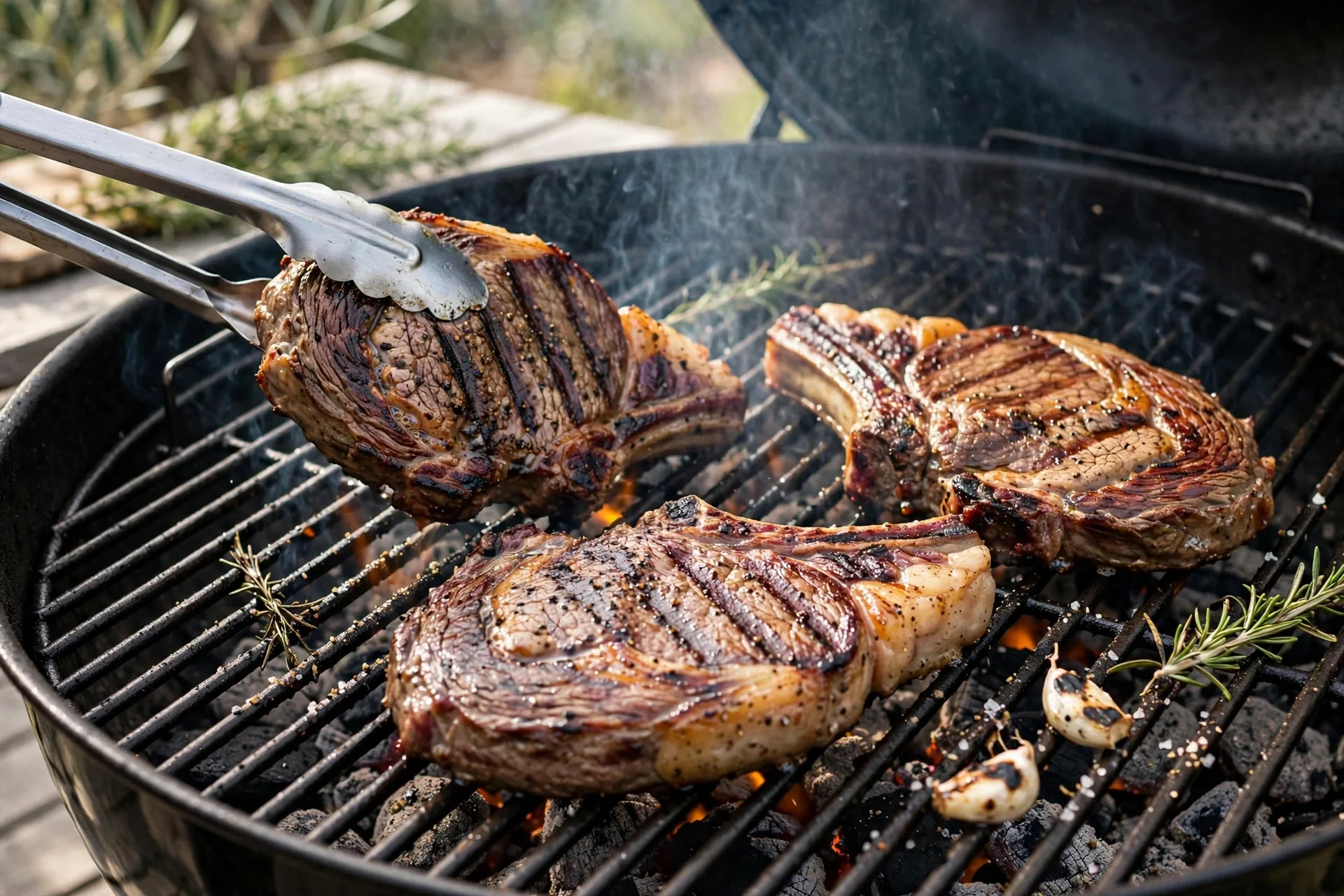
- Preheat the grill properly. Heat your grill to high — you want 450 to 500°F (230 to 260°C) at the grates. Clean the grates well with a grill brush, then oil them by folding a paper towel, dipping it in oil and dragging it across the grates with tongs. A clean, oiled, screaming-hot grate is what gives you defined grill marks instead of sticking and tearing.
- Sear hard, flip once. Lay the steaks on the hottest part of the grill and do not touch them for 4 to 5 minutes — moving them around prevents a proper crust from forming. Flip once with tongs (never a fork, which pierces the meat and lets juices escape) and grill 4 to 5 minutes more on the second side. For a 1 1/2-inch ribeye, this gives you a beautiful medium-rare. If you like crosshatch marks, rotate the steaks 90 degrees halfway through each side.
- Temp, do not guess. This is the step that guarantees perfection: insert an instant-read thermometer horizontally into the thickest part of the steak, avoiding fat pockets. Pull the steaks at 125 to 130°F (52 to 54°C) for medium-rare — carryover cooking will bring them to 130 to 135°F (54 to 57°C) as they rest. For reference: rare is 120 to 125°F (49 to 52°C), medium is 135 to 145°F (57 to 63°C), and anything past 150°F (66°C) on a ribeye is, frankly, a tragedy.
- Butter and rest. Transfer the steaks to a cutting board and immediately top each with a generous knob of the garlic-herb butter — it will melt into a glistening pool. Rest for 5 to 10 minutes. This is non-negotiable: resting lets the juices redistribute instead of flooding the board. Slice against the grain into 1/2-inch strips, spoon any board juices back over, and finish with a pinch of flaky sea salt.
Tips & Variations
- Choose marbled steaks: Look for abundant white flecking throughout the meat — that intramuscular fat is what makes ribeye juicy and flavorful. USDA Choice or Prime both work beautifully.
- No grill? No problem: Sear in a ripping-hot cast iron skillet for 4 minutes per side, then finish in a 400°F (200°C) oven until the thermometer reads right.
- Reverse sear for extra-thick steaks: For steaks over 2 inches, bake at 250°F (120°C) until 115°F (46°C) internally, then sear 1 minute per side for edge-to-edge perfection.
- Compound butter variations: Swap the herbs for blue cheese and chives, or add a teaspoon of smoked paprika for a smoky twist.
- Let the grill do the work: Resist pressing the steaks with a spatula — you are just squeezing out juice for no benefit.
Storage
Refrigerate leftover steak in an airtight container for up to 3 days. To reheat without overcooking, warm slices gently in a 250°F (120°C) oven until just heated through, about 15 minutes — or better yet, enjoy leftovers cold on salads and sandwiches.
FAQ
How do I know when my steak is done without a thermometer?
Honestly? Get a thermometer — it is the single biggest upgrade to your steak game. The touch test is unreliable, and cutting into the steak to peek lets precious juices escape. A basic instant-read thermometer costs little and removes all guesswork.
Should I marinate ribeye?
No. Ribeye is already tender and flavorful; a marinade would mask its beefy character. Salt, pepper, high heat and garlic butter are all it needs.
Why did my steak turn out tough?
Usually one of three things: the steak was too thin (under 1 inch overcooks before it sears), the grill was not hot enough, or it was not rested. Thick steaks, screaming heat and a proper rest solve nearly everything.
Can I cook this indoors on a grill pan?
Yes, with a caveat: grill pans create nice marks but less overall crust than a flat cast iron skillet, which gives you wall-to-wall sear. If using a grill pan, keep it smoking hot and ventilate well.
Recipe Card
- Prep time: 15 minutes
- Cook time: 15 minutes
- Total time: 30 minutes
- Servings: 4
- Calories: 720 kcal per serving
Fire, salt, butter, rest — master these four things and you will never order a steak out again.